
Overcoming Mental Blocks in Gymnastics (And Any Sport)
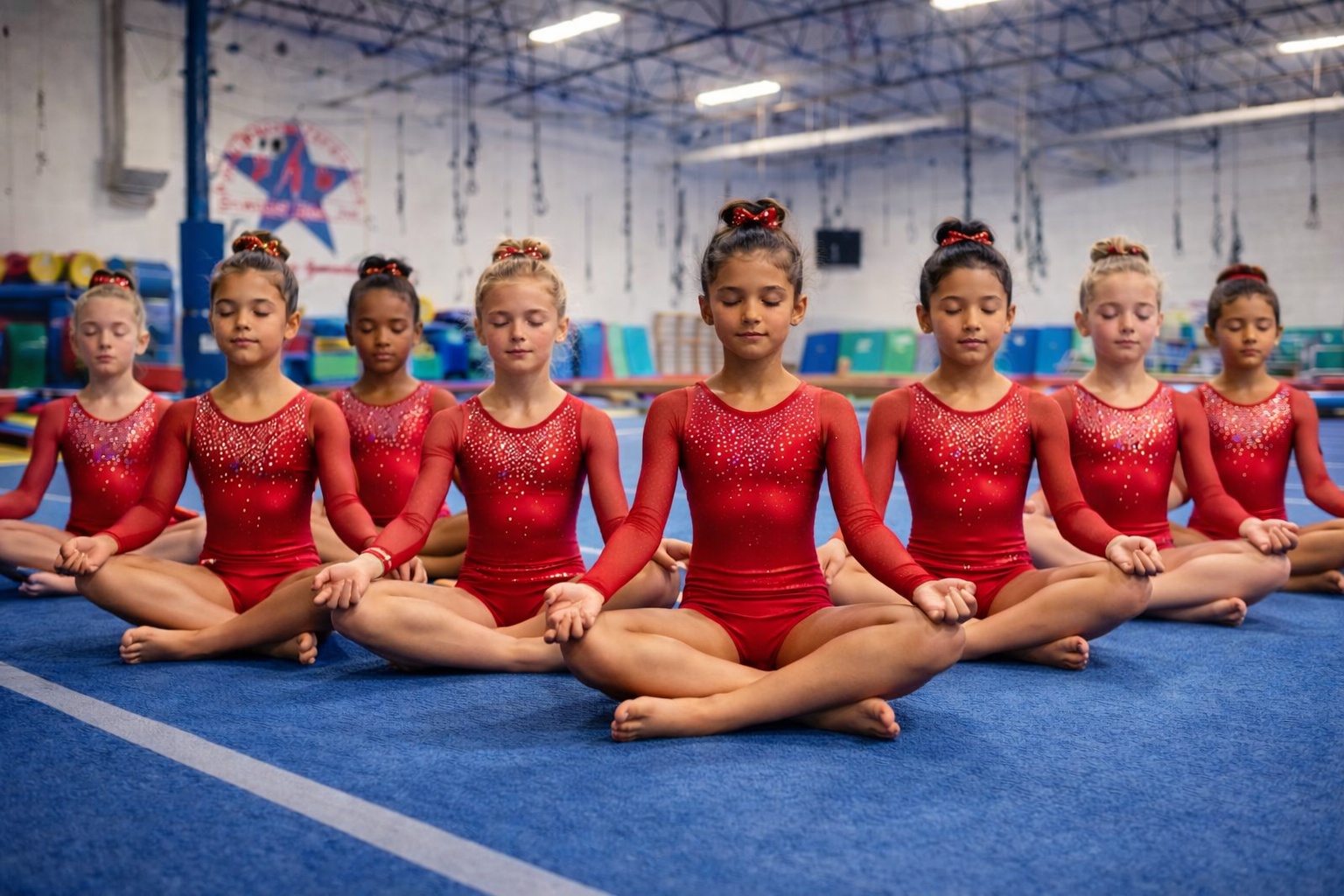
What is a mental block in gymnastics?
A mental block in gymnastics occurs when the brain perceives a skill as dangerous and prevents the body from performing it, even though the athlete has successfully completed it before. It is a natural self-preservation response from the nervous system.
At North County Gymnastics & The Gyminny Kids, we devote significant time to training the mind in addition to the body.
Because here's the truth:
In gymnastics, arguably one of the hardest sports in the world, the mental game is everything.
What Is a Mental Block?
A mental block isn't weakness.
It isn't laziness.
It isn't lack of talent or willpower.
A mental block is your nervous system doing its job.
The human brain is wired for survival. If it perceives something as dangerous or life-threatening, it will stop the body from doing it. In gymnastics, that might show up as:
Freezing before a back handspring
Refusing to flip on beam
Unable to tumble backwards
Unable to let go on a dismount
Suddenly being unable to do a skill that an athlete has done hundreds of times
The athlete wants to do it.
The body won't allow it.
That's the nervous system stepping in with a self-preservation response.
And sometimes, the block isn't just about fear of the skill.
It can also come from:
Internal pressure ("I have to hit.”)
External pressure (well-intentioned, over-involved parents or high expectations)
Stress outside the gym (bullying, school issues, home life, life changes)
When pressure stacks up, the nervous system intervenes.
That's when blocks happen.
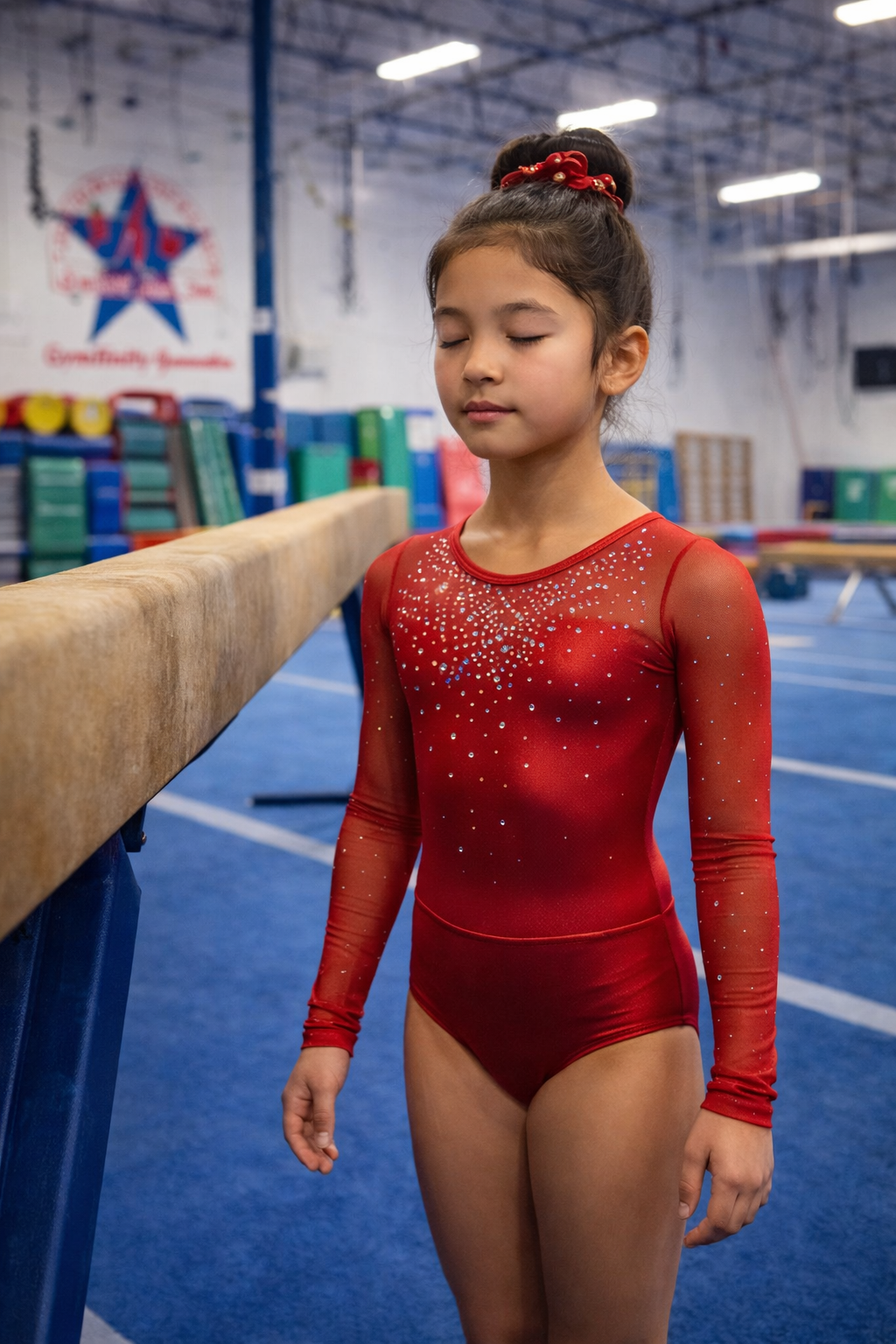
Step 1: Control What You Can Control
One of the first lessons we teach our athletes is simple:
You cannot control the score.
You can control your effort, focus, breathing, attitude, and mindset.
When athletes obsess over results and scores, anxiety rises.
When they focus on doing their best, one skill at a time, performance improves.
This philosophy alone reduces a tremendous amount of pressure.
Step 2: Break the Skill Down (Way Down)
If a skill feels scary, we don't force it.
We deconstruct it.
For example, if an athlete has a mental block on a back handspring on balance beam, we might:
Remove them from high beam.
Go back to a floor line.
Take a break from the skill altogether or find alternative skills that still fulfill the requirement.
Start with back walkovers.
Build to back handsprings on the line.
Progress to low beam.
Slowly return to high beam through beam graduation, only when consistency and confidence return. Getting a skill back can take days, weeks, months, or even years.
No rushing.
Reduced pressure.
Just small wins stacked over time.
Progressions calm the nervous system.
Confidence comes from consistency.
Step 3: Reduce Outside Pressure
One of the largest contributors to mental blocks is pressure at home.
We talk with parents about allowing coaches to handle skill progressions. When athletes feel coached at the gym and at home, burnout and anxiety increase dramatically.
Support your child.
Encourage effort.
But avoid technical corrections outside the gym.
The safest and fastest way through a block is in a calm, consistent environment with no pressure from parents.
This includes:
-Do not ask your child why they didn't complete a skill during practice or at a competition. The coaches are aware and are working with your child on it.
-Bribing your child if they obtain a certain skill. We want to instill intrinsic motivation, which gets annihilated when first place in the all-around earns you a new puppy or iPhone.
- Forcing your child to do private lessons. If they want them, great! If not, do not push.
Step 4: Replace Fear With a Verbal Routine
The brain cannot focus on two things at once.
If an athlete is thinking:
"I hope I don't fall…"
They are mentally rehearsing falling.
Instead, we teach athletes to replace fearful thoughts with:
Words of affirmation: " I can do this."
A structured verbal routine
Example on balance beam:
"I can do this."
Then:
Pull up.
Pivot turn.
Square hips.
Spot.
Jump.
Flic.
Tight legs.
Extend.
Dismount.
Stick.
Finish.
When the mind is locked into cues, there's no room for fear.
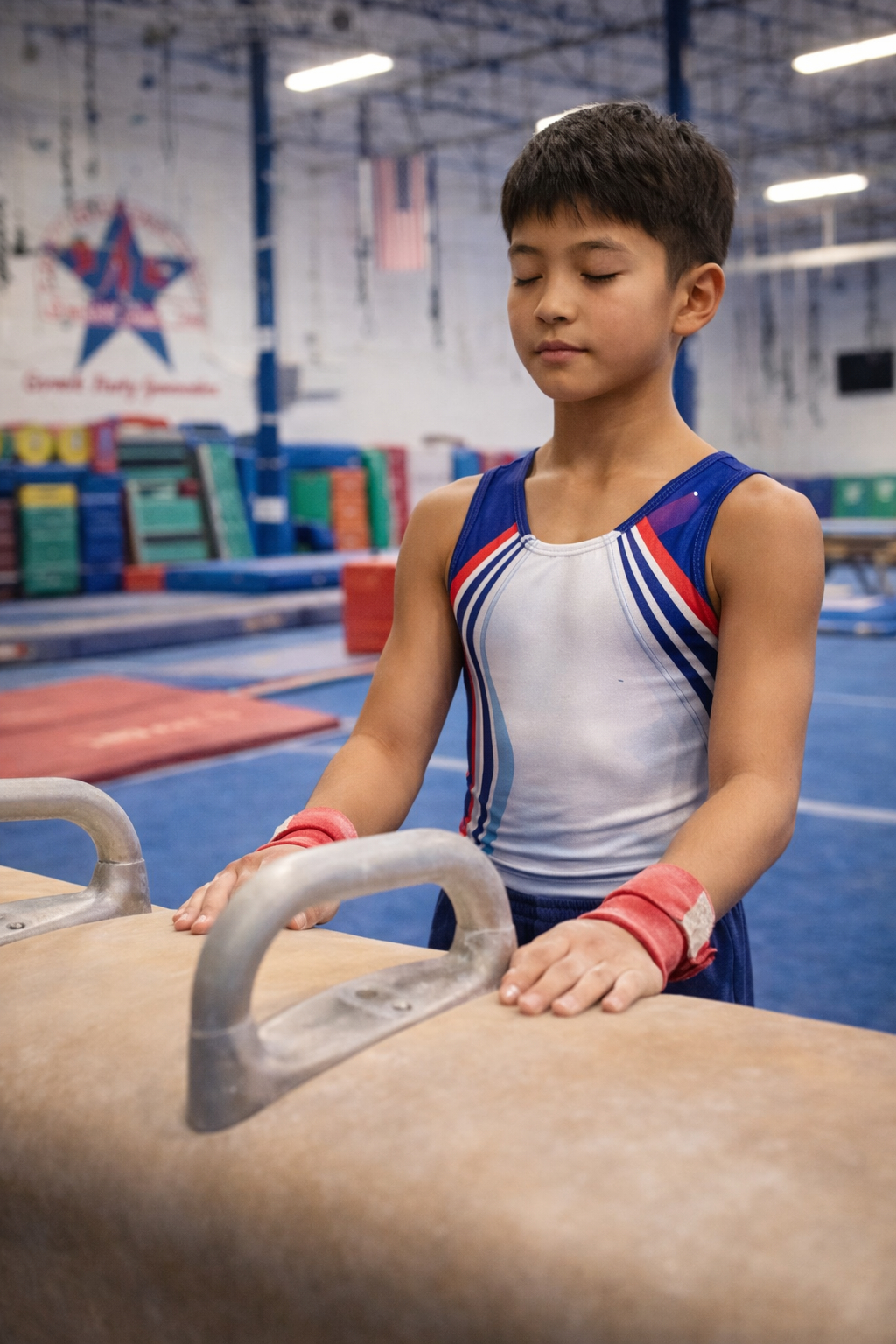
Some athletes even use music internally. When I competed, I used to hum "Don't Stop Believin'" by Journey in my head during pommel horse routines. It kept my mindset positive and steady, making it easier to reach a flow state.
On the pommel horse, if your shoulders are a millimeter off, you're flying off and spinning on your back like a turtle. Staying mentally locked in was everything.
Step 5: Visualization: Training the Brain Before the Body
Visualization is one of the most powerful tools we teach.
We guide athletes to:
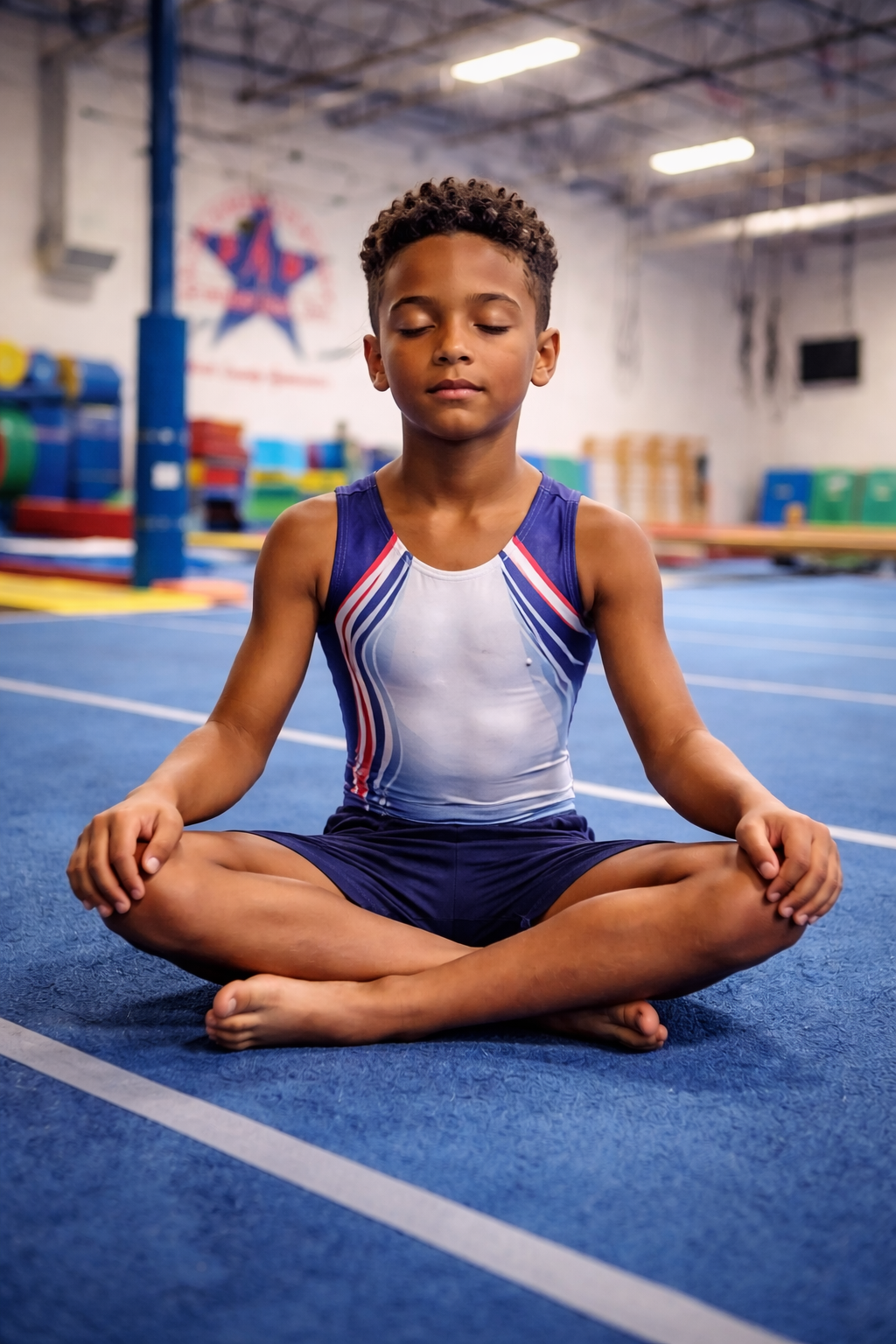
Close their eyes.
See the routine perfectly in their mind.
Watch it from different angles (first-person, side view, even from above).
Add sensory details:
What does the gym smell like?
What do you hear?
What does the carpet feel like on your feet?
The more real the visualization, the stronger the neural pathways become.
When an athlete visualizes a routine 50–100 plus times correctly, the brain begins to wire those movements as familiar patterns.
Then something amazing happens.
When they perform it successfully, it feels like déjà vu. After a hit routine, I used to say, "I feel like I've been here before."
Because I had already done it so many times in my mind.
We consistently see higher success rates, fewer falls, and more confident performances when visualization becomes a habit.
The Mental Game Is the Game
Gymnastics requires strength, flexibility, coordination, and courage.
But none of it matters if the mind isn't right.
At North County Gymnastics & The Gyminny Kids, our coaches are trained not only in physical progressions but in mental preparation techniques that help athletes perform safely and confidently over the long term.
Because when the nervous system feels safe…
When pressure is managed…
When thoughts are intentional…
When visualization becomes routine…
That's when athletes are ready to perform high-flying, daring skills successfully and safely, year after year.
And the best part?
These tools don't just apply to gymnastics.
They apply to school.
To relationships.
To business.
To life.
Master the mind, and the body follows.
Happy Training!
Daniel Gundert
Gyminny Kids Owner, former gymnast, gymnastics judge, coach, and parent to five competitive gymnasts
Frequently Asked Questions About Mental Blocks in Gymnastics
What causes mental blocks in gymnastics?
Mental blocks in gymnastics are usually caused by the nervous system perceiving a skill as dangerous. When the brain senses risk, it activates a self-preservation response that can prevent the body from performing a movement, even if the athlete has done it successfully before.
Mental blocks can also be triggered by:
Internal pressure to perform perfectly
External pressure from parents or competition
Stress outside the gym (school issues, bullying, family changes)
A previous fall or injury
Mental blocks are not a lack of talent or effort; they are a natural protective response.
How do you help a gymnast overcome a mental block?
The most effective way to overcome a mental block is to reduce pressure and rebuild confidence through progressions.
At North County Gymnastics & The Gyminny Kids, we:
Break the skill down into smaller steps.
Remove the athlete from the stressful setting (like high beam or high bar).
Rebuild consistency on easier surfaces.
Gradually reintroduce the skill once confidence returns.
Teach verbal routines and visualization techniques.
Reward effort and attitude.
Confidence comes from stacking small wins over time.
At North County Gymnastics & The Gyminny Kids, with locations in 4S Ranch, Poway, Carlsbad, La Costa, La Jolla, and UTC, our coaches are trained in both physical skill development and mental performance strategies.
Should parents coach their child through a mental block at home?
No. Please do not. In most cases, additional coaching at home increases pressure and worsens the block.
Athletes experiencing a mental block benefit from a calm, supportive environment. Encouragement is helpful. Technical corrections or repeated conversations about the skill outside of practice increase anxiety.
The best approach is to trust the coaches and focus on effort and mindset, not outcomes.
What is a verbal routine in gymnastics?
A verbal routine is a sequence of positive cues or affirmations that an athlete repeats internally while performing a skill or routine.
For example, on the balance beam:
"Pull up. Square hips. Spot. Jump. Stick. Finish."
A verbal routine replaces fearful thoughts like "I hope I don't fall" with focused instructions. This improves concentration and reduces anxiety during performance.
Does visualization really help athletes perform better?
Yes. Visualization strengthens neural pathways in the brain by mentally rehearsing a skill before physically performing it.
When athletes:
Close their eyes.
See the routine successfully.
Imagine the sights, sounds, and sensations.
Repeat this process consistently. The car ride to the competition and the time spent waiting for thier turn are excellent moments to breathe, close your eyes, and visualize a successful routine.
The brain begins wiring the movement as familiar and achievable.
Many athletes report that, after consistent visualization, successfully performing a skill feels like déjà vu because they have already completed it many times in their minds.
Are mental blocks normal in youth sports?
Yes. Mental blocks are very common in gymnastics and other high-skill sports.
They can happen at any level, recreational or competitive, and often occur during skill upgrades, growth spurts, parental over-involvement, or stressful life events.
With proper coaching, patience, and mindset training, most mental blocks can be overcome.
How long does it take to overcome a mental block?
There is no set timeline. Some athletes work through a block in days. Others may need weeks or months. Sometimes longer.
The key factors that influence recovery include:
Reducing pressure
Breaking skills into manageable progressions
Building consistency
Practicing positive self-talk
Using visualization regularly
Focusing on controlables. Attitude and effort.
Rushing the process often delays progress. Patience builds long-term confidence.
Recreational Gymnastics Page→]
Our programs build confidence, character, and growth mindset→]
13 Reasons Why Gyminny Kids Is San Diego's Premier Gymnastics School→]