
How Gymnastics Develops Fine and Gross Motor Skills: What the Research Shows
Owner, North County Gymnastics & The Gyminny Kids
Former Gymnast, Coach, Judge, and Father of Five Competitive Gymnasts
When parents sign their children up for gymnastics classes, they usually think about flips, cartwheels, and fun.
But something even more important is happening behind the scenes.
Gymnastics is one of the most powerful activities for developing motor skills in children, especially during the early years of growth when the brain and body are learning how to work together.
In fact, pediatric specialists often point to gymnastics as one of the best ways to develop both fine motor skills and gross motor skills, the two foundational systems that help children move, learn, and interact with the world.
At North County Gymnastics & The Gyminny Kids, we see these changes every day in the gym. Children who start unsure of their bodies begin moving with coordination, control, and confidence.
This is one reason many educators say:
Gymnastics is the foundation for all sports.
Or as we like to say at Gyminny Kids,
Start with Gymnastics, go anywhere!
Let's look at why.
What Are Motor Skills?
Motor skills are the abilities that allow children to move their bodies with purpose and control.
There are two primary types.
Gross Motor Skills
Gross motor skills involve large-muscle movements and full-body coordination.
Examples include
• running
• jumping
• climbing
• balancing
• swinging
• rolling
• landing safely
These movements require coordination between the brain, muscles, and nervous system.
They are the foundation for sports and physical confidence.
Fine Motor Skills
Fine motor skills involve smaller muscle groups, especially the hands and fingers.
Examples include
• gripping
• hand positioning
• body awareness
• coordination between eyes and hands
• controlled movement
• Reaching for bubbles
Fine motor skills are critical for everyday activities like writing, tying shoes, and using tools.
Gymnastics develops both systems simultaneously, which is why it is such a powerful activity for growing children.
Why Gymnastics Is So Effective for Motor Skill Development
Unlike many sports that specialize in a few movements, gymnastics exposes children to a wide range of physical challenges.
In a single class, children might
• climb
• swing
• balance
• crawl
• roll
• jump
• hang
• support their body weight
Each of these activities trains different motor pathways.
The result is whole-body coordination.
Research in pediatric motor development shows that activities involving balance, body control, and spatial awareness stimulate brain development and strengthen neural connections between movement and cognition.
That is exactly what gymnastics does.
How Gymnastics Improves Gross Motor Skills
Gymnastics is one of the most effective ways to develop large muscle coordination.
Every apparatus challenges the body differently.
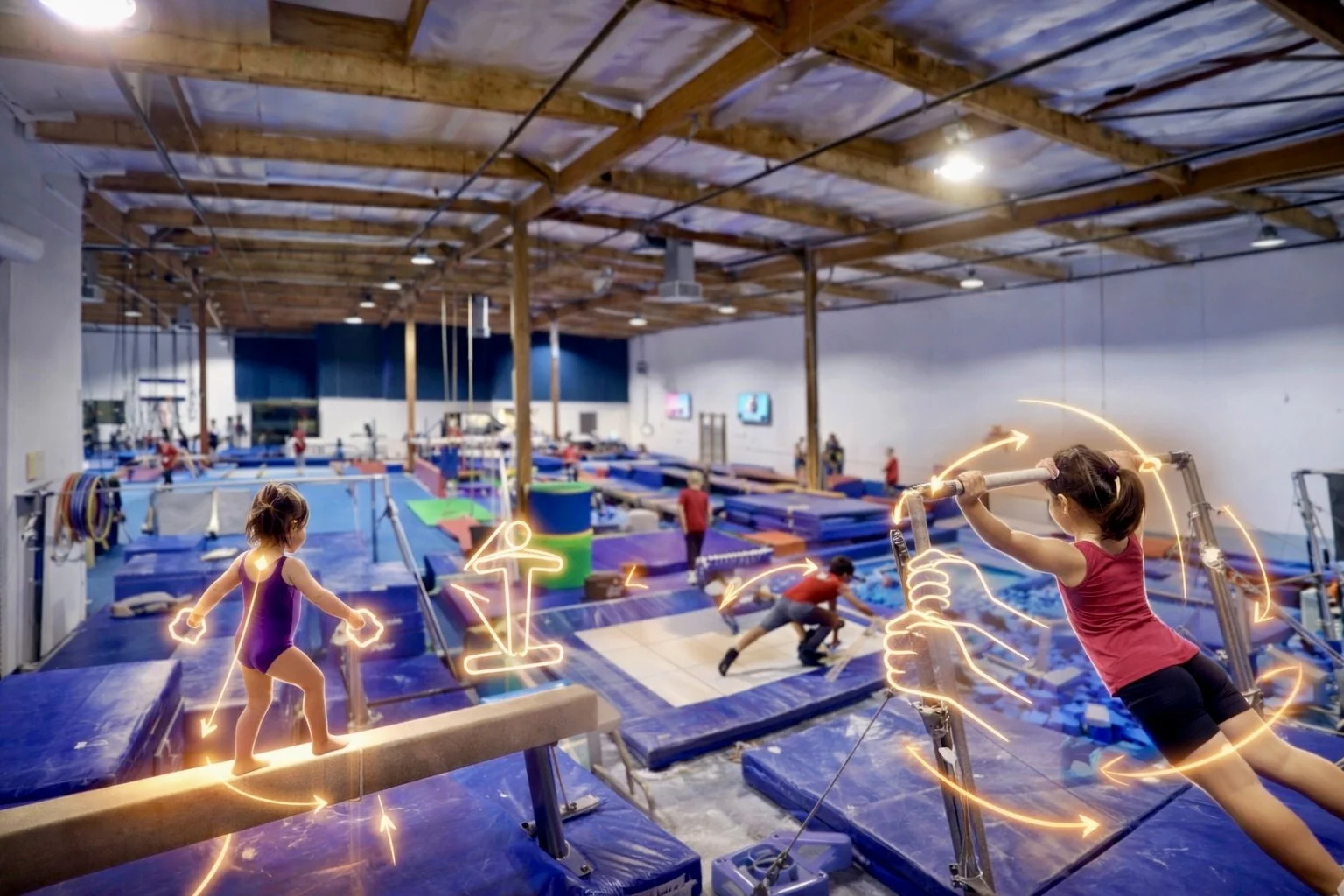
Balance Beam
Beam teaches children how to control their center of gravity.
They learn:
• balance
• posture
• stability
• focus
Bars and Rings
Hanging and swinging develop
• upper body strength
• shoulder stability
• grip strength
• body and air awareness
Tumbling and Floor
• explosive power
• coordination
• controlled landings
• spatial awareness
Vault and Trampoline
These activities train
• jumping mechanics
• speed and timing
• safe landing techniques
• quick-twitch muscle
Over time, children learn how to move their bodies with confidence and precision.
How Gymnastics Builds Fine Motor Skills
While gymnastics is known for big movements, it also develops smaller movement patterns.
Gymnasts constantly practice
• gripping bars
• pointing toes
• controlled hand placement
• body tension and alignment
• Weight transfers while in support
These small adjustments require precise muscle control.
For young children, this type of training improves.
• hand strength
• body awareness
• coordination between the brain and muscles
These improvements often translate into better focus in school and improved coordination in everyday activities.
Why Early Childhood Is the Best Time to Start
Children develop motor skills fastest during their early years.
That is why toddler gymnastics classes and gymnastics classes for toddlers can have such a powerful impact.
During these early stages, the brain is forming millions of new connections every day.
Movement strengthens those connections.
In a structured gymnastics environment, toddlers learn.
• how to climb safely
• how to balance
• how to jump and land
• how to follow directions
• how to interact with other children
It is one of the most complete developmental environments available for young children.
Gymnastics Also Improves Confidence and Listening Skills
Motor skills are only part of the story.
Gymnastics classes also teach:
• discipline
• listening skills
• patience
• perseverance
• body awareness
Children learn how to try something difficult, fall safely, and try again.
That process builds confidence.
It also prepares them for success in other sports and in school.
Why Many Athletes Start with Gymnastics
Many professional athletes in sports like
• football
• baseball
• soccer
• diving
• skiing
• martial arts
began their athletic journey with gymnastics.
The reason is simple.
Gymnastics teaches body control.
Athletes who understand how their bodies move in space tend to perform better across nearly every sport.
What Parents Often Notice First
Parents usually notice improvements quickly.
Children who begin gymnastics classes for kids often develop
• stronger balance
• better coordination
• improved posture
• more confidence on playground equipment
• greater focus on structured activities
Many parents tell us the same thing.
Their child becomes more aware of their body and more confident using it.
Why Families Choose Gyminny Kids
At North County Gymnastics & The Gyminny Kids, our programs are designed to develop the whole child.
Our classes focus on
• safe skill progressions
• professional career coaches
• structured learning environments
• positive encouragement
• long-term athletic development
We also offer unique benefits that families appreciate.
• No registration or annual fees
• Unlimited makeup classes if you miss
• Flexible scheduling
• Live camera viewing in many areas of the gym, so there are no blind spots
• Classes starting as early as 9 months and toddler years
Most importantly, our goal is:
Help children build confidence, coordination, and character through sport.
Quick Links
• Register for a free trial class today→]
• Recreational versus team: which is better for my child?→]
• Learn more about GK's no registration or annual fees pricing model→]
• Competitive gymnastics training→]
• Gymnastics mindset training→]
• Why Families Choose Gyminny Kids→]
Frequently Asked Questions
How does gymnastics improve motor skills in children?
Gymnastics improves motor skills by training balance, coordination, strength, and body awareness. Children practice movements such as climbing, jumping, balancing, swinging, and tumbling, which strengthen both fine motor control and large muscle coordination.
What age should kids start gymnastics?
Children can begin gymnastics as early as 9 months old in parent participation classes. Many toddlers start developing motor skills through structured toddler gymnastics classes between the ages of 1 and 3.
Are gymnastics classes good for toddlers?
Yes. Gymnastics classes for toddlers help develop balance, coordination, spatial awareness, and listening skills during an important stage of brain development.
Do gymnastics classes help with coordination?
Yes. Gymnastics improves coordination by teaching children how to control their bodies through balance, controlled movement, and strength exercises.
Are gymnastics classes good for girls?
Absolutely. Many families enroll their children in girls' gymnastics classes to build strength, flexibility, coordination, and confidence while having fun in a safe, structured environment.