
Common Gymnastics Injuries in Kids, and How Quality Programs Help Prevent Them
Gymnastics is one of the best activities a child can do for strength, coordination, balance, body awareness, discipline, and confidence. It teaches kids how to move well, fall safely, listen, focus, and push through challenges. It is also a sport with significant physical demands, which means parents should care deeply about how a program is run, not just what skills are being taught.
Like every athletic activity, gymnastics carries some injury risk. The goal is not to pretend that risk does not exist. The goal is to reduce preventable risk with smart coaching, safe progressions, quality equipment, age-appropriate training, and close supervision. USA Gymnastics notes that more than 40 percent of gymnastics injuries are overuse injuries, which are often preventable, and pediatric sports medicine sources consistently point to the wrists, ankles, knees, lower back, and growth plates as common trouble spots for young gymnasts.
At North County Gymnastics & The Gyminny Kids, we believe families deserve more than a room full of equipment. They deserve a structured, professional program that uses safety systems, trained coaches, and proper progressions to help children build skills without unnecessary wear and tear. Our website highlights free trial classes, career coaches, first-aid and CPR-certified staff, and purpose-built Olympic training equipment across locations, all of which support a safer learning environment.
What are the most common gymnastics injuries in kids?

1. Ankle sprains
Ankle sprains are one of the most common gymnastics injuries, especially during landings, dismounts, and tumbling. Children's Health notes that lateral ankle sprains frequently happen when a gymnast lands awkwardly from a jump or dismount.
How quality programs help reduce risk:
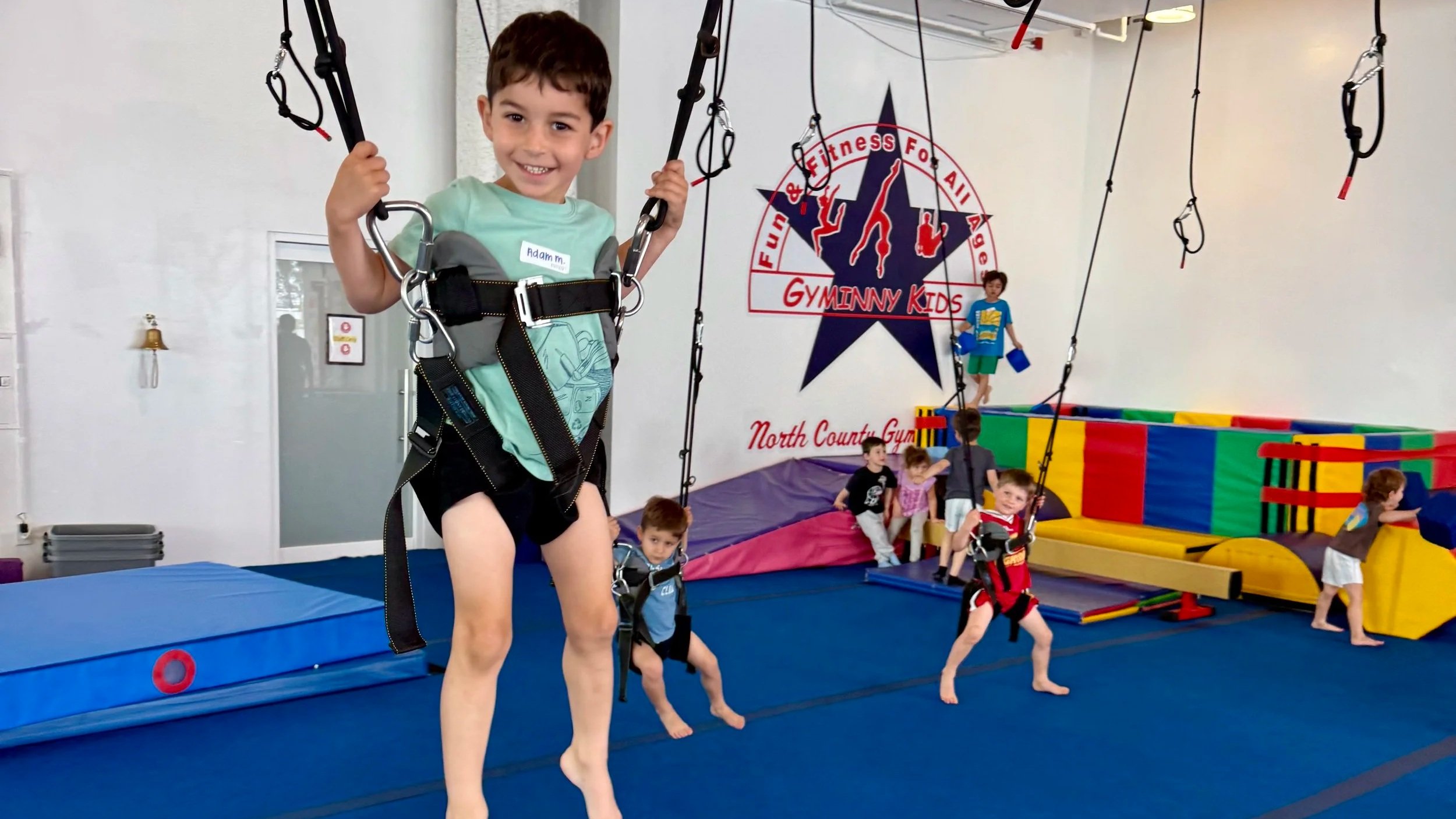
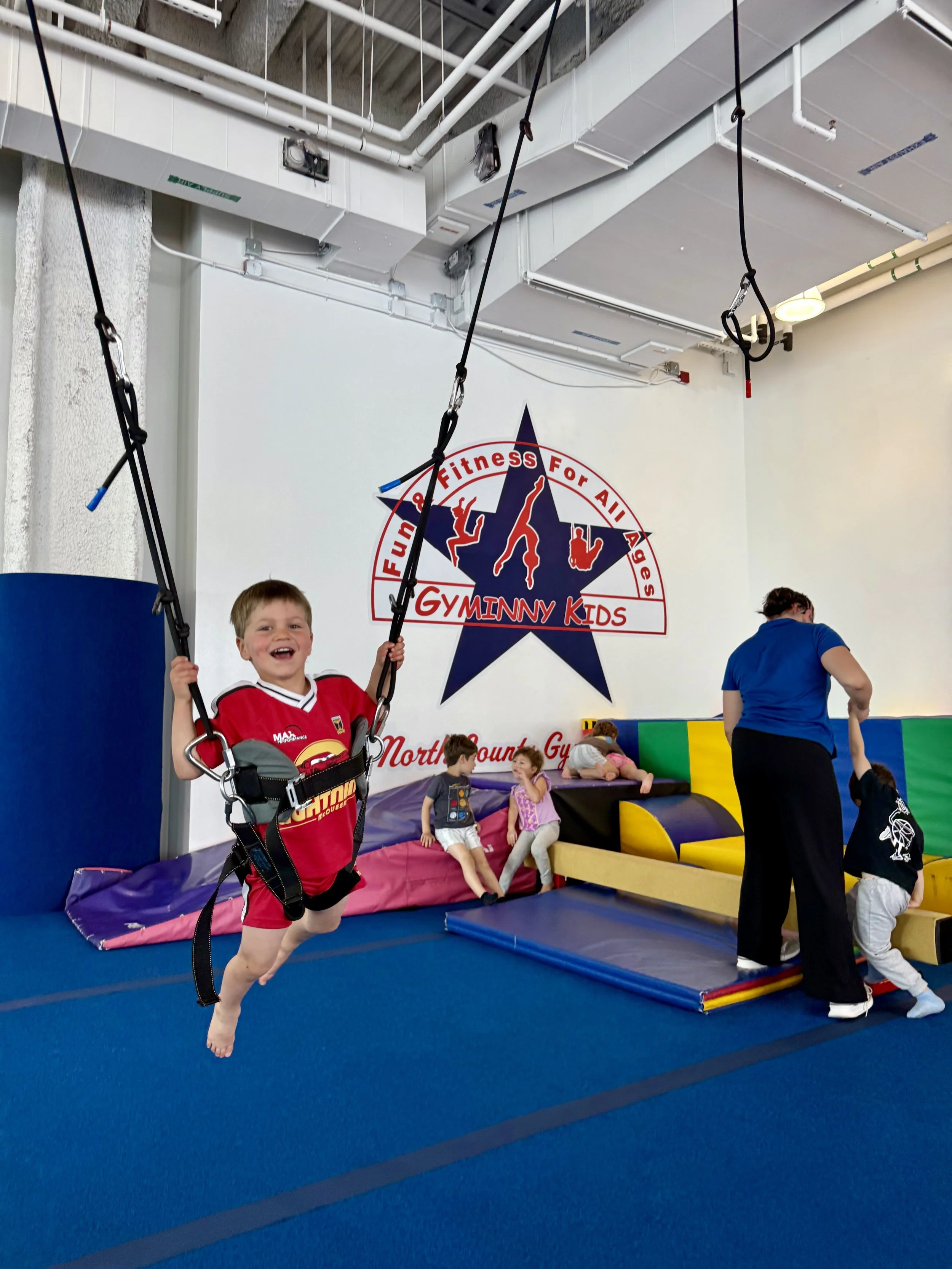
A good gymnastics program does not rush high-impact skills. It builds a strong foundation first, including body control, jumping mechanics, balance, and a safe landing position. Spring floors, padded landing zones, and progressive drills matter because they reduce repeated pounding and give kids a better chance to learn proper technique before moving on to harder skills. Gyminny Kids also uses equipment such as Bungee Bouncers, which lowers impact and reduces stress on joints during dynamic movement and tumbling.
2. Wrist pain and gymnast's wrist
Wrist pain is common in gymnastics because the sport places repeated weight-bearing stress on the upper body. Children's Colorado reports that wrist pain affects roughly 70 to 80 percent of high-level gymnasts, and Boston Children's describes gymnast's wrist as an overuse injury involving the growth plate in young athletes.
How quality programs help reduce risk:
This is where smart programming matters. Young athletes need proper warm-ups, skill progressions, rest, technique correction, and training loads that match their age and readiness. USA Gymnastics emphasizes that overuse injuries are common and often preventable. A program that values long-term development over rushing skills and padded, rebound surfaces significantly lowers the risk of overuse injuries.
3. Lower back pain and stress injuries
Back pain is another common issue in gymnastics, particularly among athletes who perform repeated backbending, tumbling, jumps, and impact-heavy skills. Pediatric sports medicine guidance identifies spondylolysis, a stress injury of the lower spine, as a known concern in sports such as gymnastics that involve repeated extension and impact.
How quality programs help reduce risk:
A safer program teaches shapes, hollow control, core strength, flexibility, and proper mechanics before repeatedly asking a child to arch, twist, and flip at high intensity. Coaches should also notice when fatigue is changing a child's technique. Good coaching is not only about what kids can do. It is about what they are ready to do safely. At Gyminny Kids, they use proper progressions and do not rush children through skills.
4. Sprains, strains, and growth-plate irritation
Sprains and strains are common in youth sports, and gymnastics adds repetitive stress through tumbling, swinging, jumping, and landing. Young athletes are also more vulnerable to growth-plate injuries because their bones are still developing. Boston Children's, Lurie Children's, and orthopedic guidance for youth gymnastics all highlight these overuse and growth-related concerns.
How quality programs help reduce risk:
Progressive repetition is helpful. Excessive repetition is not. The best programs create structure, rotate stations, vary impact, and gradually build strength and control using spring floors, soft landing mats, and foam pits. That is one reason equipment matters. Gyminny Kid's Bungee Bouncers allow kids to bounce, tumble, flip, and swing with reduced joint impact while still building coordination and confidence.
5. Fractures, dislocations, and concussions
Acute injuries such as fractures, dislocations, and concussions are less common than routine overuse aches and sprains, but they can happen, especially with falls or missed landings. Orthopedic and pediatric resources identify fractures, dislocations, and head injuries among the possible acute gymnastics injuries seen in children.
How quality programs help reduce risk:
No gym can promise zero injuries. What matters is lowering the chance of preventable accidents through close spotting, active supervision, padded surfaces, smart station setup, age-appropriate assignments, and never allowing kids to work beyond their control level. That is why families should look closely at coaching quality and facility design, not only class price or convenience.
How quality gymnastics programs help keep kids safer
A quality gymnastics program should focus on four things:
1. Safe progressions
Kids should earn the next step. They should not be rushed into skills because they are brave or eager.
2. Professional coaching
Parents should look for trained, attentive coaches who correct form, manage class flow, and recognize fatigue or unsafe mechanics early. Gyminny Kids emphasizes career coaches and first-aid and CPR-certified staff on its location pages.
3. Purpose-built equipment
Spring floors, soft landing areas, foam pits, and other training tools are not luxury items. They are part of reducing impact and building confidence safely. Gyminny Kids camps and facility pages highlight Olympic apparatus, padded environments, and signature Bungee Bouncer systems designed for skill development with lower impact on the body.
4. A long-term mindset
The best gyms care more about healthy progression than quick tricks. That matters because overuse, burnout, and poor mechanics can pile up over time in youth sports. Pediatric guidance warns that overtraining, overuse, and burnout are real concerns for young athletes.
Why parents in San Diego choose Gyminny Kids
At North County Gymnastics & The Gyminny Kids, we take safety seriously because parents trust us with their children. Our programs are built around structure, supervision, and progression. Families can start with a free trial class, and our gyms are designed to support kids at different ages, stages, and ability levels. Our locations also offer open gym, camps, classes, and adaptive options, which give families flexibility without sacrificing quality.
We are not trying to create reckless, shortcut-based gymnastics. We are trying to help children become stronger, more coordinated, more confident, and more resilient in a setting that respects both safety and progress.
Gymnastics is the foundation for all sports. Start with gymnastics, go anywhere!
Signs parents should not ignore
Parents should pay attention if a child has ongoing wrist pain, limps after class, complains of back pain with backbends or tumbling, struggles to bear weight through the arms, or keeps having the same soreness over and over. Persistent pain, especially around growth plates or with impact, deserves evaluation rather than being brushed off as normal soreness. Pediatric sports medicine sources recommend medical evaluation for pain that does not improve or keeps returning.
Final thoughts
Gymnastics is incredibly valuable for children, but not all gymnastics programs are created equal. The right program can help reduce preventable injuries through coaching quality, smart progressions, strong supervision, and better equipment. That is what families should be looking for.
If you are searching for gymnastics classes for kids in San Diego, and you want a program that values both fun and safety, Gyminny Kids offers a premium experience built around professional coaching, real structure, and long-term child development.
Quick Links
Proudly Serving Families In:
• 4S Ranch
• Poway
• Carlsbad
• La Costa
FAQ
What is the most common gymnastics injury in kids?
Ankle sprains and wrist overuse injuries are among the most common. Wrist pain is especially common in gymnastics because children repeatedly bear weight through their hands, while ankle sprains often happen during landings and dismounts.
Can gymnastics be safe for young children?
Yes, when it is taught in a structured, age-appropriate program with trained coaches, proper equipment, and clear progressions. Injury risk goes up when skills are rushed, technique breaks down, or training load is poorly managed.
What is gymnast's wrist?
Gymnast's wrist is an overuse injury affecting the growth plate at the wrist in young athletes. It is caused by repeated loading through the hands during practice and should not be ignored if pain persists.
How do good gymnastics gyms help prevent injuries?
They use proper progressions, quality surfaces, close supervision, smart warm-ups, and equipment that reduces the risk of repeated impact. They also focus on technique and long-term development instead of rushing children into advanced skills.
Are overuse injuries more common than major accidents in gymnastics?
Often, yes. USA Gymnastics says over 40 percent of gymnastics injuries are overuse injuries, which is why rest, progression, and technique matter so much.
When should a parent take a child to see a doctor?
A child should be evaluated if pain lasts more than a few days, recurs, causes limping, affects weight-bearing, or occurs during backbends, tumbling, or wrist loading. Persistent pain should not be treated like normal soreness.