
How Gymnastics Strengthens Children's Bones: What the Science Says About Impact Activity
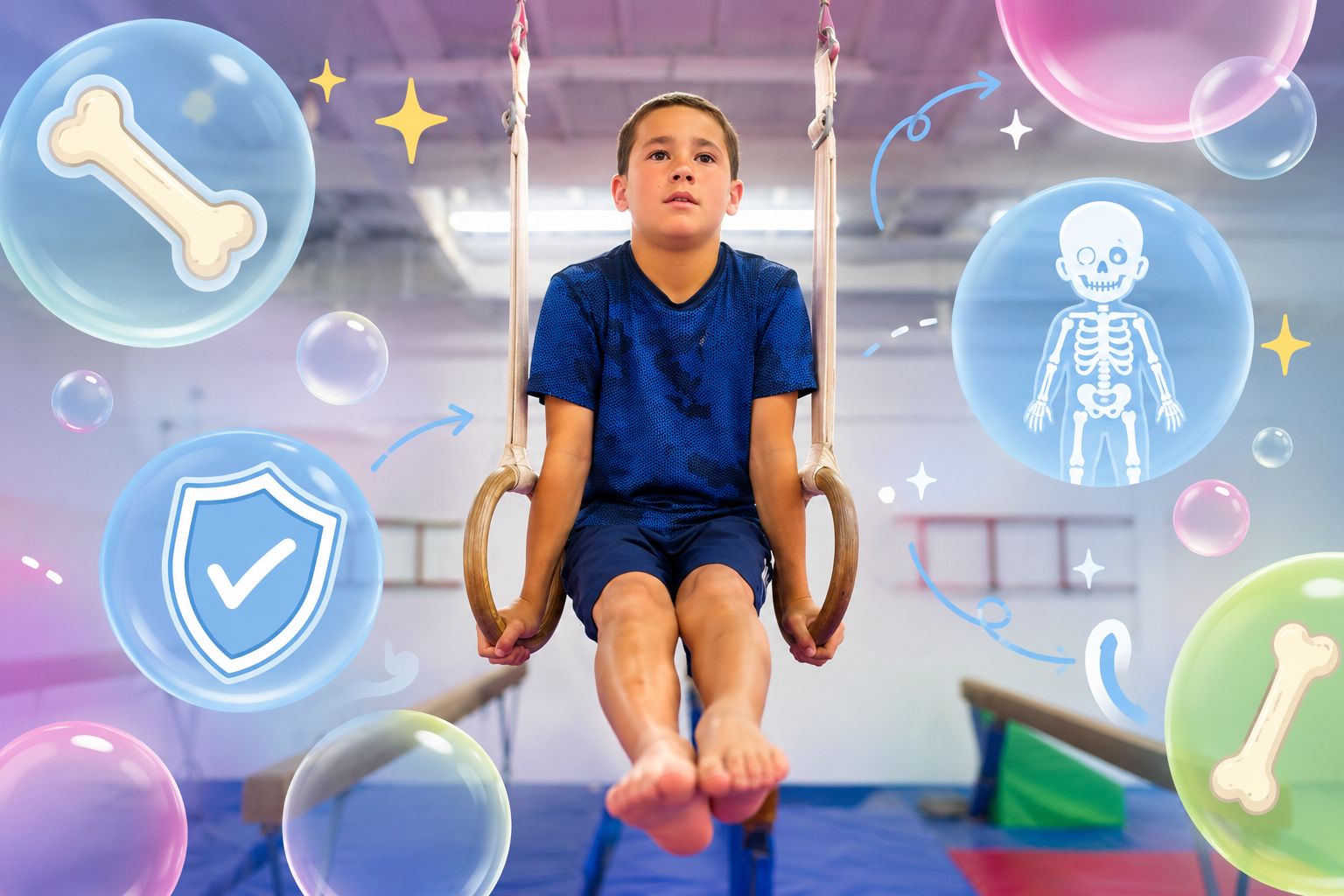
Parents often think about gymnastics in terms of strength, flexibility, coordination, and confidence. But one of the biggest long-term benefits of gymnastics classes for kids is something many families do not immediately think about: bone health.
A common question parents ask is, "Is gymnastics good for children's bone development?" According to research, the answer is yes.
Childhood is one of the most important periods for building strong bones that last into adulthood. The activities kids participate in during these years can directly influence bone density, strength, posture, coordination, and injury resistance later in life. Gymnastics is one of the few activities that combine impact loading, balance training, coordination, strength development, and body awareness.
At North County Gymnastics & The Gyminny Kids, we see these benefits every day across our preschool, recreational, and competitive programs. As a parent of five gymnasts myself, I have watched firsthand how gymnastics helps children become physically stronger, more confident, and more resilient over time.
Why Bone Development Matters During Childhood
Bones are constantly changing and rebuilding throughout life, but childhood and adolescence are when the body builds the majority of its bone mass.
According to the National Institutes of Health and the American Academy of Pediatrics, children develop most of their peak bone mass before adulthood. Activities that place healthy stress on the bones during these years help stimulate bone growth and improve bone density.
That is why doctors and researchers consistently recommend weight-bearing and impact-based activities for children.
Gymnastics naturally includes many of these movements:
Jumping
Landing
Climbing
Swinging
Balancing
Running
Supporting body weight through the arms and legs
These activities create healthy mechanical stress on the bones, which signals the body to strengthen them over time.
Research published in the Journal of Bone and Mineral Research has shown that children who participate in impact-based sports often demonstrate higher bone mineral density than less active peers.
Gymnastics Is Different From Many Other Kids Activities
Not all physical activities stimulate bone development equally.
Swimming, for example, is fantastic for cardiovascular health and coordination, but because the body is supported by water, it creates less bone-loading stimulus. Gymnastics classes, on the other hand, require children to support and control their body weight in many different ways.
This matters because bone responds to force.
When kids jump, rebound, tumble, hang from bars, or land safely on padded surfaces, their skeletal system adapts and becomes stronger.
Gymnastics is unique because it develops:
Upper body bone strength
Lower body bone strength
Core stability
Balance and coordination
Body control and spatial awareness
Gymnastics is the foundation for all sports. Start with gymnastics, go anywhere!
What Science Says About Gymnastics and Bone Density
Multiple studies have found that gymnasts often have higher bone density than non-gymnasts.
A study published in Pediatrics found that impact-loading sports during childhood can significantly improve bone strength and long-term skeletal health. Another study in the Journal of Clinical Endocrinology & Metabolism showed that jumping and landing activities improve bone mineral accrual during key developmental years.
Researchers consistently point to several factors that make gymnastics beneficial for bone development:
Repeated impact loading
Multi-directional movement
Weight-bearing activity
Coordination training
Muscle strengthening
These are all naturally built into quality recreational gymnastics classes.
Importantly, children do not need to become competitive gymnasts to benefit. Even beginner and recreational gymnastics classes provide many of these developmental advantages.
Strong Bones Help Kids Beyond The Gym
The benefits of bone development extend far beyond gymnastics itself.
Children with stronger bones and better coordination often experience:
Improved posture
Better balance
Increased athletic confidence
Reduced injury risk
Better playground confidence
Improved overall physical literacy
Physical literacy means children learn how to move confidently and efficiently in the world around them. Kids who develop strong foundational movement patterns early often transition more successfully into other sports later.
That is one reason gymnastics cross-training is so common among athletes in:
Football
Baseball
Soccer
Basketball
Cheer
Diving
Martial arts
Dance
Skiing
Volleyball
At Gyminny Kids, many families use kids' gymnastics classes as either a primary activity or as a foundation alongside other sports.
The Importance Of Safe Progressions
While impact activity is beneficial for bone development, quality coaching and proper progressions matter tremendously.
Parents should look for gymnastics programs that emphasize:
Strength development
Flexibility training
Proper supervision
That is what families should be looking for.
At North County Gymnastics & The Gyminny Kids, safety and structure are a major focus across all locations. Our programs are designed to help children build confidence and physical strength gradually, not rush through skills before they are ready.
Our gyms utilize:
Professional spotting systems
Foam pits
Progressive skill stations
Padded landing surfaces
Structured lesson plans
These systems help reduce unnecessary wear and tear while allowing children to build strength and coordination safely.
Bone Health Is Also Connected To Confidence
One thing that often gets overlooked in discussions about physical development is confidence.
Children who feel physically capable tend to participate more actively on playgrounds, in PE class, and in other sports. They are often more willing to try new activities because they trust their bodies.
As a father, I have seen this repeatedly with my own children. Gymnastics teaches kids how to fall safely, control their bodies, and persist through challenges. Those lessons transfer well beyond the gym.
We regularly hear parents say things like:
"My daughter became so much more confident physically after starting gymnastics. She used to avoid climbing structures at the park, and now she's constantly active and trying new things." — Gyminny Kids Parent Review.
Another parent shared:
"Gymnastics has helped my son become stronger, more coordinated, and more focused in other sports. His balance and confidence improved dramatically." — Google Review.
These changes matter because active children are more likely to continue healthy habits long-term.
Recreational Gymnastics Classes Still Provide Major Benefits
Some parents assume only competitive gymnastics provides physical benefits, but recreational gymnastics classes are incredibly valuable for bone development and overall health.
Even one or two classes per week can help children:
Build foundational strength
Improve coordination
Increase physical activity levels
Develop healthier movement habits
Improve flexibility and balance
This is especially important today, as many children spend more time sitting indoors and on screens than previous generations did.
Gymnastics gives kids an opportunity to get off the screens and into the gym while developing skills that support long-term health.
Nutrition Still Matters
Physical activity is only one piece of the puzzle.
Strong bone development is also supported by:
Calcium
Vitamin D
Protein
Hydration
Sleep
Overall nutrition
Parents should view gymnastics as part of a healthy overall lifestyle that includes proper nutrition and recovery.
The combination of physical activity and healthy habits during childhood can have lifelong benefits.
Why Families Choose Gymnastics Early
One of the biggest advantages of gymnastics is that children can start very young.
Toddler and preschool gymnastics classes help introduce:
Coordination
Balance
Body awareness
Confidence
These early years are foundational for physical development.
At Gyminny Kids, we often tell families that gymnastics builds the athletic base that supports nearly every other activity children will try later.
That foundation matters.
Final Thoughts
So, is gymnastics good for children's bone development?
The science strongly suggests yes.
Quality gymnastics classes provide impact-based physical activity that helps stimulate bone growth, improve coordination, strengthen muscles, and build long-term physical confidence.
Beyond the physical benefits, gymnastics also teaches discipline, perseverance, focus, and resilience. These lessons help children far outside the gym environment.
Whether a child participates recreationally or competitively, gymnastics can play an important role in helping kids become stronger, healthier, and more confident as they grow.
Proudly Serving Families In:
• 4S Ranch
• Poway
• Carlsbad
• La Costa
Quick Links
• Register for a free trial class today→]
• Adaptive gymnastics classes at Gyminny Kids→]
• Learn more about GK's no registration or annual fees pricing model→]
• Competitive gymnastics training→]
• Gymnastics mindset training→]
• Why Families Choose Gyminny Kids→]
By Daniel Gundert, Owner of North County Gymnastics & The Gyminny Kids, former gymnast, lifelong coach, former national gymnastics judge, best-selling author, and father of five competitive gymnasts.
Frequently Asked Questions
Is gymnastics good for children's bone development?
Yes. Research shows that impact-based activities, such as gymnastics, can help improve bone density and skeletal strength during childhood.
At what age can children start gymnastics?
Many children can begin parent-and-me classes around 9 months old, while structured preschool gymnastics programs typically start around 2 to 3 years old.
Do recreational gymnastics classes help strengthen bones?
Absolutely. Recreational gymnastics classes still involve jumping, balancing, climbing, and bodyweight activity that supports healthy bone development.
Does gymnastics help prevent injuries?
Quality gymnastics programs can improve balance, coordination, flexibility, and body control, which may help reduce injury risk in other activities.
Is gymnastics safe for growing children?
When taught with proper progressions, qualified coaching, and appropriate equipment, gymnastics can be a safe and highly beneficial activity for children.