
Can Gymnastics Help Kids with Anxiety? How Structured Movement Supports Mental Health
When a child is dealing with anxiety, parents often look for healthy, practical ways to help. Therapy, routines, sleep, and family support all matter. So does physical activity.
That leads many parents to an important question: Can gymnastics help kids with anxiety?
In many cases, yes, it can help.
Gymnastics is not a replacement for mental health care when a child needs clinical support, but it can be a valuable part of the overall picture. Research consistently shows that physical activity supports brain health, emotional balance, and mental well-being in children. The CDC says physical activity helps children think, learn, problem-solve, and achieve better emotional balance, and notes that it can reduce anxiety and depression.
For many children, especially those who do well with structure, coaching, repetition, and clear routines, gymnastics can provide a steady outlet that supports both body and mind.
Why anxiety and movement are connected
Anxiety often shows up physically in kids.
Sometimes it looks like restlessness. Sometimes it looks like shutting down. Sometimes it shows up as stomach aches, clinginess, irritability, trouble focusing, or fear of trying something new.
Physical activity can help because kids do not always process stress best by talking about it. Many process it through action, rhythm, repetition, and physical release.
Exercise has been linked to lower anxiety symptoms in children and adolescents, and recent reviews have found mental health benefits from physical activity across a wide range of young people. A 2025 systematic review and meta-analysis found that exercise training lowered anxiety symptoms in children and adolescents, while a 2024 JAMA Pediatrics review found significant mental health benefits from physical activity interventions in children and adolescents with neurodevelopmental disorders.
That does not mean every child needs intense sports. It means the right kind of movement, in the right environment, can make a real difference.
Why gymnastics can be especially helpful for anxious kids
Not every sport feels the same to a child with anxiety.
Some activities feel chaotic. Some feel overstimulating. Some have too much standing around, too much pressure, or not enough guidance.
Gymnastics is different in a few important ways.
1. It gives children structure and predictability
Anxious children often do better when they know what is coming next.
A good gymnastics class follows a clear rhythm. Warm up. Rotation. Skill practice. Repetition. Encouragement. Closure. That kind of structure helps children feel safe because the environment is organized and expectations are clear.
Predictability matters. When kids know the routine, they can settle into it.
2. It channels nervous energy into something productive
Many anxious kids have energy that needs somewhere to go.
Running, climbing, balancing, jumping, swinging, rolling, and landing all give that energy a place to move. Instead of carrying anxiety in their body, they get to work through it physically.
For some children, that physical outlet becomes one of the healthiest parts of their week.
3. It builds confidence through small wins
Anxiety often makes kids doubt themselves.
Gymnastics helps rebuild confidence one step at a time. A child learns to hang from a bar. Then jump to a block. Then do a forward roll. Then walk the beam alone. These small victories matter.
Progress in gymnastics is visible and measurable. Children can feel themselves getting stronger, braver, and more capable. That kind of earned confidence often carries into school, playground, friendships, and everyday life.
4. It improves focus and body awareness
Gymnastics asks children to listen, follow directions, and stay present. They have to think about where their hands go, how their feet land, how to control their body, and what comes next.
That combination of movement and concentration can be grounding. It helps shift attention away from racing thoughts and toward what the body is doing in the moment.
5. It teaches emotional regulation
Gymnastics does not just teach skills. It teaches patience, resilience, and how to keep going after mistakes.
A child may feel nervous before trying something new. Then they learn to take a breath, listen to the coach, and try anyway. That process matters.
Over time, kids start learning something powerful: I can feel nervous and still move forward.
That is not just a gymnastics lesson. That is a life lesson.
What about toddlers and younger children?
Gymnastics classes for toddlers and preschoolers can be especially helpful because early childhood is often when parents first notice anxiety-related behaviors such as separation difficulties, sensory sensitivity, fearfulness, or trouble with transitions.
At that age, the goal is not pressure or performance. It is comfort, familiarity, and positive exposure.
A well-run toddler or preschool gymnastics class can help young children:
Build confidence away from home
Practice following routines
Improve coordination and body control
Get used to a group setting
Learn through play in a safe environment
Even simple things, like climbing a soft obstacle, jumping into a pit, flipping in the bungee bouncers, or following a coach through a circuit, can help a child feel more secure in their body and surroundings.
Can gymnastics help children with special needs or sensory differences?
It can, especially when the program is thoughtful and supportive.
Physical activity interventions have shown mental health benefits in children and adolescents with neurodevelopmental disorders, including gains in psychological well-being and reductions in internalizing problems.
That is one reason adaptive gymnastics and special needs gymnastics can be so valuable. These classes can offer:
smaller groups
more individualized pacing
supportive coaching
sensory aware instruction
a lower-pressure environment
For children with anxiety, autism, ADHD, developmental delays, or sensory processing challenges, the right gymnastics setting can provide both physical skill development and emotional support.
Is it normal for kids to feel anxious when starting gymnastics?
Absolutely.
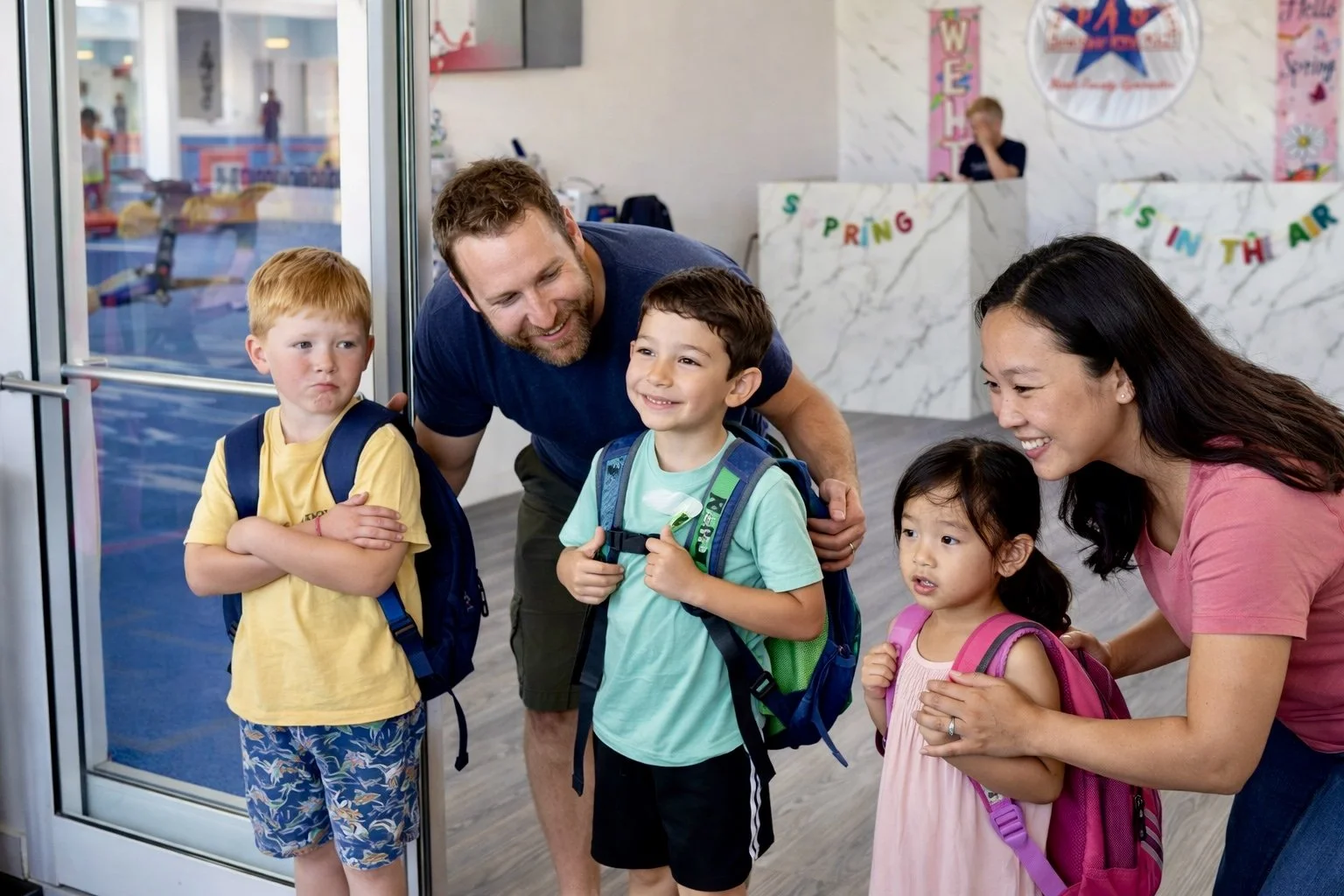
In fact, many children feel shy, hesitant, or emotional when starting something new. North County Gymnastics & The Gyminny Kids notes that shyness, hesitation, and separation anxiety are common when children begin classes, and that experienced coaches help kids build confidence at their own pace.
That is important for parents to remember.
A child does not need to walk in confidently on day one for gymnastics to be a good fit. Sometimes growth comes from being nervous at first and learning to work through it. We tend to see engagement and results in the second month, so please be patient in the first 6-8 weeks while your child becomes acquainted.
Signs gymnastics may be a good fit for an anxious child
Gymnastics may be worth exploring if your child:
Does well with routines
Has a lot of physical energy
Needs help building confidence
Struggles with transitions or group settings
Seems calmer after physical activity
Enjoys climbing, jumping, balancing, or being active
Benefits from encouragement in small steps
The key is finding the right environment, not just any program.
What to look for in a gymnastics program
If you are considering gymnastics for a child with anxiety, look for a program that values coaching, patience, and child development, not just skill progression.
A strong program should offer:
Kind, experienced coaches
Consistent routines
Age-appropriate expectations
Options for beginners and different ability levels
For some children, adaptive gymnastics or special needs classes may be the best starting point. For others, a regular recreational class with the right coach and class structure may be perfect.
A healthy support, not a magic fix
It is important to be honest here.
Gymnastics can help support mental health, but it is not a cure for anxiety. If a child is dealing with significant anxiety, panic, school refusal, sleep disruption, or emotional distress, parents should also speak with a pediatrician or licensed mental health professional.
The best approach is often layered: family support, healthy routines, physical activity, school support when needed, and professional help when appropriate.
Gymnastics can be one meaningful piece of that support system.
Final thoughts
So, can gymnastics help kids with anxiety?
For many children, yes.
The combination of structured movement, clear routines, physical activity, social interaction, and confidence building can be incredibly helpful. Gymnastics gives kids a chance to move their bodies, calm their minds, and learn that they are capable of doing hard things.
For anxious children, that matters.
Sometimes growth starts with something simple, a coach who is patient, a class that feels safe, and one small success at a time.
Quick Links
• Register for a free trial class today→]
• Adaptive gymnastics classes at Gyminny Kids→]
• Learn more about GK's no registration or annual fees pricing model→]
• Competitive gymnastics training→]
• Gymnastics mindset training→]
• Why Families Choose Gyminny Kids→]
Proudly Serving Families In:
• 4S Ranch
• Poway
• Carlsbad
• La Costa
FAQ Section
Can gymnastics help reduce anxiety in children?
Yes, gymnastics can help reduce anxiety in children by providing structured physical activity, which has been shown to lower stress hormones and increase endorphins. The predictable class format and supportive coaching environment also help children feel safe and more in control.
What age should kids start gymnastics for mental health benefits?
Children can start as early as 9 months old in parent-child classes. Early exposure helps build confidence, coordination, and comfort in structured environments, which can support emotional development over time.
Is gymnastics good for kids with social anxiety?
Yes, gymnastics can be especially helpful for kids with social anxiety. Classes provide guided social interaction in a low-pressure setting, helping children gradually build confidence around peers.
How does structured movement help with anxiety?
Structured movement gives children a predictable routine, which reduces uncertainty, a major trigger for anxiety. It also helps regulate the nervous system through physical activity and repetition.
Can gymnastics improve focus and emotional control?
Gymnastics improves focus by requiring children to follow instructions and stay engaged in tasks. It also helps develop emotional control as kids learn to manage fear, frustration, and challenges in a safe environment.
What type of gymnastics class is best for anxious kids?
Recreational classes with experienced, patient coaches are a great starting point. For children who need additional support, adaptive gymnastics or special needs programs provide more individualized attention and flexibility.
Is gymnastics better than team sports for anxious children?
It depends on the child, but many anxious kids do well in gymnastics because it combines individual progress with group structure. There's less pressure from teammates and more focus on personal growth.
How long does it take to see benefits from gymnastics?
Many parents notice improvements in confidence, mood, and behavior within a few weeks of consistent participation, especially when children attend classes regularly.