
How Gymnastics Prepares Your Toddler for Kindergarten: Listening, Focus, and Motor Skills
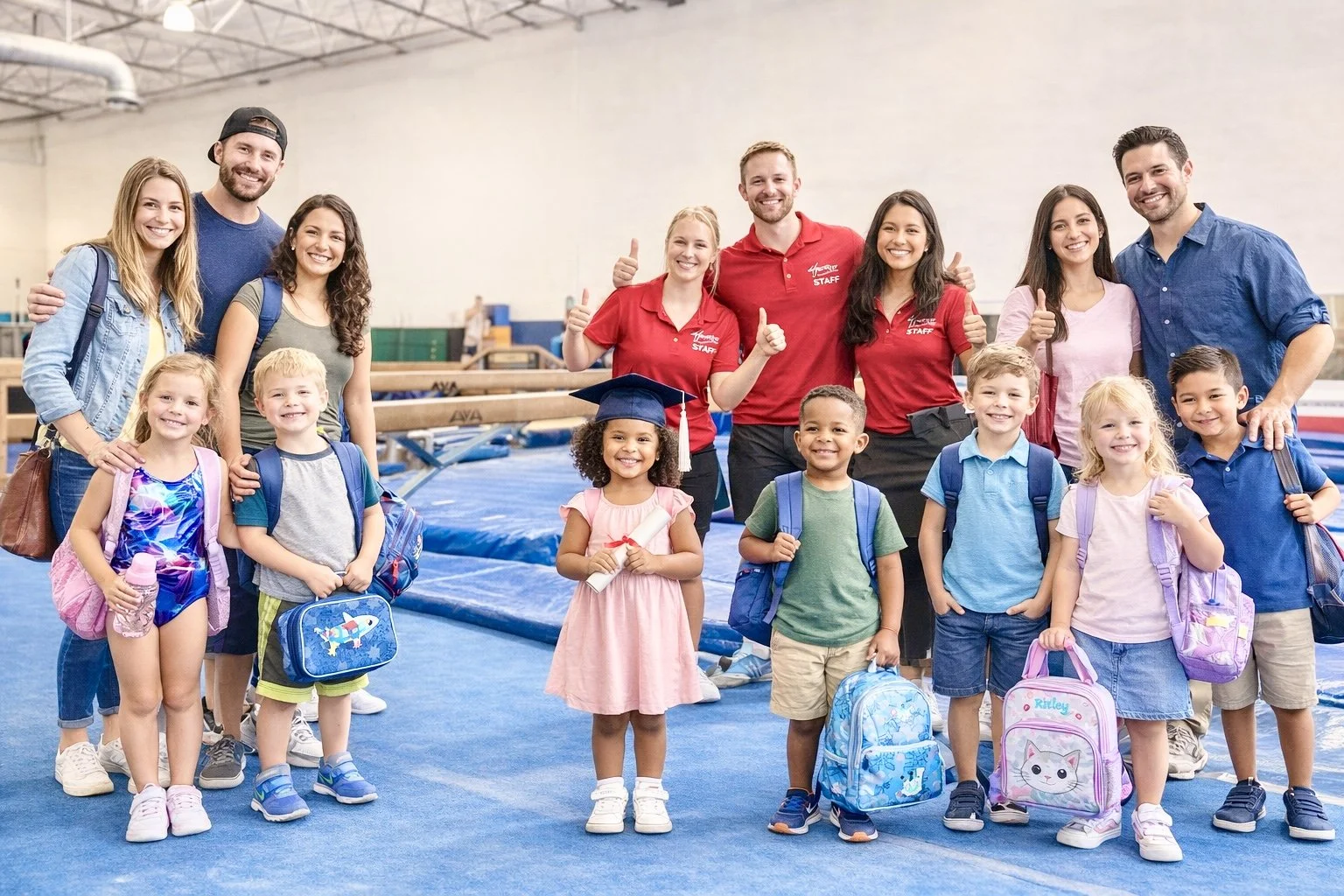
Most parents think of kindergarten readiness in terms of ABCs and 123s.
But when teachers talk about what really matters on day one, they usually point to something different. Can the child listen? Can they follow directions? Can they stay with a group, take turns, and manage their body in a structured environment?
Those are the skills that shape a child's early school experience.
And this is where gymnastics becomes one of the most valuable activities a toddler can do.
At North County Gymnastics & The Gyminny Kids, we see it every day. Kids who participate in structured gymnastics classes often walk into kindergarten better prepared, more confident, and more comfortable in group settings.
Gymnastics is the foundation for all sports. Start with gymnastics, go anywhere!
Listening Skills Start Here
In a quality toddler gymnastics class, listening is part of everything.
Children learn to pause when a coach is speaking, follow directions through obstacle courses, and respond to simple multi-step instructions. Over time, this builds a habit of listening and responding appropriately.
That translates directly into the classroom.
Kindergarten teachers are constantly giving instructions, guiding transitions, and managing groups. A child who has already practiced listening in a structured setting is more likely to feel comfortable and succeed.
One parent recently shared on Google:
"My son has learned how to listen and follow directions so much better since starting at Gyminny Kids. His preschool teacher even mentioned the difference."
Building Focus and Attention Over Time
Toddlers are not expected to sit still for long periods, but they can begin building focus through structured, engaging activities.
Gymnastics classes naturally create this environment. Kids rotate through stations, follow sequences, and stay engaged with a coach guiding them through each part of class.
This kind of repetition helps improve attention span over time.
According to the American Academy of Pediatrics, regular physical activity plays a key role in cognitive development, including attention and executive function in young children.
That means what looks like play is actually helping build the mental skills needed for learning.
Motor Skills That Carry Into the Classroom
Gymnastics develops both gross motor skills and body awareness.
Toddlers learn how to balance, climb, jump, land safely, hang, crawl, and control their bodies in space. These are not just athletic skills; they are foundational physical abilities.
Strong motor development supports:
Sitting upright with good posture
Navigating playground equipment confidently
Coordinating movements during group activities
Developing control needed for early classroom tasks
Research from the Centers for Disease Control and Prevention highlights that early physical development is directly linked to long-term health, coordination, and overall development.
That is what families should be looking for: a program that builds a strong physical foundation, not just isolated skills.
Learning Social Skills in a Group Setting
Kindergarten is often a child's first consistent group environment.
Gymnastics helps prepare toddlers for that transition in a natural and supportive way.
Children learn how to:
Take turns
Share equipment
Follow group instructions
Respect personal space
These early experiences matter. A child who has already practiced being part of a group tends to feel more comfortable walking into a classroom full of other children.
A Yelp review from a Gyminny Kids parent captures this well:
"It's not just gymnastics. My daughter has learned how to interact with other kids, wait her turn, and be part of a group. That confidence has carried into school."
Confidence That Carries Over
Confidence is built through small wins.
Climbing onto a beam for the first time. Jumping into a foam pit. Completing a simple obstacle course. Listening, trying, and finishing something new.
Those moments add up.
These gymnastics experiences build playground confidence, which, when on the park playstructures, kindergarten, or preschool playground, has a profound effect on a child's confidence when they can complete the monkey bars all the way across because of the strength they gained while on the bars at gymnastics class in the early years.
When a child experiences success in a structured setting, they begin to trust themselves. That confidence shows up when they face new environments like preschool and kindergarten.
Instead of feeling overwhelmed, they are more likely to participate, try new things, and engage with others.
Understanding Structure and Routine
A well-run toddler class follows a consistent structure.
There is a warm-up, guided instruction, structured rotations, and a clear ending. Over time, children begin to understand that rhythm.
They learn when to listen, when to move, and how to transition between activities.
That is exactly what kindergarten looks like.
Children who are already familiar with structure often adjust more smoothly to a classroom setting. They are not experiencing that type of environment for the first time.
Why This Matters More Than Academics Alone
Academic readiness matters, but it is not the full picture.
A child can know letters and numbers, but if they struggle to listen, focus, follow directions, or participate in a group, the classroom experience becomes more difficult.
Gymnastics helps build the underlying skills that enable learning.
Listening, focus, coordination, confidence, and social awareness all come together to support a child's success in school.
That is why many families choose to start their children in gymnastics before kindergarten.
Quick Links
• Register for a free trial class today→]
• Adaptive gymnastics classes at Gyminny Kids→]
• Learn more about GK's no registration or annual fees pricing model→]
• Competitive gymnastics training→]
• Gymnastics mindset training→]
• Why Families Choose Gyminny Kids→]
Proudly Serving Families In:
• 4S Ranch
• Poway
• Carlsbad
• La Costa
FAQs
At what age should toddlers start gymnastics?
Children can start as early as 9 months in parent-child classes. Most independent toddler classes begin around age 2 to 3.
Does gymnastics really help with kindergarten readiness?
Yes. Gymnastics helps develop listening, focus, coordination, and social skills, all of which are essential for a successful transition into kindergarten.
How often should toddlers attend gymnastics classes?
Once or twice per week is typically enough to see consistent progress without overwhelming the child.
What should I look for in a toddler gymnastics program?
Look for structured classes, trained coaches, safe equipment, and a program that emphasizes progressions, listening, and positive reinforcement.
Will gymnastics help my child with confidence in school?
Yes. Completing new skills and participating in group activities helps build confidence that carries into classroom environments.