
How Long Does It Take Kids to Progress in Gymnastics? A Realistic Timeline by Age
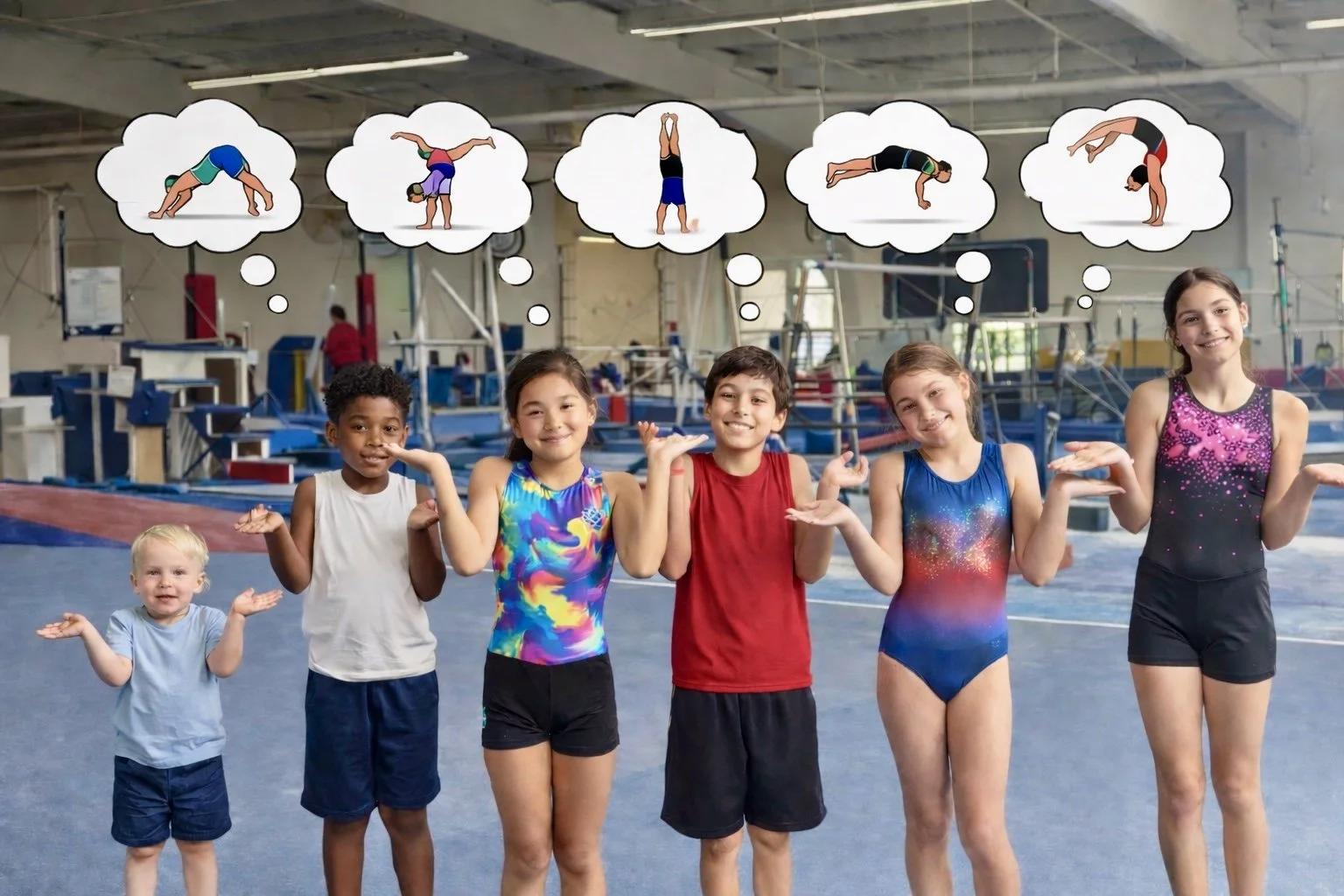
When parents enroll their child in gymnastics classes, one of the first questions that comes up is simple:
"How long will it take for my child to get better?"
It's a fair question. You want to know if your child is progressing, building confidence, and getting value from their time in the gym.
The honest answer is this: progress in gymnastics is not linear, and it looks different for every child. But there are clear patterns, milestones, and timelines that can help you understand what to expect.
At Gyminny Kids, we've coached thousands of athletes, from toddlers taking their first steps on a balance beam to Level 10 and elite competitors. Here's a realistic breakdown of how gymnastics skill progression works, what impacts it, and what parents should actually look for.
What Progress Really Looks Like in Gymnastics
Most parents expect progress to mean new tricks. Forward rolls, cartwheels, back handsprings.
Those matter. But real progress starts much earlier.
In gymnastics classes for kids, the first wins are often:
Listening and following instructions
Taking turns and working in a group
Learning how to fall safely
Building coordination and body awareness
Developing confidence in trying something new
These are the foundations that allow more advanced skills to develop later.
Gymnastics is the foundation for all sports.
And more importantly, it builds the foundation for how kids approach challenges in life.
A Realistic Gymnastics Progression Timeline by Age
Ages 1 to 3: Exploration and Comfort
At this stage, progress is not about skills; it's about comfort and movement.
What you'll see:
Climbing, jumping, and basic balance
Parent-assisted movement
Social interaction with other children
Timeline expectation:
3 to 6 months to see noticeable confidence and coordination gains
Ages 4 to 5: Structure and Basic Skills
This is where things start to look like "real gymnastics."
What you'll see:
Forward rolls, backward rolls
Introductory cartwheels
Hanging and swinging on bars
Improved listening and class participation
Timeline expectation:
6 to 12 months to build a solid foundation
Some kids progress faster, others need repetition; both are normal
Ages 6 to 8: Skill Development and Confidence
This is one of the most important development windows.
What you'll see:
Stronger cartwheels and handstands
Beginning round-offs
Better strength and flexibility
Increased independence and confidence
Timeline expectation:
1 to 2 years of consistent classes for noticeable skill progression
Kids who attend regularly progress significantly faster
Ages 9 and Up: Strength, Precision, and Advanced Skills
At this stage, progression becomes more technical.
What you'll see:
Back handsprings, round-offs, and combinations
Increased strength training
More detailed coaching and corrections
Potential transition into a competitive team
Timeline expectation:
2+ years of structured training for advanced skills
Progress depends heavily on consistency and effort
What Determines How Fast a Child Progresses?
There are a few key factors that matter more than anything else:
1. Consistency
Kids who regularly attend gymnastics classes improve faster.
One class per week builds a foundation. Two or more accelerate progress.
2. Coaching Quality
Experienced career coaches make a major difference.
At Gyminny Kids, our coaches follow a proven progression system:
I do, you watch. We do. You do, I watch. You do.
3. Attitude and Effort
A child who is willing to try, fail, and try again will progress faster than a naturally talented child who avoids challenges.
4. Environment
Clean, safe, structured gyms with proper equipment allow kids to perform more reps safely, leading to faster improvement.
Recreational Gymnastics vs Competitive Team Progression
Most children begin in recreational gymnastics classes.
In this phase:
Progress is steady and pressure-free
Focus is on fun, fitness, and fundamentals
Advancement happens through skill readiness
For children who want more:
North County Gymnastics (Gyminny Kid's Competition team) provides:
Structured training multiple days per week
Faster skill progression due to volume and focus
Clear level-based advancement (DP and Xcel programs)
This pathway is ideal for kids who show strong interest, work ethic, and consistency.
What Parents Should Really Watch For
Instead of asking,
"Is my child learning skills fast enough?"
A better question is:
"Is my child improving compared to where they started?"
Look for:
Increased confidence
Willingness to try new things
Better focus and listening
Improved strength and coordination
If those are happening, the skills will follow.
Why Some Kids Progress Faster Than Others
This is one of the biggest misconceptions in youth sports.
Progress is not about talent alone.
It's influenced by:
Maturity level
Fear tolerance
Focus and attention span
Physical development timing
Two kids can start at the same time and progress at completely different speeds, and both can be doing exactly what they should be doing.
The Long-Term Payoff of Gymnastics
Gymnastics is not just about short-term skill gains.
It builds:
Discipline
Self control
Body awareness
Confidence under pressure
Resilience after failure
These traits carry into every sport and every area of life.
That's why we say:
Start with gymnastics, go anywhere!
Proudly Serving Families In:
• 4S Ranch
• Poway
• Carlsbad
• La Costa
Quick Links
• Register for a free trial class today→]
• Adaptive gymnastics classes at Gyminny Kids→]
• Learn more about GK's no registration or annual fees pricing model→]
• Competitive gymnastics training→]
• Gymnastics mindset training→]
• Why Families Choose Gyminny Kids→]
Frequently Asked Questions
How long does it take for a child to get good at gymnastics?
Most children show noticeable improvement within 3 to 6 months. Strong foundational skills typically take 6 to 12 months, while advanced skills can take several years of consistent training.
How often should my child attend gymnastics classes?
One class per week builds a foundation. Two or more classes per week significantly accelerates progress.
What if my child is progressing slower than others?
That is completely normal. Every child develops at a different pace. Focus on individual growth, not comparison.
When should my child move to competitive gymnastics?
When they show strong interest, consistency, and readiness in both skills and attitude, coaches can guide you through that decision.
Is gymnastics safe for beginners?
Yes. With proper coaching, equipment, and safety protocols, gymnastics is one of the best structured environments for physical development.