
Managing Sibling Schedules at Gymnastics: How to Enroll Kids of Different Ages Without Making Life Harder
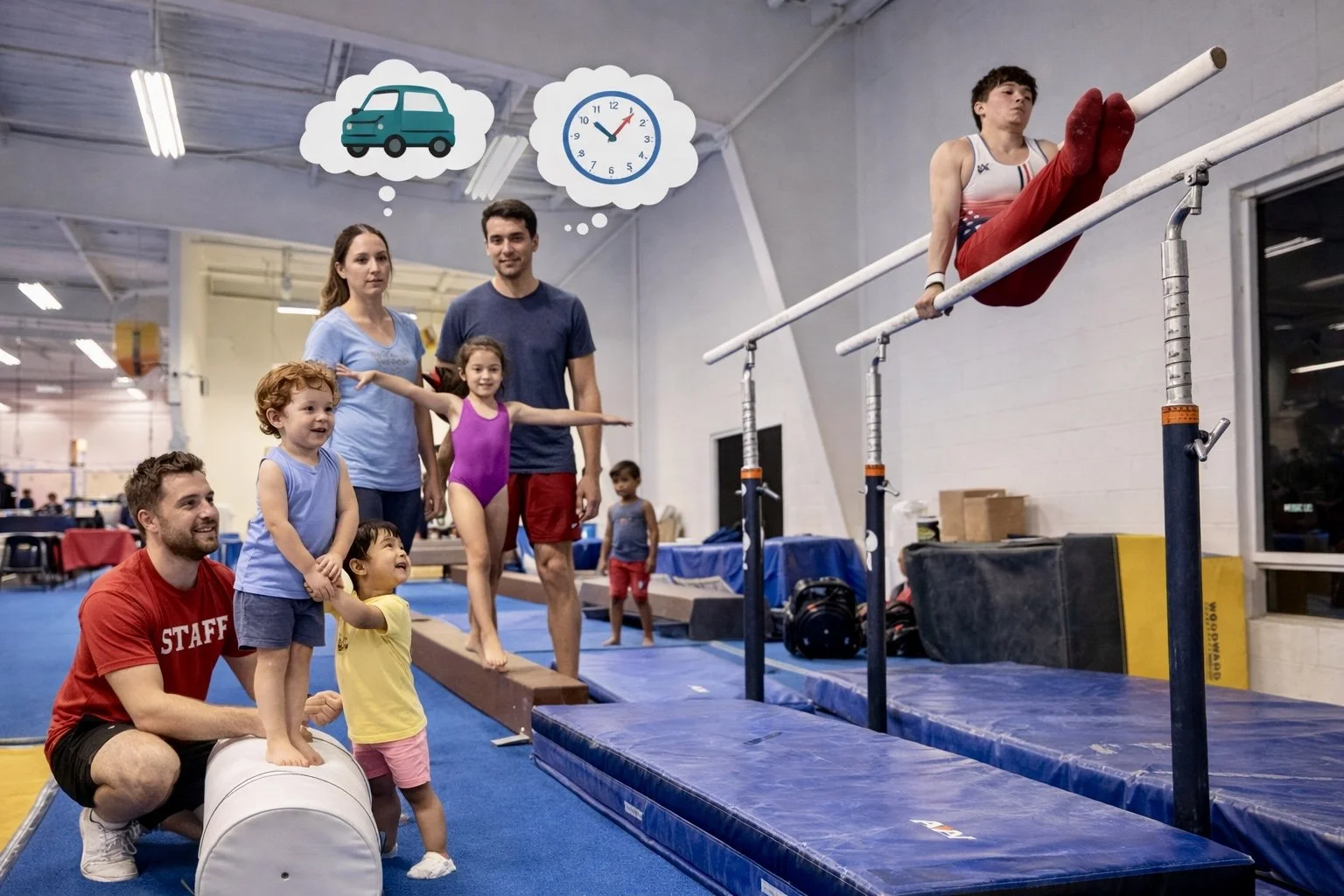
If you have more than one child, you already know the real sport is often the schedule.
One child is a toddler who still needs a parent nearby. Another is in elementary school and ready for a more independent class. An older sibling may want recreational gymnastics, ninja, tumbling, or even team. Parents are often less worried about whether their kids can do gymnastics at the same gym, and more worried about whether the weekly logistics will actually work.
The good news is, yes, siblings of different ages can absolutely attend gymnastics at the same gym, and when the program is structured well, it can make family life a lot easier. At Gyminny Kids, classes are offered for a wide range of ages and stages, from parent participation classes for babies and toddlers to recreational gymnastics, ninja, camps, open gym, and competitive team pathways. The company also offers free trial classes, unlimited makeups, and an all-inclusive pricing model with no registration, membership, or annual fees, which helps families stay flexible when managing multiple children.
For many families, you want your children in a program that helps them grow, but you also want a plan that does not turn your week into a transportation puzzle.
Can siblings of different ages attend gymnastics at the same gym?
Yes, and in many cases, it is one of the easiest ways to simplify a busy family calendar.
A quality gymnastics program should have age-appropriate options for younger children, school-age kids, and older athletes, all under one roof. Gyminny Kids structures classes by developmental stage, with parent participation options like Joeys for 9 to 18 months, Lil' Hoppers for 15 to 27 months, and additional preschool and recreational tracks as children grow.
That matters because a one-year-old does not need the same environment as a six-year-old, and a six-year-old does not need the same class structure as a ten-year-old. When classes are organized by age and readiness, each child gets a better experience, and parents get a much smoother weekly routine.
Why families look for one gym for multiple siblings
Most parents are not searching for "gymnastics classes for kids" in a vacuum. They are trying to solve a real-life problem:
How do I keep all my kids active without driving to three different places every week?
A good sibling setup can help with:
fewer stops after school
fewer conflicting schedules
easier pickup and dropoff routines
One staff team to communicate with
one parent portal and one overall system to manage
One familiar place for all siblings
That convenience matters, especially for larger families. It also helps children feel more comfortable as they enter a new environment. Younger siblings often gain confidence by watching older brothers or sisters enjoy the gym, while older siblings appreciate the familiarity of a shared family routine.
The bigger benefit is that age-appropriate classes under one roof.
The best setup is not putting every child in the exact same class. The best setup is having the right class for each child at the same gym.
At North County Gymnastics & The Gyminny Kids, the class structure starts with parent participation for babies and toddlers, then expands into preschool and recreational classes as children mature. This allows families to keep siblings in one program while still placing each child where they belong developmentally.
That is important because kids benefit most when activities match their current stage of growth.
The American Academy of Pediatrics says children ages 3 to 5 need about three hours of physical activity spread throughout the day, while children and teens ages 6 to 17 need at least 60 minutes of moderate to vigorous activity daily. Organized gymnastics can be a strong part of that routine because it builds coordination, body awareness, strength, balance, listening skills, and confidence in an age-appropriate way.
What this can look like for real families
Here are a few common sibling combinations parents ask about.
Baby or toddler plus preschooler
This is one of the most common family combinations. One child may be ready for a parent participation class, while the older sibling is ready for a more independent preschool class.
That setup works well because both children are active and learning, and the family starts building a single gym routine instead of managing multiple programs at different locations.
Preschooler plus elementary age child
This is another sweet spot for families. One sibling may still be in early foundational classes, while the older child is ready for stronger recreational gymnastics instruction with more skill progressions, independence, and structure.
Parents like this setup because the kids are still close enough in age that overlapping class times can sometimes be found, but each child still gets a class that fits their needs.
Recreational child plus competitive team athlete
Some families have one child who wants a fun weekly class and another who wants to train more seriously.
That is normal.
Not every sibling has the same goals, and they do not need to. One child may thrive in a recreational class, open gym, or camp environment, while another may move toward team. A strong program gives families room for both paths.
How to make sibling scheduling easier
Here are the biggest things parents should look for when comparing gymnastics options.
1. A broad age range
The first thing to check is whether the gym truly serves people of all ages, not just one narrow group. Gyminny Kids offers programming that starts with parent-tot ages and continues through older recreational and team pathways, up to level 10, elite, and college-bound athletes.
2. Schedule flexibility
This is where many families either stay enrolled or burn out.
North County Gymnastics (Gyminny Kids' competitive name) and The Gyminny Kids (recreational name) offer unlimited makeups and free trial classes, and its class schedule pages also highlight peak class times, including midday and twilight discount windows at some locations. That kind of flexibility can make a major difference for families juggling siblings, school schedules, naps, illness, and sports overlap.
3. No extra fee overload
When you have more than one child in activities, all the small fees add up fast.
Gyminny Kids states that it does not charge registration, membership, or annual fees, instead using an all-inclusive pricing structure. That can make planning easier for parents who are enrolling more than one child.
4. Programs beyond weekly class
Sometimes a sibling schedule works better because the gym offers more than just standard classes.
Camps, open gym, and Kids Night Out can help parents fill gaps and create additional options for siblings. Gyminny Kids offers camps, open gym at locations like La Jolla, and Kids Night Out on select schedules, which gives families more ways to coordinate active time for different children.
What younger siblings gain from the gym
For toddlers and preschoolers, gymnastics is not only about flips. It is about early childhood development.
These classes help children learn how to:
Listen to instructions
wait their turn
move safely in a group
develop balance and coordination
build comfort in a structured environment
separate gradually and confidently when age appropriate
Gyminny Kids specifically describes early classes as supporting foundational movement, balance, pushing and pulling, directions and opposites, rolling, attention span, body awareness, safe falling, and socialization.
Those are the kinds of foundational skills that help children in and out of the gym.
What older siblings gain
Older children often benefit from a different set of gains:
strength and flexibility
body control
resilience through challenge
coachability
confidence after skill progress
consistency and discipline
For some kids, gymnastics becomes the foundation for other sports. For others, it becomes their sport. Either way, having siblings in the same environment often makes it easier for parents to keep everyone active.
Tips for enrolling siblings without creating weekly chaos
If you are enrolling more than one child, here are a few practical tips:
Try to stack class times when possible.
Even if the classes are not at the exact same hour, close-to-back-to-back times can still make life easier.
Start with a free trial.
Gyminny Kids offers free trial classes, which give parents a low-pressure way to test whether the class placement and schedule work before committing.
Ask about makeup flexibility.
For families with multiple children, makeup options matter. A missed class is much more manageable when there is a clear path to reschedule.
Choose the right level, not the most impressive-sounding one.
The right class is the one where your child feels challenged, successful, and safe.
Think in seasons, not only in weeks.
What works during summer may be different from what works during the school year. A flexible gym makes those transitions easier.
Final thoughts
Yes, siblings of different ages can attend gymnastics at the same gym, and for many families, it is one of the smartest ways to simplify extracurricular life.
The key is choosing a program that supports multiple age groups, offers families scheduling flexibility, and provides enough options so each child can grow at their own pace. At Gyminny Kids, that includes parent-tot classes, preschool and recreational gymnastics, flexible scheduling options, free trial classes, career coaches, unlimited makeups, camps, and an all-inclusive pricing model without registration or annual fees.
For parents managing toddlers, school-age siblings, and everything in between, that kind of structure can make a big difference.
Proudly Serving Families In:
• 4S Ranch
• Poway
• Carlsbad
• La Costa
Quick Links
• Register for a free trial class today→]
• Adaptive gymnastics classes at Gyminny Kids→]
• Learn more about GK's no registration or annual fees pricing model→]
• Competitive gymnastics training→]
• Gymnastics mindset training→]
• Why Families Choose Gyminny Kids→]
FAQs
Can siblings of different ages go to the same gymnastics gym?
Yes. Most strong gymnastics programs offer classes for multiple age groups, allowing siblings to attend the same gym while still being placed in age-appropriate classes. Gyminny Kids offers classes that begin with parent-tot ages and continue into preschool, recreational, and team pathways.
What age can kids start gymnastics?
At Gyminny Kids, Joey's start at 9 to 18 months, and Explorers begin at 15 to 27 months, both as parent participation classes.
Do all siblings have to be in the same type of class?
No. One child may be in a toddler class, another in recreational gymnastics, and another in team. The goal is not the same class; it is the right class for each child.
What helps families manage sibling schedules best?
Flexible class options, free trial classes, unlimited makeups, and having multiple age-appropriate programs under one roof are some of the biggest advantages for busy families.
Do kids need special gymnastics clothing?
Most gyms recommend comfortable athletic wear or a leotard for girls and athletic shorts and a fitted shirt for boys. Avoid clothing with zippers or buttons and dangly jewelry. Bare feet are typical unless a gym says otherwise. Families should always confirm the exact dress code with their location.