

The Parent's Guide to Gymnastics Grips: When, Why, and How to Choose the Right Gear
By Daniel Gundert: Owner, North County Gymnastics & Gyminny Kids | Gymnastics Coach | Former Judge | Gymnastics Parent
When does your child actually need gymnastics grips? Coach, former judge, gymnastics parent, and North County Gymnastics & Gyminny Kids owner Daniel Gundert explains when to introduce grips, why starting too early can be counterproductive, when higher-level athletes should carry broken-in backup grips, and what parents should know about dowels, buckles, hand care, and bar rips.
As your child progresses through gymnastics, you'll eventually hear about grips.
For parents, grips can be confusing. You walk into a pro shop or start searching online, and suddenly you are looking at palm grips, dowel grips, buckles, hook-and-loop straps, wristbands, different sizes, and different brands. Then your child tells you that everyone else on the team has grips and they need them too.
My first piece of advice: don't rush it.
I've spent decades coaching gymnastics, judging the sport, owning gymnastics facilities, and raising children who compete in gymnastics. One of the biggest misconceptions I see is that grips are some rite of passage that a gymnast needs as soon as they become serious about the sport.
They aren't.
At the lower levels, grips are usually unnecessary. In some cases, they can actually become a distraction and even make holding onto the bar more difficult for a young gymnast with small hands.
Grips have their place. The goal is to introduce them when the gymnast's skills, hand size, and amount of swinging make them useful rather than just another piece of equipment to manage.
Why Do Gymnasts Wear Grips?
Grips primarily do two things: protect the hands and help the gymnast maintain a secure hold on the bar.
As gymnasts progress, they spend much more time swinging, rotating, circling, and transitioning around the bars. That creates tremendous friction between the hand and the bar.
Leather grips put a layer between the gymnast's skin and the bar. That reduces direct friction on the palm and can help reduce blisters and the skin tears gymnasts call "rips."
Grips can also improve the gymnast's hold on the bar. Leather holds chalk well, and dowel grips in particular give gymnasts extra leverage as skills get bigger and faster.
That becomes even more important as athletes progress to long-hang skills, baby giants, giants, releases, and other advanced bar and ring work.
When Does a Gymnast Actually Need Grips?
This is where I think parents sometimes get ahead of themselves.
A preschool gymnast does not need grips.
A beginning recreational gymnast does not need grips.
And a child learning basic bar skills does not need grips just because another gymnast in the gym is wearing them.
Young gymnasts benefit from learning how to hold and feel the bar with their hands physically. Their hands are also small, and adding leather between a tiny hand and the bar increases the circumference they are trying to hold.
That can make grips counterproductive when introduced too early.
I generally start thinking about grips when athletes begin doing more long-hang (swinging) work and kipping skills in class. Even then, there is no universal rule saying the gymnast must immediately start wearing them.
Some gymnasts have competed at extremely high levels of gymnastics without grips at all. It is unusual and not my preference, but grips are not inherently required just because an athlete reaches a particular level.
When Should Girls Start Wearing Grips?
For girls in the Development Program, my general guideline is:
Level 2: No grips.
Level 3: No grips.
Level 4: You can begin considering grips, particularly as the athlete's bar work develops, but I don't consider them mandatory.
Level 5 and above: I generally recommend grips.
By Level 5, athletes are progressing into bigger swings and skills such as baby giants and giants. Their hands are typically larger, their bar routines are longer, and grips start providing a real advantage rather than getting in the way.
The athlete's coach should still determine the exact timing. Two Level 4 gymnasts can have very different hand sizes, bar skills, and training volumes.
The level is a guideline. What ultimately matters is the gymnast standing in front of us.
In my opinion, Xcel gymnasts may begin considering grips in the Gold level and above. But once again, it's not mandatory. Some compete through thier entire Xcel career without grips.
What About Boys?
My philosophy for boys is very similar.
Level 3 boys should absolutely not need grips.
At Level 4, grips can begin to be considered depending on the athlete, hand size, skills, and the amount of swinging being performed.
By Level 5 and above, I generally want our boys using grips as their high bar work becomes more demanding.
Again, there are exceptions. Some gymnasts reach very high competitive levels without using grips. But once an athlete has sufficiently big enough hands and is generating substantial swing, I believe the benefits of properly fitted grips generally outweigh the benefits of continuing without them.
Palm Grips vs. Dowel Grips
Parents will commonly encounter two basic styles.
Palm Grips
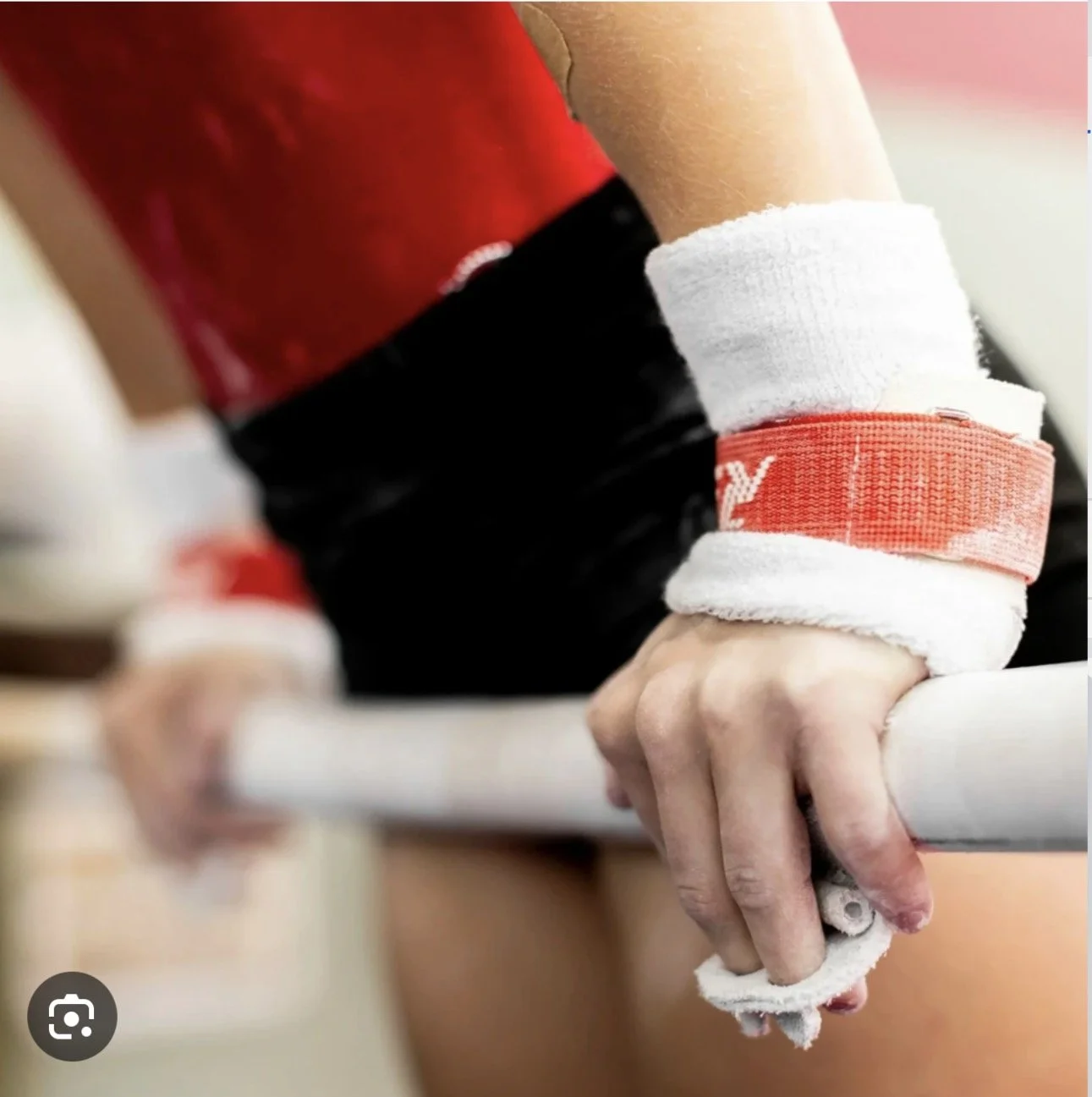
Palm grips are simple leather pieces that cover the palm. They primarily create a barrier between the gymnast's hand and the bar.
They can suit recreational gymnasts, intermediate athletes, and some early competitive or Xcel athletes who need extra hand protection but aren't yet doing the swinging where a dowel becomes particularly beneficial. I generally do not recommend using these grips.
Dowel Grips
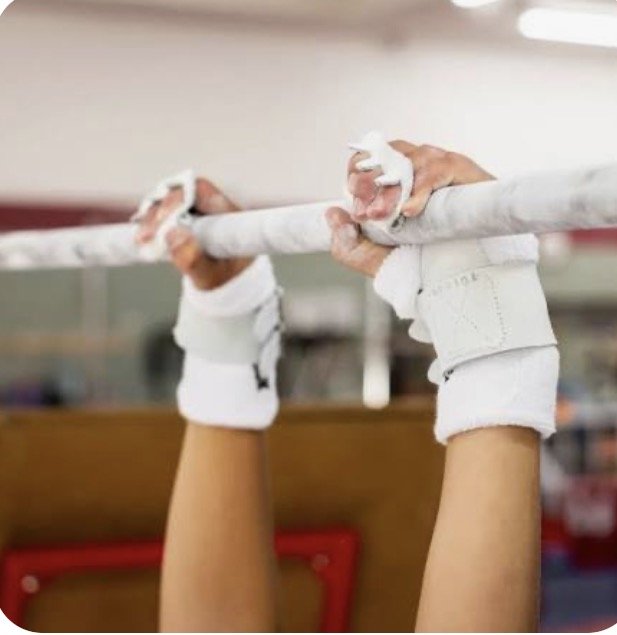
Dowel grips have a small dowel near the upper portion of the grip.
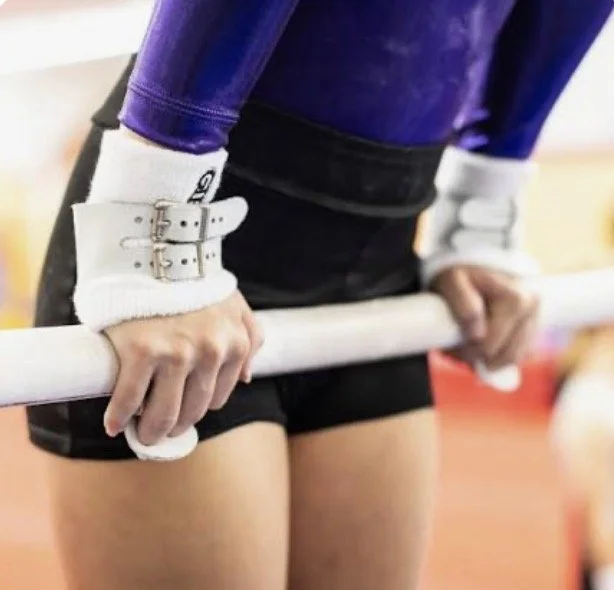
When worn and used properly, that dowel helps the gymnast maintain leverage against the bar and almost acts as an unclosed hook on the bar or ring. As athletes progress into larger swinging elements, this becomes increasingly useful.
For a competitive gymnast who is ready for grips, dowel grips are generally my preference.
But I wouldn't put a dowel grip on a small child just because it looks more advanced. The athlete needs the hand size, skill development, and coaching to use it correctly.
Buckles vs. Hook-and-Loop Straps
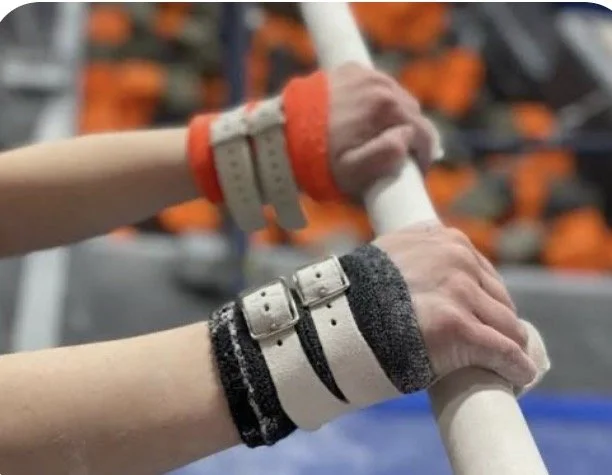
My personal preference is pretty straightforward: I like buckles.
Hook-and-loop grips are convenient, but I have watched kids pull them off, put them back on, tighten them, loosen them, tighten them again, and repeat the process throughout practice.
It can become a ritual and an unnecessary distraction.
With buckle grips, once we find the correct hole and fit, the gymnast stays at that setting. They fit consistently from practice to practice without constant readjustment.
For that reason, when I have a competitive gymnast who is ready for dowel grips, I generally prefer dowel grips with buckles.
That doesn't mean hook-and-loop grips are inherently bad. Plenty of successful gymnasts use them. This isn't my first choice.
Proper Fit Is More Important Than Brand
Parents often ask coaches, "What is the best grip?"
Several reputable gymnastics grip manufacturers exist, but the most important thing isn't having the coolest brand or whatever another gymnast on the team wears.
It is having the correct grip for the athlete and making sure it fits correctly.
Grips that are too large can be dangerous. Grips that are too small can restrict the hand and wear improperly.
This is why I recommend asking your child's coach before ordering anything.
Don't surprise your gymnast with a pair of grips for their birthday because they look cool.
Talk to the coach first.
The coach can tell you whether the gymnast is actually ready for grips, which style they should use, and how they should be sized.
I highly recommend speaking with your club's team administrator or team coach before deciding which brand to use.
Breaking In New Gymnastics Grips
New leather grips are stiff. They don't feel like the old pair your gymnast has worn for months.
They need to be broken in gradually.
One easy method is to wear them for short periods and squeeze something like a tennis ball so the leather can form around the hand.
The gymnast can also gently work and roll the leather with their hands.
I don't recommend trying to speed up the process by soaking the grips, aggressively sanding them, or doing anything else that could unnecessarily weaken the leather.
More importantly, don't put on brand-new grips and immediately start doing the biggest skills the athlete can perform.
Start with basic bar work.
Hang.
Swing.
Do some casts and kips.
Gently bend the grips around the bar or ring cables during practice, and slightly scrape the leather on the cables to soften it.
Allow the athlete to develop a feel for the new grips before progressing back into their biggest skills.
Your coach should supervise this process.
Always Check Grips for Wear
Grips don't last forever.
Leather stretches, thins, and deteriorates with use. Competitive gymnasts and their coaches should regularly inspect grips for thinning leather, cracks, unusual stretching, damaged stitching, worn finger holes, or problems with the buckle or wrist attachment.
A grip breaking during a large swing is a serious safety concern.
Once an athlete reaches higher levels, I recommend taking grip preparation one step further.
Level 6 and Above: Always Have Backup Grips
For Level 6 and above, I believe every gymnast should have a backup pair of grips in their gym bag, and those backup grips should already be broken in.
This is important.
Don't wait until your gymnast's primary pair breaks and then pull a brand-new pair out of the package.
Grips can break at any time. They can break during a regular practice, during competition warm-up, or a few days before an important meet. The last thing you want is for an athlete who has spent months preparing for a competition to suddenly have no usable grips or be forced to compete in a stiff pair they have never really swung in.
Once your gymnast reaches Level 6 and above, I recommend having two usable pairs of grips for every apparatus the athlete regularly wears.
The primary pair is the pair they normally train and compete in.
The backup pair should also get enough practice time to be comfortably broken in, and the gymnast should know exactly how it feels.
That doesn't mean switching back and forth constantly. The competition pair can remain the primary pair. But periodically training in the backup pair keeps it ready.
Think of it as insurance.
If a grip breaks during warm-up at a competition, the athlete should be able to reach into the gym bag, put on the backup pair, chalk up, and continue.
This becomes especially important as athletes move into higher-level gymnastics where the forces generated during swinging skills are much greater and changing grips can dramatically affect how the bar feels.
A backup pair sitting in the bag brand-new and untouched isn't really a backup pair.
Break them in before you need them.
Wristbands Matter Too
Wristbands worn under grips aren't just decoration.
Grips create pressure around the wrist, particularly during larger swinging skills. Good wristbands provide padding between the grip and the gymnast's skin.
Make sure the wristbands are long enough to cover the areas where the grip contacts the wrist, and keep them reasonably clean. That means washing them at least once a month.
Gymnastics equipment gets sweaty. Wash the wristbands regularly.
Leather grips, on the other hand, should not be treated like clothing and thrown into the washing machine.
What About Chalk?
Chalk helps absorb moisture and can improve the gymnast's grip on the apparatus.
Once gymnasts begin using leather grips, the combination of chalk and leather feels different from bare hands on the bar. Learning how much chalk to use and how to prepare the grips becomes part of using them properly.
More chalk isn't always better.
This is another area where athletes should follow their coaches' direction rather than creating elaborate grip and chalk routines of their own.
Bar Rips Are Part of Gymnastics
Even with good grips, gymnasts can still rip their hands.
A "rip" occurs when friction tears away a layer of skin, often a callus. They aren't pleasant, but they are extremely common in gymnastics.
I'm not a medical professional, so the following advice is based on my experience as a coach and working with physical therapists.
If your gymnast gets a rip, clean the area gently with soap and water, and keep it protected from dirt and chalk while it heals.
Keep the rip uncovered overnight to let it air out, then keep it clean and covered during the day, especially during physical activity.
A thin layer of petroleum jelly or an appropriate wound ointment during the day can help keep the area from drying and cracking excessively.
If the area becomes increasingly red, swollen, warm, painful, develops drainage, or shows other signs of infection, parents should have a medical professional evaluate it.
The fundamentals still matter most: clean the rip, protect it, allow it to heal, and don't repeatedly tear the same area open.
Calluses Aren't Necessarily a Bad Thing
Parents sometimes see calluses developing on their child's hands and immediately want to eliminate them.
Some callus development is normal for gymnasts.
The problem occurs when a callus becomes excessively thick, raised, or rough because that extra skin can catch and tear.
Experienced gymnasts learn to maintain their hands rather than trying to keep them completely soft. Your child's coaches can help teach appropriate hand-care habits as their training volume increases.
My General Rule for Parents
After all my years in gymnastics, my advice on grips is pretty simple:
Don't be in a hurry.
Grips aren't a status symbol. Wearing them doesn't make your child a more advanced gymnast.
At the beginning levels, I would rather see athletes develop natural hand strength, learn how to hold the bar correctly, and get comfortable swinging without another piece of equipment between their hands and the apparatus.
When their hands get bigger, their swings get longer, and their skills start generating enough force that grips become beneficial, then we introduce them.
Girls generally don't need grips at DP Levels 2 or 3. I start considering them at Level 4. By Level 5 and above, I generally recommend them.
For boys, I don't recommend grips at Level 3. They can be considered at Level 4, and by Level 5 and above, I generally want athletes using them.
Once they reach Level 6 and above, add a second, already broken-in pair to the gym bag. At that level, having backup grips isn't excessive. It's being prepared.
And when it is time, my preference is usually a properly fitted pair of dowel grips with buckles.
Most importantly, don't decide based on what another gymnast is wearing.
Ask your child's coach.
The right grips match your child's hands, skills, apparatus, and stage of development.
Frequently Asked Questions About Gymnastics Grips
What age should my child start wearing gymnastics grips?
There isn't a specific age. Skill level, hand size, training volume, and the type of bar work matter more than age. Your child's coach should make the recommendation.
Does my recreational gymnast need grips?
Usually not. Most preschool and recreational gymnasts are better off learning basic bar skills with their bare hands.
Should a Level 2, 3 or Xcel Copper, Bronze or Silver gymnast wear grips?
Generally, no. I don't recommend grips for lower-level Xcel and DP Level 3 girls or Level 3 boys.
Should a Level 4 boy or girl gymnast wear grips?
Maybe. I start considering grips at Level 4, depending on the gymnast's hand size, skills, and bar development. I don't consider them automatically necessary just because the athlete reached Level 4.
Should a Level 5 gymnast have grips?
In my experience, yes. By Level 5 and above, I generally recommend grips because athletes are performing more substantial swinging skills and usually have hands large enough to use grips effectively. But again, it depends on the athlete's size. A very small gymnast may need to wait until thier hands can safely cover the majority of the bar with thier grip before using grips.
When should a gymnast have two pairs of grips?
For Level 6 and above, I recommend keeping two usable pairs for each apparatus where the gymnast wears grips. The backup pair should already be broken in, stored in thier gym bag or locker, and comfortable enough to use immediately if the primary pair breaks.
Why should backup gymnastics grips already be broken in?
New grips are stiff and feel very different from grips you've trained in. If a gymnast's competition grips break during warm-up or the week of a competition, that is not the time to start breaking in a brand-new pair. A properly prepared backup lets the gymnast switch with much less disruption.
Should gymnasts occasionally practice in their backup grips?
Yes. The backup pair should get enough use to break it in and get familiar. It doesn't need to replace the gymnast's primary pair, but it should be competition-ready if needed.
Are grips mandatory in competitive gymnastics?
Not universally. Some athletes have competed at high levels (level 10 and elite) without grips. However, for most advanced gymnasts, properly fitted grips provide meaningful advantages in hand protection and bar security.
Do grips prevent all rips?
No. Grips reduce direct friction between the gymnast's skin and the bar, but athletes can still develop calluses, blisters, and rips.
Are dowel grips better than palm grips?
It depends on the gymnast. Palm grips primarily provide friction protection. Dowel grips become more useful as athletes progress into larger swinging skills. For competitive athletes who are ready for them, I generally prefer dowel grips.
Are buckle grips better than hook-and-loop grips?
Both can work. I prefer buckle grips because the athlete can use the same established buckle setting each time, rather than repeatedly tightening and readjusting the wrist straps throughout practice.
Can I buy grips without asking my child's coach?
You can, but I don't recommend it. Incorrectly sized or inappropriate grips can interfere with the gymnast's ability to hold the bar safely. Ask the coach what style and size they recommend before ordering.
How should new grips be broken in?
Gradually. Begin with basic hanging, swinging, casts, kips, and other skills the coach approves before returning to the athlete's most advanced bar skills. Avoid aggressive methods that could damage or weaken the leather.
How often should gymnastics grips be replaced?
There is no universal replacement schedule because athletes train different numbers of hours and use their grips differently. Regularly inspect the leather, stitching, finger holes, buckles, and overall condition. Replace grips when their structural integrity becomes questionable rather than waiting for them to break. My children receive new grips every year or two, depending on how fast they are growing.
Quick Links
• Competitive gymnastics training→]
• Register for a free trial class today→]
• Recreational versus team: which is better for my child?→]
• Learn more about GK's no registration or annual fees pricing model→]
• Gymnastics mindset training→]
• Why Families Choose Gyminny Kids→]
Where does North County Gymnastics train competitive athletes?
North County Gymnastics & The Gyminny Kids trains competitive gymnastics athletes at multiple San Diego locations, including:
Proudly Serving Families In:
• 4S Ranch
• Poway
• Carlsbad
• La Costa