
Is Your Three-Year-Old Ready for Independent Gymnastics Class? How to Tell
Owner, North County Gymnastics & The Gyminny Kids
Gymnast • Coach • Judge • Parent of Five Competitive Gymnasts
One of the most common questions parents ask when their child turns three is:
"Is my three-year-old ready for gymnastics without a parent?"
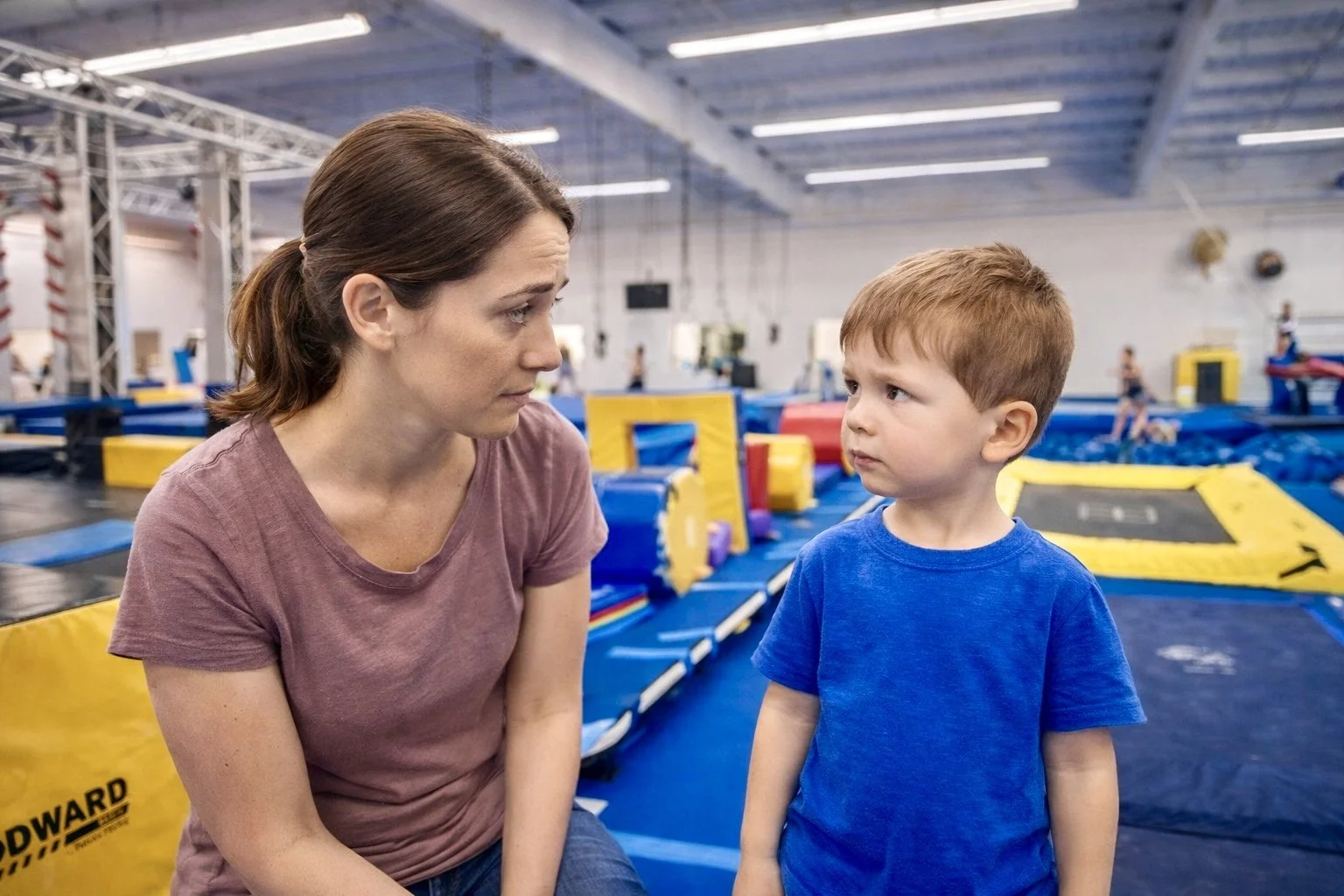
Many toddlers begin gymnastics in a parent participation class, where moms, dads, or caregivers move through the gym alongside their child.
Around age three, however, something exciting starts to happen.
Children begin developing independence.
They start listening to instructions from other adults, interacting with peers, and learning to participate in structured group activities.
For many families, this is the age when children move into their first independent gymnastics class.
But every child develops differently, so how do you know if your three-year-old is ready?
Let's break it down.
What Is an Independent Preschool Gymnastics Class?
A preschool gymnastics class is designed for children roughly ages three to four, who participate on the gym floor without a parent.
Instead of following a parent through stations, children begin learning to follow a coach's instructions, rotate through activities with their classmates, and develop early listening skills.
At North County Gymnastics & The Gyminny Kids, preschool classes focus on:
• Balance
• Coordination
• Listening skills
• Body control
• Safe falling techniques
• Confidence and independence
• Social interaction with other children
The structure is fun, energetic, and designed specifically for this age group.
Most importantly, everything is taught through movement and some basic structure.
Gymnastics at this stage is not about competition, but about learning the early life lessons that will better prepare them for school, the playground, life, and future sports.
It is about development.
Signs Your Three-Year-Old Is Ready for Independent Gymnastics
Parents often assume readiness is based on physical ability.
In reality, emotional readiness matters more than athletic ability.
Here are several signs your child may be ready for independent toddler gymnastics classes.
1. Your Child Can Separate from You for Short Periods
The biggest milestone is:
Can your child spend 15 to 20 minutes in an activity without a parent nearby?
Some children adjust immediately.
Others may take a few classes to feel comfortable, and that is okay.
Both are normal.
Great preschool coaches understand that the first few weeks are part of the learning process.
2. Your Child Can Follow Basic Instructions
Independent gymnastics classes involve basic directions such as:
• sit on the line
• wait your turn
• jump like a frog
• hang on a bar
If your child can follow basic instructions some of the time, they are likely ready for a toddler gymnastics class without a parent.
3. Your Child Shows Curiosity About the Gym
Children who are ready often show excitement about:
• climbing
• jumping
• swinging
• balancing
Gymnastics gives toddlers a safe environment to explore movement.
Many children who struggle to sit still thrive in gymnastics because it allows them to move constantly while learning discipline.
4. Your Child Is Interested in Other Kids
Preschool gymnastics classes also help children develop social skills.
Children begin learning:
• how to wait for their turn
• how to participate in group activities
• how to encourage teammates
These are valuable life skills that extend far beyond the gym.
What If My Three-Year-Old Is Not Ready Yet?
That is completely normal.
Some children benefit from staying in parent participation toddler gymnastics classes a little longer.
Those classes help children build:
• confidence
• familiarity with the gym environment
• comfort with coaches
At North County Gymnastics & The Gyminny Kids, the goal is always to meet children where they are developmentally, not rush them.
Many children transition naturally once they feel comfortable.
What Skills Do Preschool Gymnasts Learn?
At three years old, gymnastics is about building a physical foundation.
Preschool gymnasts learn early versions of skills such as:
• jumping and landing safely
• walking across low balance beams
• swinging on bars
• climbing and hanging
• basic strength movements
These activities build core strength, coordination, and body awareness.
This is why gymnastics is widely considered the foundation for all sports.
A child who learns balance, coordination, agility, and body control through gymnastics carries those advantages into soccer, baseball, basketball, and nearly every other athletic activity later in life.
As USA Gymnastics says:
Start with gymnastics, go anywhere!
Why Preschool Gymnastics Builds Confidence
One of the most powerful aspects of gymnastics for preschoolers is the confidence it builds.
Children face small challenges in every class.
Maybe it is walking across the beam.
It could be trying a forward roll.
When children succeed at something that once felt scary, they build self-belief.
Over time, these small wins build.
Children begin to believe:
"I can do hard things."
That mindset becomes incredibly valuable in school, sports, and life.
What to Look for in a Preschool Gymnastics Program
If you are exploring gymnastics classes for toddlers or preschoolers, here are a few things parents should look for:
Working with young children requires patience, training, and the ability to make learning fun.
Age-appropriate equipment
Preschool gymnastics uses scaled equipment designed for small bodies.
Structured progressions
Children should learn skills step by step in a safe environment.
Encouragement and confidence-building should be central to the program.
A clean, climate-controlled facility
At Gyminny Kids, many of our coaches have spent years working specifically with preschool athletes, helping children develop both physical and social skills in a supportive environment.
Families across San Diego choose North County Gymnastics & The Gyminny Kids for professional coaching, structured classes, and a positive environment where children can grow.
Quick Links
• Register for a free trial class today→]
• Recreational versus team: which is better for my child?→]
• Learn more about GK's no registration or annual fees pricing model→]
• Competitive gymnastics training→]
• Gymnastics mindset training→]
• Why Families Choose Gyminny Kids→]
Frequently Asked Questions
Is three years old a good age to start gymnastics?
Yes. Age three is one of the most common ages at which children begin independent gymnastics classes. At this age, children start developing the coordination, listening skills, and independence needed to participate without a parent.
What if my child cries during their first class?
That is normal for some children. Most adjust after a few classes once they become familiar with the coach and environment. Please give it at least 4 weeks before you decide to pull your child out.
What should my child wear to gymnastics?
Comfortable athletic clothing works best. Many girls wear leotards, and boys typically wear athletic shorts and a T-shirt. Avoid zippers, belts, and buttons. Hair that touches the shoulder should be placed in a ponytail for safety reasons.
How long are preschool gymnastics classes?
Most preschool classes last 45 minutes, which is the ideal length to keep young children engaged and active.
Can boys take toddler gymnastics classes?
Yes. Boys can start gymnastics very young. Many boys begin in parent participation classes as early as 9 months.