
Gymnastics as Physical Therapy for Kids: When Movement Helps Developmental Delays
Owner, North County Gymnastics & The Gyminny Kids
Former Gymnast, Coach, Judge, and Father of Five Competitive Gymnasts
When parents hear the word gymnastics, they usually think of cartwheels, flips, and Olympic athletes.
But many pediatric specialists recognize something else.
Gymnastics can function very similarly to physical therapy for children, especially for kids working through developmental delays related to coordination, balance, strength, and sensory processing.
At North County Gymnastics & The Gyminny Kids, we see this transformation every week. Children who initially struggle with balance, body awareness, or coordination often make remarkable progress once they begin moving regularly in the gym.
There is a reason many developmental specialists say:
Gymnastics is the foundation for all sports, and for many children, it can also support foundational development.
Why Movement Is Critical for Early Development
During early childhood, the brain and body are learning how to communicate with each other.
Movement helps build the neurological pathways responsible for:
• Balance
• Coordination
• Body awareness
• Muscle control
• Reaction time
• Focus and attention
Programs that emphasize climbing, jumping, swinging, balancing, and controlled falling stimulate multiple brain systems simultaneously.
Gymnastics includes all of these.
This is why many pediatric therapists recommend structured movement programs to help children who may be experiencing motor development delays.
How Gymnastics Mimics Physical Therapy
Many gymnastics drills closely resemble exercises used in pediatric physical therapy.
For example:
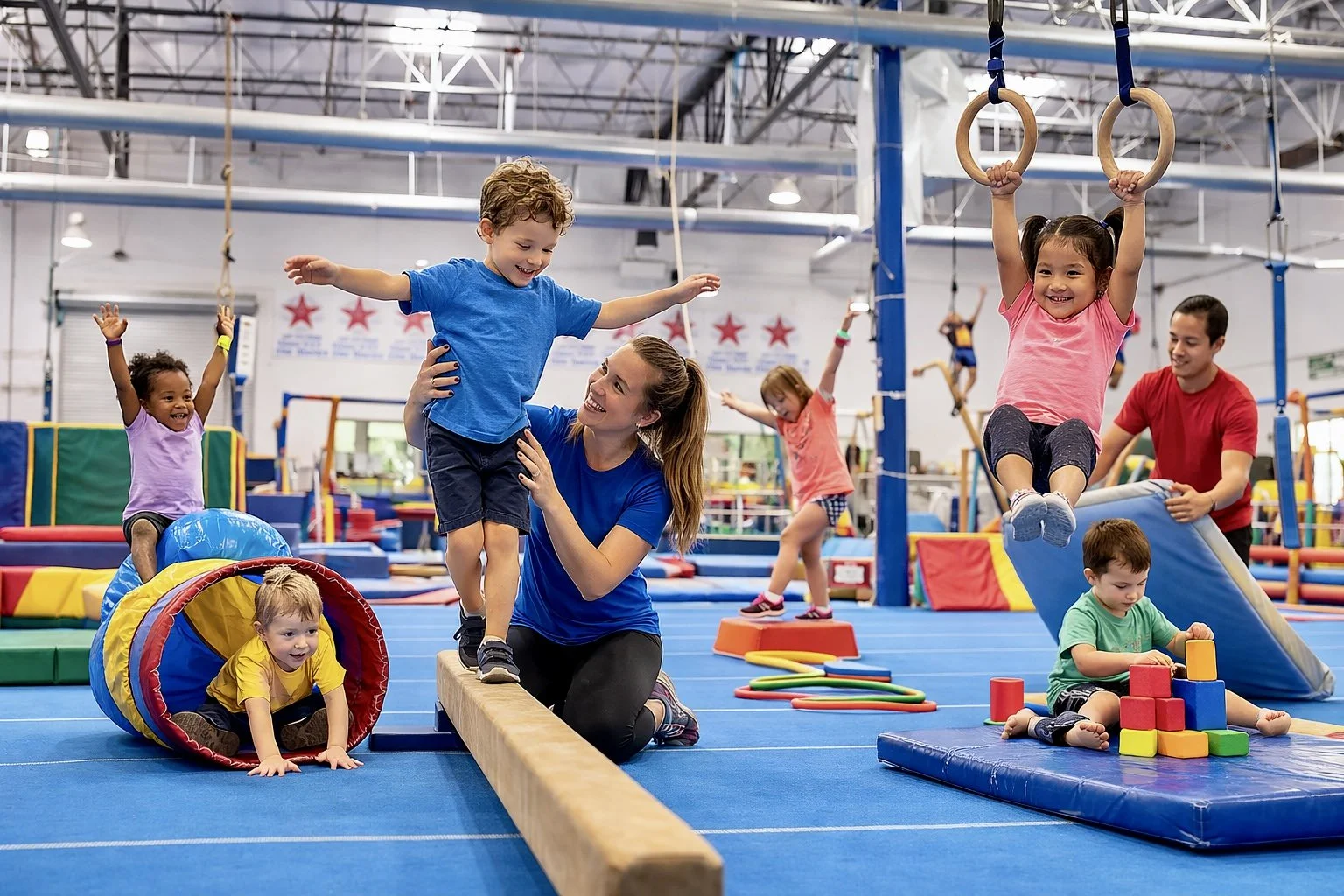
Balance beam work improves vestibular development and postural control.
Swinging on bars or rings strengthens the shoulders and improves grip strength.
Tumbling skills teach spatial awareness and safe falling techniques.
Obstacle courses develop coordination and motor planning.
The difference is that in a gymnastics setting, children experience these exercises as fun and play, which often leads to more engagement and faster improvement.
Key Developmental Benefits of Gymnastics
Stronger Gross Motor Skills
Gymnastics helps children develop the large muscle groups responsible for running, jumping, climbing, and balancing.
These gross motor skills are foundational for almost every sport and physical activity.
Improved Balance and Coordination
Many gymnastics movements challenge the vestibular system, which controls balance and spatial orientation.
Regular practice helps children gain better body control and coordination.
Better Body Awareness
Children learn to control their bodies in space through skills such as rolls, handstands, and jumping drills.
This awareness, known as proprioception, plays a critical role in movement confidence.
Increased Strength and Flexibility
Gymnastics naturally builds:
• Core strength
• Shoulder stability
• Leg power
• Joint flexibility
These physical improvements often translate into better performance in everyday activities and overall dexterity.
Higher Confidence and Self-Esteem
Children who may struggle in other physical settings often thrive in gymnastics because progress is measured in small, achievable steps.
Each new skill builds confidence.
One parent recently shared on Google:
"Our son struggled with coordination when he was younger, but gymnastics helped him gain strength and confidence. The coaches were incredibly patient and supportive."
Adaptive Gymnastics and VIP Programs
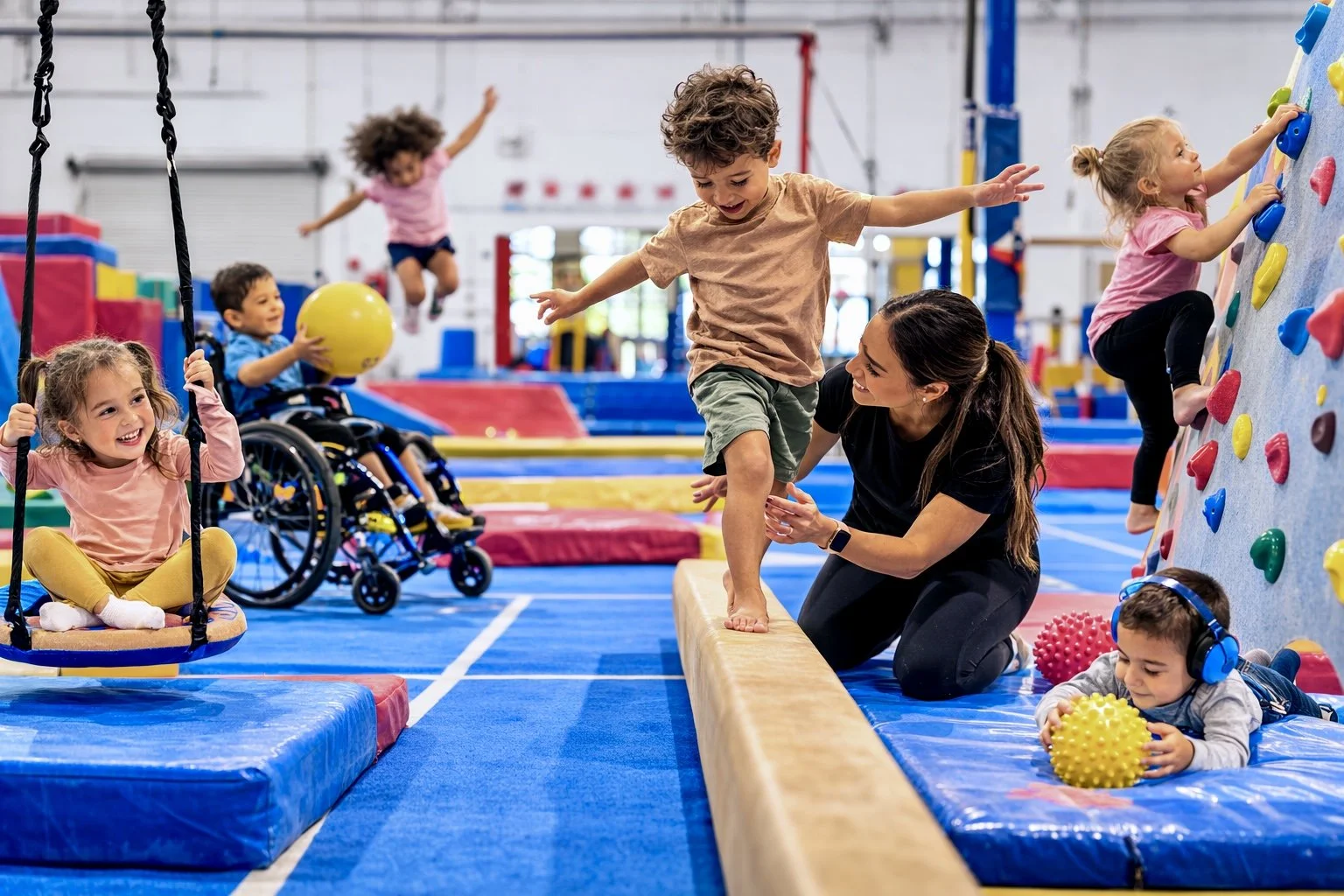
Many gyms now offer specialized programs for children with developmental differences.
At Gyminny Kids, our Adaptive Gymnastics Program provides a supportive environment where every child can succeed.
Classes may include children with:
• Sensory processing challenges
• Autism spectrum differences
• ADHD
• Motor delays
• Physical coordination challenges
Coaches modify drills, equipment, and pacing so children can participate safely while still building skills.
The goal is not perfection.
The goal is progress, confidence, and enjoyment of physical activity.
What Parents Should Look for in a Program
If you are exploring gymnastics as a developmental support activity, look for a gym that offers:
• Experienced coaches trained to work with diverse learners
• Appropriate student-to-teacher ratio
• A positive and encouraging environment
• Safe equipment and padded surfaces
• A focus on progress rather than competition
The right environment can make a significant difference in how comfortable a child feels trying new skills.
Why Many Pediatric Experts Recommend Gymnastics
Gymnastics uniquely combines multiple types of movement into a single activity.
Children climb, swing, balance, jump, roll, and hang, often within the same class.
This full-body approach supports development across multiple physical systems at once.
That is why many experts in youth development emphasize the same idea:
Start with gymnastics, go anywhere!
Proudly Serving Families In:
• 4S Ranch
• Poway
• Carlsbad
• La Costa
Quick Links
• Register for a free trial class today→]
• How to find the best adaptive gymnastics program→]
• Learn more about GK's no registration or annual fees pricing model→]
• Gyminny Kids accepts charter & 3rd party funds→]
• Gymnastics mindset training→]
• Why Families Choose Gyminny Kids→]
FAQs
Can gymnastics replace physical therapy?
Gymnastics is not a replacement for medical therapy. However, many physical therapists recommend structured movement programs, such as gymnastics, to support development and reinforce therapy goals.
At what age can kids start gymnastics?
Children can begin gymnastics as early as 9 months old in parent-child classes.
Is gymnastics helpful for kids with coordination delays?
Yes. The combination of balance, strength, and coordination exercises can significantly support motor development.
Do kids need experience to start?
Not at all. Most children begin with no prior experience, and classes are structured to build skills step by step.