
How to Help a Shy or Anxious Child Thrive in Gymnastics Class
Owner, North County Gymnastics & The Gyminny Kids
Former Gymnast, Coach, Judge, and Father of Five Competitive Gymnasts
One of the most common questions parents ask when enrolling their child in gymnastics is this:
"My child is shy. Will they be okay in class?"
It is a completely valid concern.
Many children entering their first toddler gymnastics class or kids gymnastics class feel nervous in a new environment. Some children run straight onto the floor and start exploring the equipment. Others stay close to their parent and quietly observe.
Both reactions are normal.
At North County Gymnastics & The Gyminny Kids, we see shy children grow into confident athletes every single week. In many cases, the quiet observer becomes one of the most enthusiastic participants once they feel comfortable.
Gymnastics and ninja classes provide a structured environment where children build confidence, independence, and resilience as they learn new skills.
Why Gymnastics Is Especially Good for Shy Children
Shy children often thrive in activities that combine structure, clear expectations, and individual progress.
Gymnastics classes provide exactly that.
Unlike many youth sports that immediately emphasize team competition, gymnastics classes for kids focus on individual development within a supportive group environment.
Each child works on their own progress while participating alongside other children.
This creates an ideal environment where shy children can grow socially without feeling overwhelmed.
Research Supports This
Child development research consistently shows that structured physical activity improves children's confidence and emotional regulation.
A study published in the Journal of Sport and Exercise Psychology found that children who participate in organized physical activities demonstrate:
• Increased self-confidence
• Better emotional resilience
• Improved social interaction skills
Programs like gymnastics classes for toddlers and young children provide a safe space where these skills develop naturally.
What Coaches Do to Support Shy Children
Experienced gymnastics coaches understand that every child learns differently.
At Gyminny Kids, we focus on creating an environment where children feel safe, supported, and encouraged. Our career coaches have over a decade of experience on average and have been trained through our internal training program, Gyminny Kids Academy, which covers working with shy children and individualizing within a class of diverse emotional and physical abilities.
1. Predictable Class Structure
Children feel more comfortable when they understand what will happen next.
Our gymnastics classes follow a consistent structure:
• Warm-up activities at the start of class
• Skill stations on different equipment
• Circuits and obstacle courses
• Fun games that reinforce learning
• A rotation schedule. Kids crave structure.
• Closing activity
This consistency allows shy children to relax because the environment becomes familiar quickly.
2. Progress Without Pressure
A shy child should not be forced into participation.
Instead, our coaches allow children to observe and join when they feel ready.
Many shy children watch quietly during their first class. By the second or third class, they begin trying activities. Within a few weeks, they often become enthusiastic participants. At Gyminny Kids, we ask that parents remain patient, as it can take 4-6 weeks for the child to participate fully.
Confidence develops step by step.
3. Celebrating Small Wins
Success builds confidence.
In gymnastics, success might look like:
• Saying hello to the coach
• Interacting with peers
• Hanging from the bars for the first time
• Walking across a low balance beam
• Jumping independently into the foam pit
Every small step forward matters.
What Parents Can Do to Help a Shy Child Try Gymnastics
Parents play an important role in helping children feel comfortable trying something new.
Here are three strategies that work extremely well.
Speak Positively About the Experience
Children often mirror their parents' emotional tone.
When parents describe gymnastics as exciting and fun, children approach it with curiosity rather than fear.
You might say:
"We are going to a fun place where kids climb, jump, and learn new skills."
Children are intuitive, so if you struggle with separation anxiety, they likely will as well. But if you encourage them to try new things and look to the teacher for support, so will they.
Visit the Gym Before the First Class
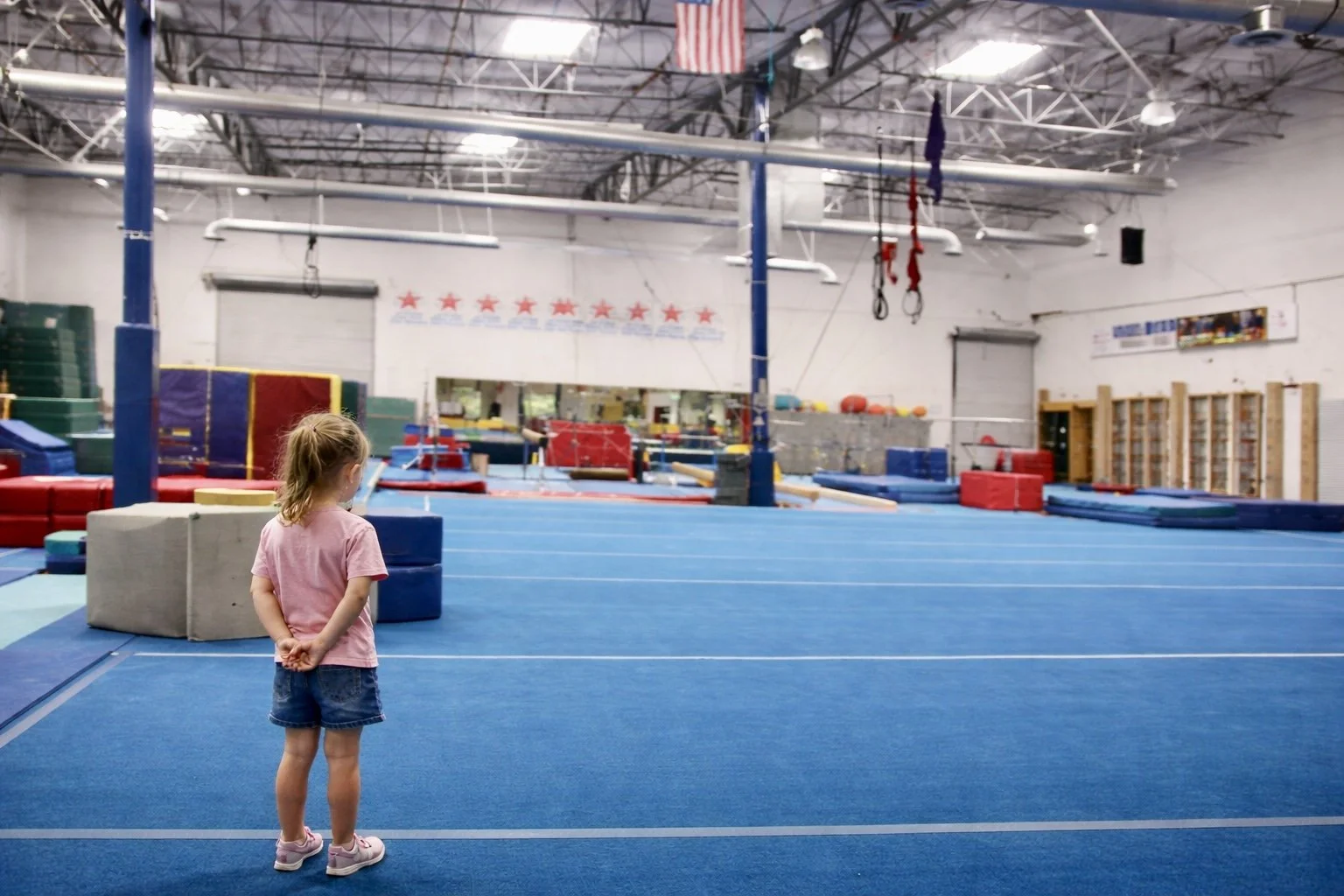
Walking into a large gym full of equipment can feel overwhelming for some children.
Many families schedule a free trial class or attend an open gym to let their child explore the environment before starting regular classes.
This simple step can make a big difference.
Allow Time to Adjust
Confidence does not always appear on the first day.
Some children engage immediately. Others take several weeks to participate fully.
Both are completely normal.
Consistency and patience help children gradually feel comfortable.
Why Toddler Gymnastics Classes Build Confidence Early
Many families begin with toddler gymnastics classes because early experiences shape how children approach new environments.
A toddler gymnastics class introduces children to:
• Climbing and hanging skills
• Balance activities
• Safe jumping and landing
• Listening and following directions
• Social interaction with other children
These early experiences often make the transition to independent kids' gymnastics classes much easier. Early gymnastics classes also better prepare toddlers for preschool and the playground.
What Parents Are Saying
Families often tell us that gymnastics helped their shy child become more confident.
Here are a few examples from online reviews.
"My daughter was extremely shy when she started. The coaches were patient and encouraging, and now she runs into class with a huge smile."
Google Review
"The instructors know exactly how to help kids feel comfortable. My son barely spoke during the first class. Now he talks about gymnastics every day."
Yelp Review
"This program has helped my child gain confidence in ways I did not expect. The environment is supportive and fun."
Why Gymnastics Builds Confidence That Lasts
Gymnastics teaches children an important life lesson.
Progress happens through effort.
Children try a skill, struggle, try again, and eventually succeed.
Over time, this process builds resilience and confidence that carries into school, friendships, and other sports.
That is why gymnastics is often described as:
The foundation for all sports.
At Gyminny Kids, we often say:
Start with Gymnastics, go anywhere!
Proudly Serving Families In
Proudly Serving Families In:
• 4S Ranch
• Poway
• Carlsbad
• La Costa
Quick Links
• Register for a free trial class today→]
• Adaptive gymnastics classes at Gyminny Kids→]
• Learn more about GK's no registration or annual fees pricing model→]
• Competitive gymnastics training→]
• Gymnastics mindset training→]
• Why Families Choose Gyminny Kids→]
Frequently Asked Questions
How do I get a shy child to try gymnastics?
Start with a supportive program and experienced coaches. Many children feel more comfortable after attending a free trial class and observing other kids. Encouragement and patience help children gradually gain confidence.
Are gymnastics classes good for shy toddlers?
Yes. Gymnastics classes for toddlers help young children build confidence, coordination, and independence while interacting with other children in a supportive environment.
What if my child refuses to participate during the first class?
This is very common. Good coaches allow children to observe and join activities when they feel comfortable.
What age can children start gymnastics?
Many programs begin as early as 9 months old with parent participation classes. Independent kids gymnastics classes typically begin around age three.