
How Group Gymnastics Classes Build Social Skills, Teamwork, and Emotional Resilience
If you're like most parents, you're not just looking for an activity that keeps your child busy; you're looking for something that helps them grow.
You want your child to learn how to listen, communicate, handle challenges, and build real confidence around others.
That's exactly where gymnastics stands apart.
At North County Gymnastics & The Gyminny Kids, we've spent nearly four decades working with thousands of children of all ages and skill levels. One of the most consistent outcomes we see has nothing to do with flips or cartwheels.
It's social development.
From a 9-month-old in a parent-tot class to a Level 10 competitive athlete, gymnastics fosters social skills, teamwork, and emotional resilience through structured challenges, guided interaction, and consistent coaching.
Let's walk through how that actually happens, stage by stage.
Why Gymnastics Is One of the Best Activities for Social Development
Before we break down each age group, it's important to understand why gymnastics is so effective.
Unlike many youth activities where kids spend long periods waiting their turn or playing loosely structured games, gymnastics classes are:
Structured, but interactive
Individual, but team-supported
Challenging, but coach-guided
Consistent, with clear expectations
This combination creates the perfect environment for kids to:
Practice listening and following directions
Learn patience and turn-taking
Build confidence in group settings
Support and encourage peers
Handle frustration and keep trying
According to child development research from organizations such as the American Academy of Pediatrics, structured physical activities improve not only physical health but also social competence, emotional regulation, and peer interaction.
We see that play out every single day inside our gyms.
Stage 1: Babies and Toddlers (9 Months to 3 Years)
Learning Social Awareness and Interaction
At the earliest levels, social development starts like this:
In our gymnastics classes for toddlers, children are introduced to:
Group environments
Coach-led instruction
Interaction with other children
Following basic routines
Parents are actively involved at this stage, which creates a safe and supportive environment for kids to explore.
What we're really building here:
Comfort around other children
Early communication skills
Listening and responding to guidance
Confidence separating from parents over time
You'll often see toddlers watching each other, copying movements, and slowly becoming more independent.
That's the foundation of social learning.
Stage 2: Preschool Gymnastics (Ages 3 to 5)
Building Confidence, Communication, and Cooperation
This is where things start to click.
In our preschool program, kids begin participating more independently in kids' gymnastics classes while still receiving strong guidance from coaches.
At this stage, children learn how to:
Take turns in a group setting
Follow multi-step instructions
Communicate with coaches and peers
Celebrate others' successes
Handle small frustrations
We also introduce structured routines that help children feel secure and confident about what's expected of them.
Real Parent Experience
"We've seen such a difference in our son's confidence. He used to be shy and hesitant; now he walks into class, talks to his coach, and participates with the group."
— Gyminny Kids Parent (Google Review)
These early wins matter.
They shape how kids show up socially in school, at home, and in other activities.
Stage 3: Recreational Gymnastics (Ages 5 to 12)
Developing Teamwork, Respect, and Emotional Control
This is where gymnastics really starts to separate itself.
In our recreational gymnastics classes, kids are placed into structured groups with consistent coaches and classmates. Over time, they build familiarity, friendships, and accountability.
Here's what kids develop in this stage:
1. Teamwork in an Individual Sport
Even though gymnastics is scored individually, training happens together.
Kids:
Rotate through stations
Encourage each other
Celebrate progress as a group
Learn that their attitude affects the whole class
2. Respect for Coaches and Peers
Our coaches set clear expectations around:
Listening
Waiting turns
Being supportive
Showing respect
Working through personality conflicts
These are life skills, not just class rules.
3. Emotional Regulation
Gymnastics is hard.
Kids fall. They get frustrated. Skills take time.
Instead of avoiding that discomfort, they learn to work through it.
That's where emotional resilience starts to build.
Real Parent Experience
"My daughter has learned patience, discipline, and how to handle challenges without giving up. It's been incredible to watch."
— Gyminny Kids Parent (Yelp Review)
Stage 4: Pre-Team and Competitive Gymnastics
Building Leadership, Accountability, and Mental Toughness
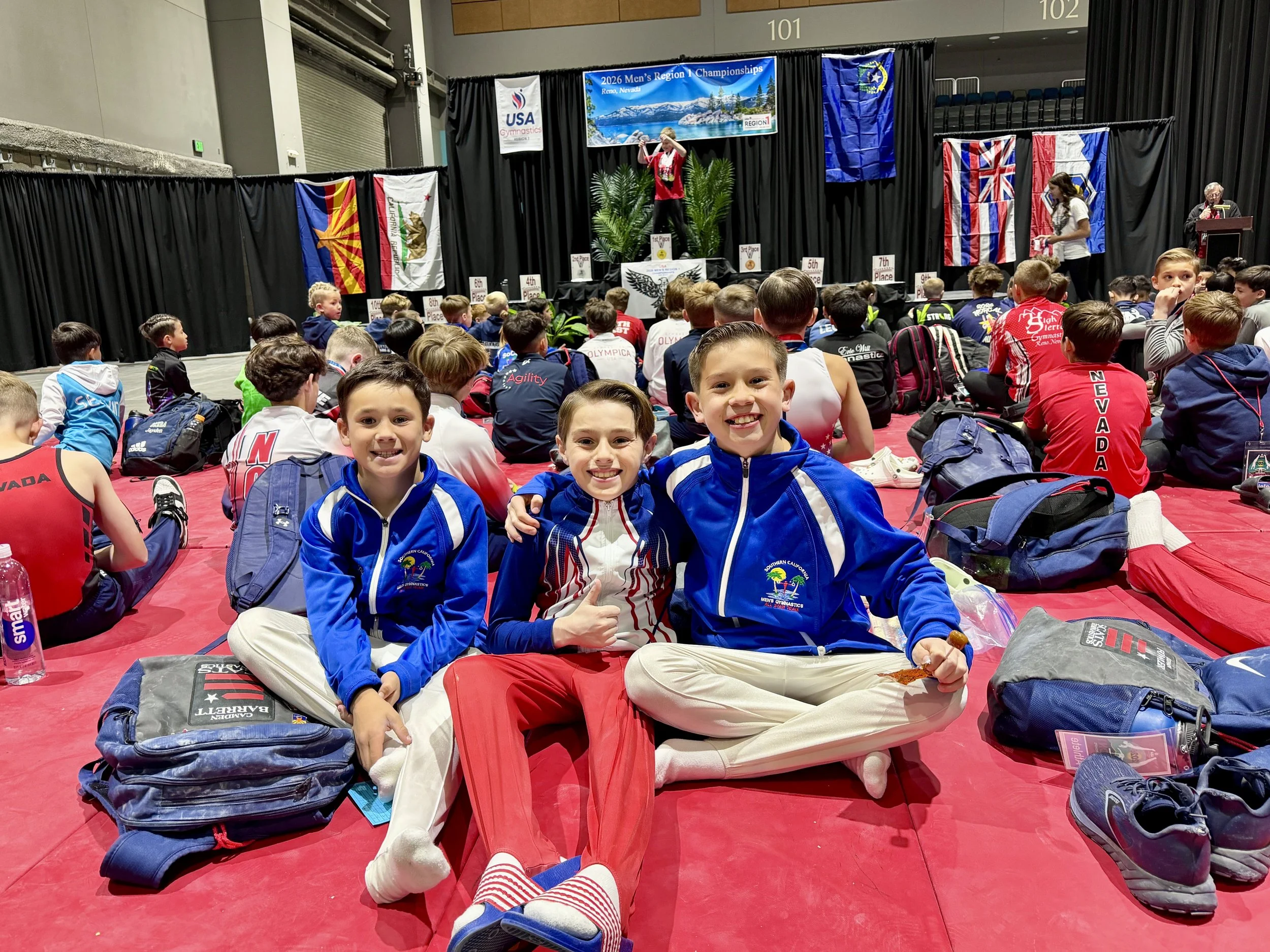
For athletes who transition to North County Gymnastics' competitive teams, their social and emotional development reaches a new level.
This is where teamwork becomes real responsibility.
What Changes at the Team Level:
1. Shared Goals
Athletes train together daily, working toward:
Competitions
Team scores
Personal bests
They learn that their effort impacts the group.
2. Deeper Relationships
Spending more time together builds:
Strong friendships
Trust
Support systems
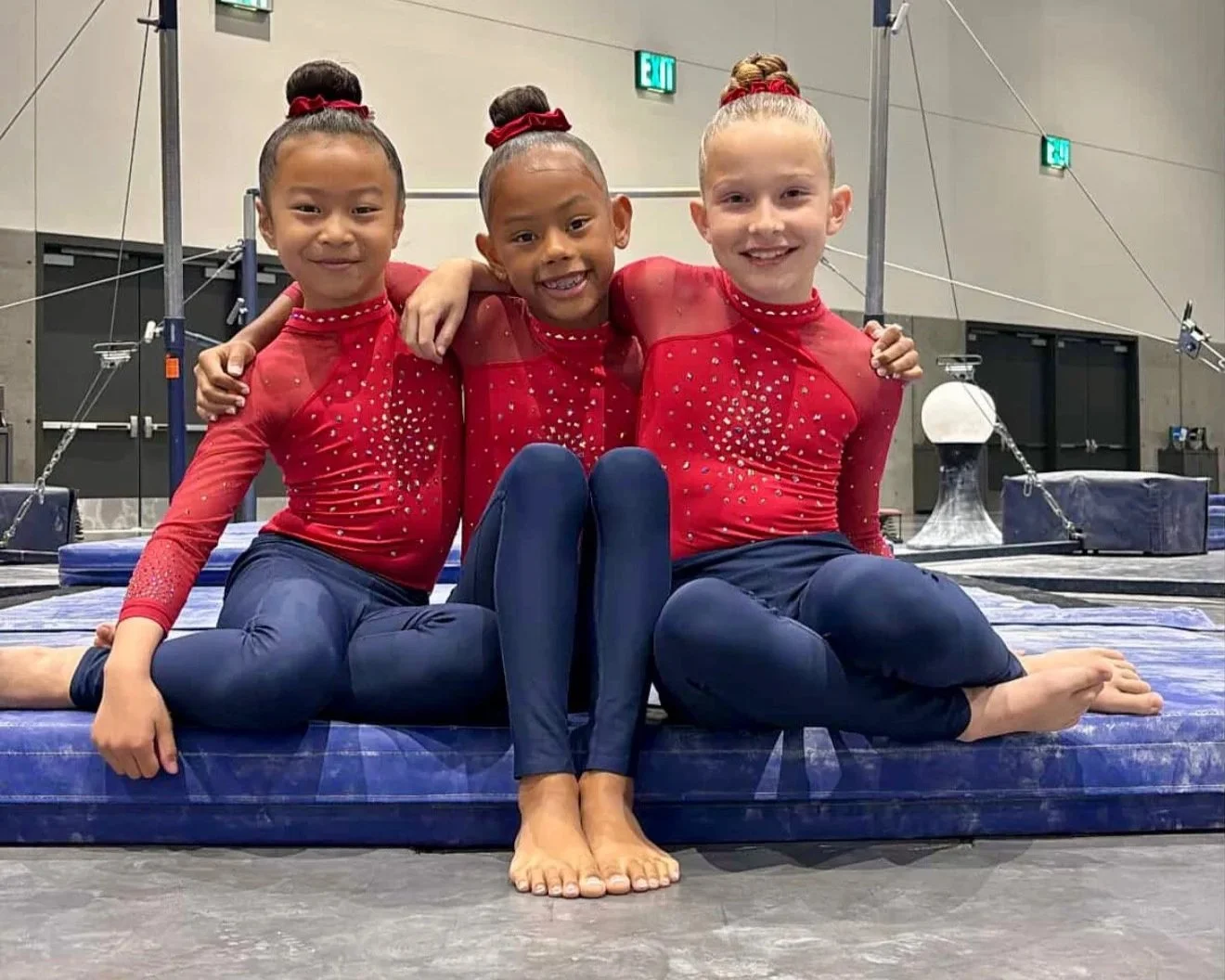
Teammates become a second family.
3. Handling Pressure
Competition introduces:
Nerves
Expectations
Wins and losses
Athletes learn how to:
Stay composed under pressure
Bounce back from mistakes
Support teammates regardless of outcomes
4. Leadership Development
Older athletes naturally step into leadership roles by:
Encouraging younger teammates
Modeling behavior
Setting the tone in practice
This is where confidence becomes identity.
Real Parent Experience
"The team environment has been amazing. My daughter has built lifelong friendships and learned how to push through challenges with support from her teammates."
— Gyminny Kids Parent (Facebook Review)
Why Gymnastics Builds Emotional Resilience Better Than Most Activities
There's a reason gymnastics athletes tend to carry themselves differently.
They've learned how to deal with adversity early.
In a single class, a child might:
Struggle with a skill
Watch others succeed
Feel frustrated
Try again
Finally get it
That cycle teaches:
Persistence
Patience
Self-control
Confidence earned through effort
And because our coaches guide kids through those moments with encouragement and structure, they learn how to handle emotions in a healthy way.
The Gyminny Kids Difference
There are many gymnastics classes for kids.
What makes Gyminny Kids different is our intentional focus on development beyond the physical.
Here's how we support social growth at every level:
Career coaches who understand child development
Consistent class structure and expectations
Clean, organized environments that reduce chaos
Positive coaching that reinforces effort and behavior
Long-term athlete development from toddler to team
If you're looking for an activity that builds more than just physical ability, gymnastics is one of the strongest foundations you can give your child.
Start with gymnastics. Go anywhere!
Proudly Serving Families In:
• 4S Ranch
• Poway
• Carlsbad
• La Costa
Quick Links
• Register for a free trial class today→]
• Adaptive gymnastics classes at Gyminny Kids→]
• Learn more about GK's no registration or annual fees pricing model→]
• Competitive gymnastics training→]
• Gymnastics mindset training→]
• Why Families Choose Gyminny Kids→]
Frequently Asked Questions
How does gymnastics help children develop social skills?
Gymnastics helps children develop social skills by placing them in structured group environments where they practice listening, taking turns, communicating, and supporting peers. Over time, this builds confidence, cooperation, and emotional awareness.
Are gymnastics classes good for shy kids?
Yes. Gymnastics is one of the best activities for shy children because it combines structured guidance with gradual social exposure, helping kids build confidence at their own pace.
What age should my child start gymnastics?
Children can start as early as 9 months in parent-tot classes. Early exposure helps build comfort in group settings and supports early social development.
Does gymnastics teach teamwork even though it's an individual sport?
Absolutely. While performances are individual, training is group-based. Kids learn to support each other, celebrate successes, and contribute to a positive team environment.
What's the difference between recreational and competitive gymnastics socially?
Recreational classes focus on foundational social skills like listening and cooperation, while competitive teams build deeper relationships, leadership, accountability, and resilience under pressure.