
Inside a Kids Gymnastics Class: What Your Child Will Do From Warm Up to Cool Down
Owner,North County Gymnastics & The Gyminny Kids
Former Gymnast, Coach, Judge, and Father ofFive Competitive Gymnasts
When parents are considering enrolling their child ingymnastics classes, one of the most common questions is simple:
What actually happens during agymnastics class?
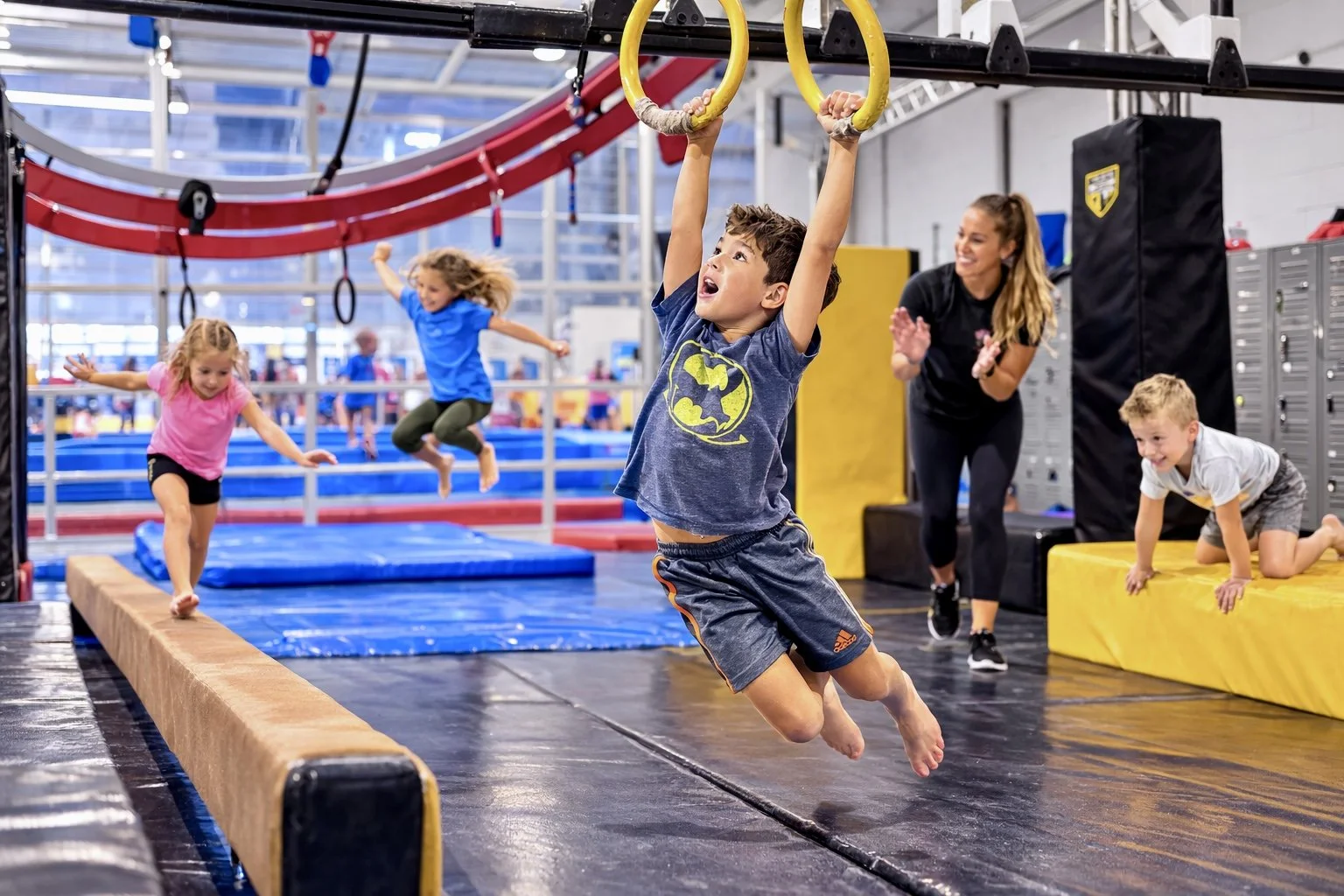
From the outside, gymnastics can look like organized chaos. Kids are climbing, swinging, jumping, rolling, and laughing all at once.
But behind the fun is a structured lesson designed to build strength, coordination, listening skills, confidence, andresilience.
AtNorth County Gymnastics & The Gyminny Kids, every class follows a purposeful structure designed to help children learn safely while having fun.
While the exact format varies based on age and level, most classes follow the same overall structure:
Warm up → skill instruction → equipment rotations → conditioning → fun station→ cool down → group cheer or clap!
Here is what your child will typically experience inside a kids'gymnastics class.
Warm Up: Preparing the Body and Mind
Classes usually begin with a group warm-up lasting around 5-8 minutes.
This helps children transition into class while preparing their muscles and joints for physical activity.
Warm-ups may include:
• Jogging or skipping
• Jumping jacks
• Arm circles
• Leg swings
• Basic stretching
• Balance drills
For younger children, warm-ups are often incorporated into fun obstacle courses or follow-the-leader activities.
For older kids, warm-ups are more structured and athletic.
Warm-ups are about more than physical preparation. They also help children practice:
• Listening skills
• Following instructions
• Staying focused
• Working as a group
These are life skills that carry far beyond the gym.
Skill Development: Building Foundational Gymnastics Skills
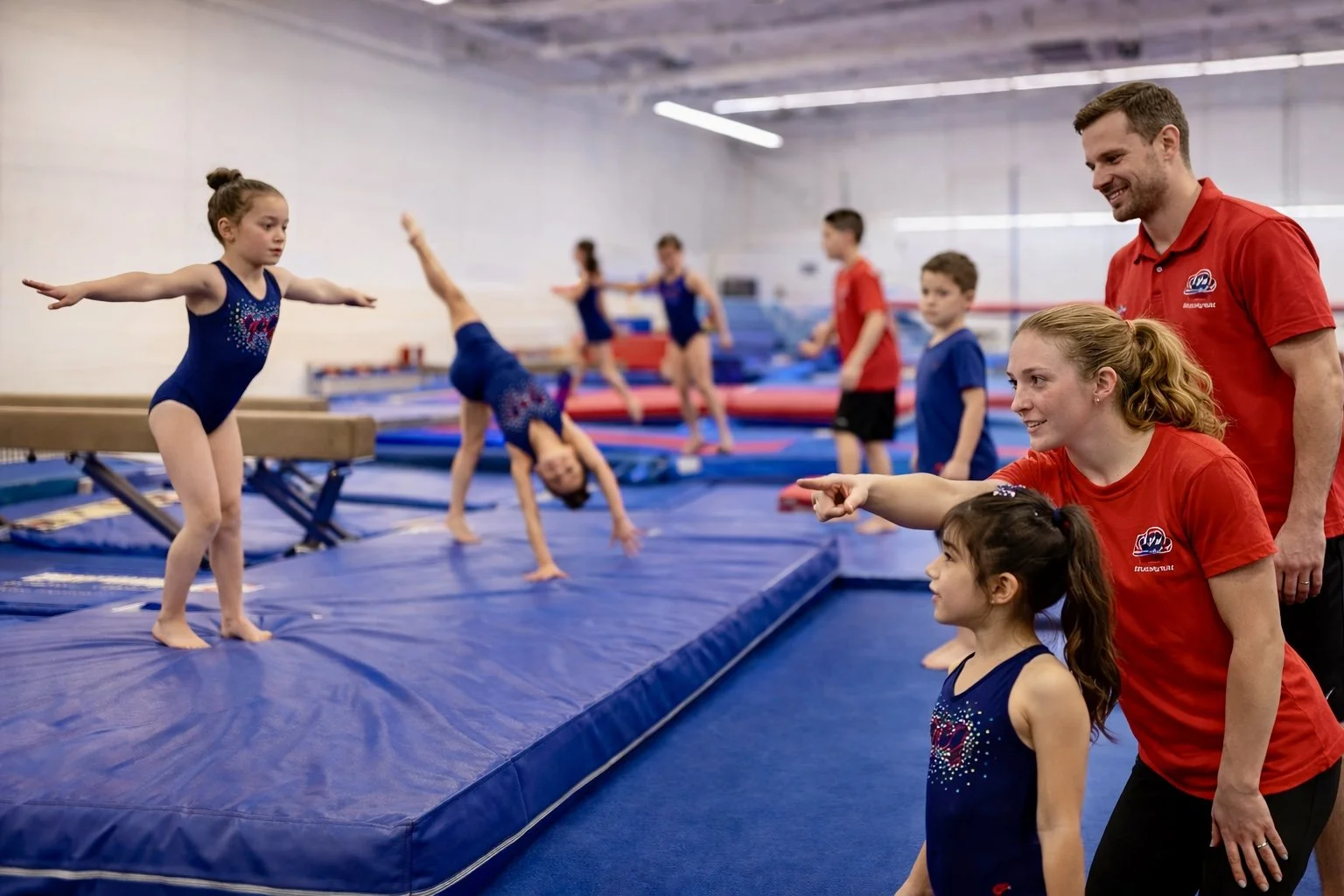
After the warm-up, children move into skill instruction.
For beginners, the focus is on fundamental gymnastics skills such as:
• Backward rolls
• Handstands
• Cartwheels
• Bridges
• Jumps and body shapes
• Chin hold on bars
• Basics on all Olympic apparatus
These basic skillsbuild the foundation for all future athletic development.
Many experts in youth development say:
"Gymnastics is the foundation for all sports."
Children learn how to run, jump, land, balance, climb, and control their bodies.
These movement patterns support success in nearly every other sport.
According to the American Academy of Pediatrics, structured physical activity in early childhood improves coordination, balance, and overall motor development.
Equipment Rotations: Exploring the Gym
One of the most exciting parts of class is rotating through different equipment stations.
Depending on the class level, children may practice on:
• Balance beam (girls)
• Uneven bars
• Vault
• Floor exercise
• Trampolines
• Rings, parallel bars, pommel horse (boys)
• Foam pits
•Ninja - parkour-inspired obstacle courses
Each event helps develop different abilities.
For example:
Beam improves balance and focus.
Bars build grip and upper-body strength.
Floor develops coordination and agility.
Vault builds speed, quick-twitch muscle, and explosive power.
Rotations also keep kids engaged and excited throughoutclass.
Conditioning: Building Strength Safely
Gymnastics requires strength, and even recreational classes include age-appropriate conditioning.
Conditioning may include:
• Core exercises
• Planks
• Leg lifts
• Hanging drills
• Jumping exercises
• Push-ups
• Body weight exercises
For younger children, these activities are often built into games or obstacle circuits. Just getting in and out of the foam pit is a tremendous workout, and the kids don't even know it because it's built into a fun activity.
Strength training helps prevent injury and supports safe progression into more advanced skills later on.
Cool Down: Ending Class the Right Way
The final part ofclass is the cool-down period.
This helps the body recover and allows coaches to reinforce positive effort.
Cool downs may include:
• Gentle stretching
• Flexibility exercises
• Breathing exercises
• Quick class recap
• Words of affirmation
• Recap successes
• High fives or group cheer
Coaches often highlight strong effort or improvement, helping children leave class feeling proud of what they accomplished. The focus atGyminny Kids remains on personal bests and effort over ability and talent.
What Parents Often Notice First
Parents often tell us they see changes in their children after just a few weeks.
Children begin to develop:
• Confidence
• Focus
• Listening skills
• Strength
• Coordination
• Resilience
They begin climbing out of their crib, or they see increased ability at the playground.
One Google parent review captures this well:
"My daughter started shy and unsure. Within a few weeks, she was smiling, making friends, and proudly showing us new skills every class. The coaches are incredible."
— Google Review
Another parent wrote on Yelp:
"Gyminny Kids has the most organized and positive gymnastics classes we've experienced. The coaches are patient, encouraging, and clearly care about every child's progress."
— Yelp Review
These experiences are exactly what great youth programs are designed to create.
Why Gymnastics Helps Children Beyond the Gym
Gymnastics teaches children something powerful:
Progress comes from effort.
Kids learn that trying again after falling is part of the process.
They learn to manage nerves, push through challenges, and celebrate small improvements.
Those lessons apply everywhere in life.
Start with Gymnastics, go anywhere!
Proudly Serving Families In:
Families throughout North County trustNorth County Gymnastics & The Gyminny Kids forsafe, clean, high-quality youth gymnastics instruction.
Quick Links
•Register for a free trial class today→]
•Recreational versus team: which is better for my child?→]
•Learn more about GK's no registration or annual fees pricing model→]
•Competitive gymnastics training→]
•Gymnastics mindset training→]
•Why Families Choose Gyminny Kids→]
Frequently Asked Questions
What age can kids start gymnastics?
Many gymnastics programs start children as young as 9 months old in parent-child classes. These early programs focus on coordination, balance, and confidence.
How long is a typical kids gymnastics class?
Most recreational gymnastics classes last 45–60 minutes, depending on the age group.
Will my child be safe in gymnastics?
Safety is a top priority. Quality gyms use padded equipment, trained coaches, and structured progressions to teach skills safely.
What if my child is shy?
Gymnastics is one of the best activities for shy children. The structured environment helps them build confidence gradually.
Does gymnastics help other sports?
Yes. Gymnastics builds strength, coordination, balance, and body control that transfer to nearly every sport.