
Age-by-Age Gymnastics Skills Guide: What to Expect from Toddler Through Elementary
By Daniel Gundert | Gym Owner, Coach, Judge, Parent of Five Competitive Gymnasts
When parents search for gymnastics classes for kids, one of the most common questions is simple:
What gymnastics skills should my child know at each age?
As a gym owner, former gymnast, judge, and father of five competitive gymnasts, I understand that question from both sides. You want to make sure your child is progressing. You want to know if they are on track. And you want to understand what is realistic for their age.
The truth is this:
Gymnastics is a progression-based sport. Skills build on skills. And development matters more than speed.
Below is a clear, age-by-age guide to help you understand what typically happens inside a structured kids' gymnastics class.
As you read this blog, please keep in mind that these skills provide a general outline of proper skill development. Still, there may be instances where athletes are above or below average and may move faster or slower through the levels based on ability, attendance, attitude, and aptitude.
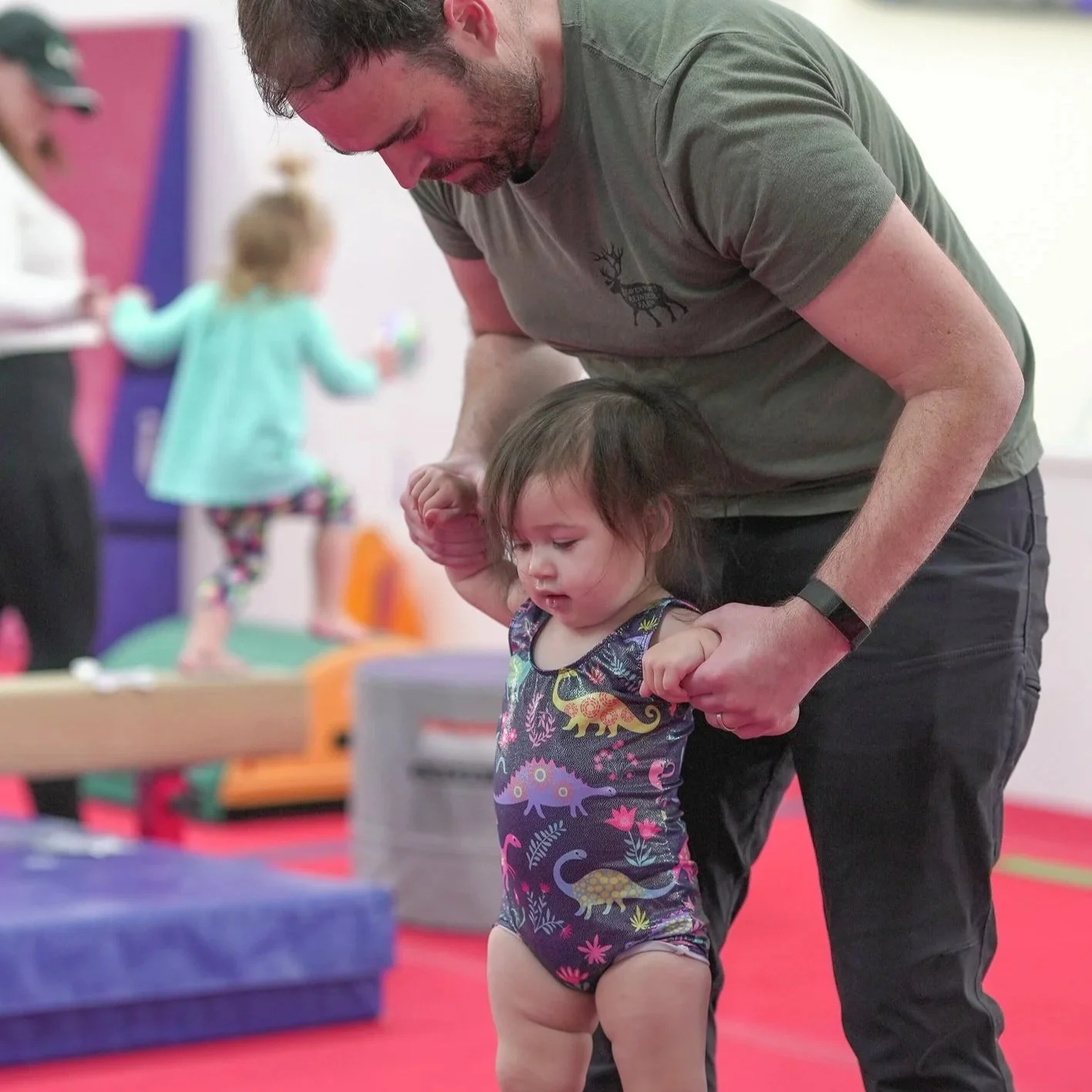
Gymnastics Classes for Toddlers (Walking to Age 3)
Typical class type: Parent-and-me or toddler gymnastics classes
Primary focus: Body awareness, listening skills, safe exploration.
At this age, gymnastics classes for toddlers are not about high-level flips. They are about:
• Locomotor
• Walking up and down soft inclines
• Hanging from a low bar
• Forward rolls with assistance
• Jumping with two feet
• Balance beam walking with support
• Learning how to fall safely
• Following one-step instructions
This stage builds coordination, grip strength, and confidence. It also teaches toddlers how to participate in a structured class environment.
One of the most overlooked benefits of toddler gymnastics classes is social development. Children learn to wait their turn, follow directions, and separate gradually from parents.
Preschool Gymnastics (Ages 3 to 4)
Typical class type: Independent preschool gymnastics class
Primary focus: Basic shapes and foundational movement
Around age three, most children transition into independent classes.
Common skills at this level include:
• Forward rolls independently
• Backward rolls down a wedge
• Straight jumps and tuck jumps
• Bear crawls and crab walks
• Beginning cartwheel drills
• Intro to handstands
• Hanging and swinging on bars
• Chin hold
• Balance beam walking without assistance
• Introduction to all six of the men's and four women's Olympic apparatus
This is where children begin learning proper gymnastics shapes, hollow, arch, tuck, and straight body positions.
Confidence grows quickly at this stage. So does coordination.
Pre-K and Early Elementary (Ages 4 to 5)
Typical class type: Beginner kids' gymnastics class
Primary focus: Strength, control, and introductory skill combinations
At this level, skills begin to look more recognizable:
• Cartwheels
• Handstand attempts against a wall
• Bridge holds
• Pullover drills on bars
• Straight jumps on a trampoline
• Balance beam kicks and small leaps
Children start combining movements. They begin learning how to control their body in space.
This is also the age when many girls' gymnastics class enrollments increase. But it is important to remember: gymnastics is for boys and girls equally. The strength, coordination, and discipline transfer to every sport.
Elementary Beginner (Ages 6 to 8)
Typical class type: Recreational gymnastics classes
Primary focus: Skill development and technical consistency
Now we begin to see stronger foundational skills:
• Cartwheel to handstand
• Round-off introduction
• Backward rolls independently
• Backbend kickovers (in progress)
• Pullovers on bars
• Cast drills
• Straight jumps and tuck jumps on the vault board
• Balance beam leaps and turns
Gymnastics classes for kids at this age begin separating recreational participation from those who may show interest in team pathways.
The key traits that stand out are:
• Listening skills
• Body control
• Coachability
• Emotional resilience
Gymnastics teaches children how to fall, get up, and try again.
Upper Elementary (Ages 8 to 11)
Typical class type: Advanced recreational or pre-team
Primary focus: Strength, discipline, and clean execution
By this age, foundational strength is important.
Common skills may include:
• Round-offs
• Back walkovers
• Handstand holds
• Glide swings on bars
• Basic bar casts
• Strong beam routines
• Front handspring drills
• Tap swings on all events
This is where confidence either accelerates or fades. The environment matters.
In the right kids' gymnastics class, children learn:
• Discipline
• Focus
• Emotional control
• Ownership of their progress
As I often tell parents, gymnastics is the foundation for all sports.
Start with gymnastics. Go anywhere!
What If My Child Is "Behind"?
Parents often compare.
They see another child doing a cartwheel at age four and wonder if theirs should be.
Here is what matters more than age:
• Does your child feel safe?
• Are they improving over time?
• Are they learning discipline and body control?
• Are they excited to come back?
• Are they learning life lessons?
Development varies. Growth spurts change coordination. Confidence fluctuates.
The goal is progress, not comparison.
Why Age-Appropriate Progressions Matter
In a professionally structured gym:
• Skills are learned in the proper order
• Strength is developed before power
• Safety systems are in place
• Coaches are trained weekly
• Curriculum builds intentionally
At North County Gymnastics & The Gyminny Kids, we hold weekly management meetings, weekly all-staff meetings, and weekly office meetings to ensure consistency across locations. That's not all! Gyminny Kids has its own internal training module, Gyminny Kids Academy, which trains all employees in all roles.
That system matters.
It protects children from learning skills too early or without proper preparation, because the company standard applies to everyone involved.
The Real Benefits Go Beyond Skills
When parents enroll in gymnastics classes for kids, they think about cartwheels and handstands.
But what children really gain is:
• Self-belief
• Listening skills
• Strength
• Safe falling mechanics
• Social development
• A physical foundation
Those traits show up in school, at home, and in every sport they try later.
I have seen it thousands of times.
If you are wondering where your child fits, the best next step is simple.
Come observe a class.
Gymnastics is not about racing through skills. It is about building strong, confident, disciplined, well-rounded humans, one progression at a time.
Quick Links
• Register for a free trial class today→]
• Recreational versus team: which is better for my child?→]
• Learn more about GK's no registration or annual fees pricing model→]
• Competitive gymnastics training→]
• Gymnastics mindset training→]
• Why Families Choose Gyminny Kids→]
Frequently Asked Questions
What gymnastics skills should my child know at age 3?
At age 3, children typically work on forward rolls, balance beam walking, basic jumping, locomotor skills, and bar hanging. The focus is on coordination and confidence, not advanced skills.
What skills should a 5-year-old know in gymnastics?
Most 5-year-olds can perform cartwheels, hold bridges, attempt handstands with support, and follow structured skill circuits.
Is gymnastics safe for toddlers?
Yes, when taught in a structured toddler gymnastics class with padded equipment and trained coaches who emphasize safe falling and supervision.
Is gymnastics better for girls or boys?
Gymnastics benefits boys and girls equally. Strength, flexibility, discipline, and coordination are human-specific skills.
When should my child move to team gymnastics?
Team placement is based on strength, skill acquisition, focus, and coach evaluation, not just age.