
Why Pediatricians and Therapists Often Recommend Gymnastics for Children With Special Needs
Parents of children with special needs are often searching for activities that help their child grow physically, emotionally, and socially while still feeling safe, encouraged, and having fun. For many families, gymnastics becomes one of the first places where their child truly feels successful.
That is one reason more pediatricians, occupational therapists, physical therapists, behavioral specialists, and speech therapists are recommending adaptive gymnastics programs for children with autism spectrum disorder, ADHD, sensory processing challenges, Down syndrome, developmental delays, anxiety, and other physical or neurological differences.
At North County Gymnastics & The Gyminny Kids, we have worked with thousands of children across San Diego County over the years, including many children with varying physical, developmental, sensory, and emotional needs. As both a gymnastics professional and a father of five competitive gymnasts, I have personally seen how movement, structure, repetition, encouragement, and physical confidence can positively impact a child far beyond the gym floor.
Gymnastics gives children opportunities to build coordination, body awareness, confidence, independence, emotional regulation, and social interaction, all while having fun in a highly engaging environment.
Why Movement Matters for Children With Special Needs
Many children with special needs benefit from physical activities that stimulate:
body awareness
coordination
bilateral movement
spatial awareness
and sensory integration
Gymnastics naturally incorporates all of these elements.
According to the Centers for Disease Control and Prevention (CDC), children with disabilities benefit significantly from regular physical activity, including improvements in physical health, emotional health, social participation, and overall quality of life.
Research published through the journal Autism Research found that many children with autism spectrum disorder experience measurable motor coordination and balance challenges, which is one reason movement-based activities are often incorporated into developmental support plans.
For many children, gymnastics combines therapy-like benefits with something equally important: enjoyment.
That matters.
Children are far more likely to continue activities that feel exciting, rewarding, and empowering rather than clinical.
How Gymnastics Helps Build Coordination and Motor Skills
One of the most common reasons therapists recommend gymnastics is because gymnastics naturally develops:
gross motor skills
balance
coordination
and body control
Many gymnastics movements challenge the vestibular system, which plays a major role in balance, spatial orientation, and sensory processing.
Activities like:
can help children better understand how their bodies move through space.
The American Occupational Therapy Association explains that vestibular and proprioceptive movement activities may support sensory processing, body awareness, motor planning, and emotional regulation in many children with sensory processing challenges.
Research published in the International Journal of Environmental Research and Public Health also found that gymnastics-based movement training may positively influence balance control, flexibility, coordination, and overall motor development in children.
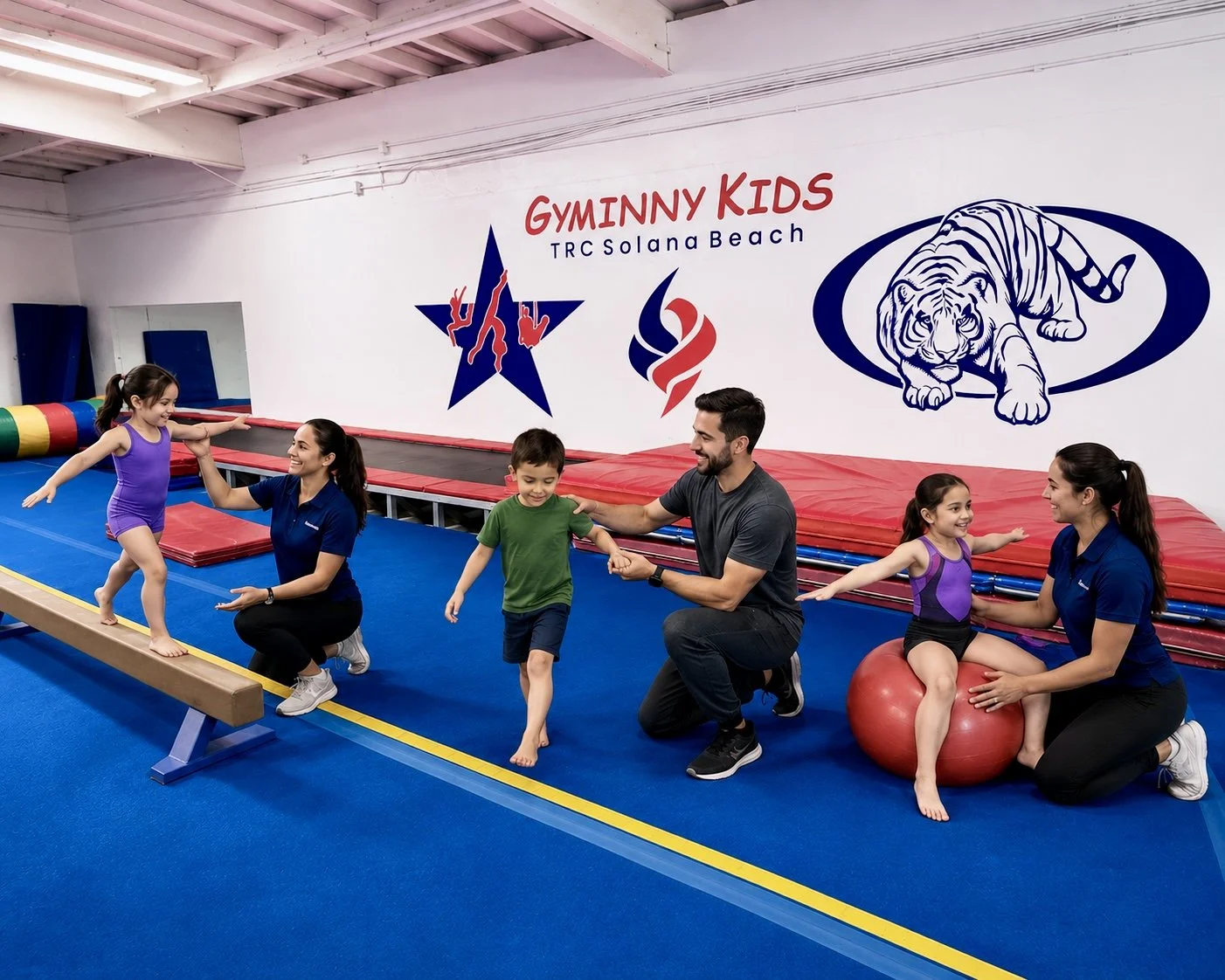
At Gyminny Kids, our adaptive gymnastics environments often include:
foam pits
padded equipment
obstacle courses
low-impact stations,
trampolines,
and progressive skill circuits designed to reduce fear while increasing success.
These tools allow children to safely practice movements repeatedly while building confidence through small wins.
Gymnastics Can Help Children With ADHD and Sensory Challenges
Many children with ADHD or sensory challenges benefit from activities that combine movement, structure, repetition, and engagement.
Unlike many traditional sports, where children may spend significant time standing still, gymnastics classes typically keep children continuously engaged through rotating stations and active movement patterns.
Research published in the Journal of Attention Disorders found that structured physical activity may help improve executive functioning, attention span, emotional regulation, and impulse control in children with ADHD.
This is one reason many therapists appreciate movement-based activities that combine physical exercise with predictable routines and positive reinforcement.
At Gyminny Kids, coaches work to create a structured environment where children are challenged appropriately while still feeling emotionally safe and supported.
Gymnastics Can Help Build Social Confidence
Many parents initially enroll their child in hopes of improving coordination or physical confidence, but they are often surprised by the social growth that follows.
Structured gymnastics classes help children practice:
taking turns
following directions
transitioning between stations
participating in groups
waiting appropriately
and interacting with peers
For some children, simply entering a group environment can feel overwhelming at first. Over time, familiar routines and supportive coaching can help reduce anxiety and build comfort.
Research published through the National Institutes of Health found that inclusive physical activity programs may improve social participation, peer interaction, and quality of life for children with developmental disabilities.
One parent recently shared in a Google review:
“Our son struggled with confidence and participating in group activities before joining the VIP program. The coaches were patient, encouraging, and structured. Now he asks every week when he gets to go back to gymnastics.”
Another family shared:
“We tried several sports and activities before finding Gyminny Kids. This was the first place our daughter truly felt successful.”
Those moments matter deeply to families.
Confidence Often Transfers Outside the Gym
One of the most powerful aspects of adaptive gymnastics is that the confidence gained in the gym often carries over into everyday life.
Parents frequently report improvements in:
playground confidence
willingness to try new things
emotional resilience
listening skills
and self-esteem
Research from the CDC shows that regular physical activity in children is associated with improved mental health, reduced anxiety, better sleep, stronger emotional well-being, and increased confidence.
Gymnastics teaches children that progress happens step by step.
A child who once feared jumping off a low block may eventually swing across bars, climb obstacles, or confidently participate in class routines.
Those physical accomplishments can become emotional breakthroughs.
Why Families Often Choose Adaptive Gymnastics Over Traditional Team Sports
For some children with special needs, traditional team sports can feel overwhelming because of:
loud environments
inconsistent participation
large team sizes
unpredictable pacing
or limited individual support
Gymnastics offers a different experience.
Children are constantly moving, learning, and engaging in smaller progressions that can be adjusted to their individual comfort level.
Many adaptive gymnastics environments also allow children to build confidence independently while still benefiting from social interaction and teamwork.
That combination can be incredibly powerful.
Safety and Coaching Matter
Not all gymnastics programs are equally equipped to work with children with special needs.
Families should look for programs that emphasize:
patience
individualized progressions
communication with parents
and a positive learning environment
At Gyminny Kids, safety systems include:
padded equipment
progressive skill development
structured supervision
ongoing staff training
background checks
SafeSport training
Finding the Right Adaptive Gymnastics Program
Every child is different.
Some children thrive immediately in group settings. Others may need additional support, gradual exposure, or modified instruction.
The best adaptive gymnastics programs understand that success looks different for every child.
Parents searching for special needs gymnastics classes in San Diego should look for programs that offer:
supportive coaching
individualized pacing
safe equipment
positive reinforcement
flexible progressions
and an encouraging environment
The right environment can make an enormous difference.
Proudly Serving Families In:
• 4S Ranch
• Poway
• Carlsbad
• La Costa
By Daniel Gundert: Owner of North County Gymnastics & The Gyminny Kids, former gymnast, lifelong coach, national gymnastics judge, best-selling author, and father of five competitive gymnasts.
Frequently Asked Questions
Is gymnastics good for children with autism?
Many children with autism benefit from gymnastics because it can help improve coordination, sensory processing, body awareness, confidence, and social interaction in a structured environment.
Can children with ADHD benefit from gymnastics?
Yes. Gymnastics keeps children physically engaged while teaching listening skills, body control, focus, and structured movement patterns.
What age can children start adaptive gymnastics?
Many adaptive gymnastics programs begin around toddler or preschool age, although every child develops differently.
Is gymnastics safe for children with special needs?
When taught by trained coaches using proper progressions and supervision, gymnastics can be a very safe and beneficial activity for many children with special needs.
What makes adaptive gymnastics different?
Adaptive gymnastics classes may include modified instruction, individualized pacing, smaller group sizes, additional sensory considerations, and specialized coaching approaches.