
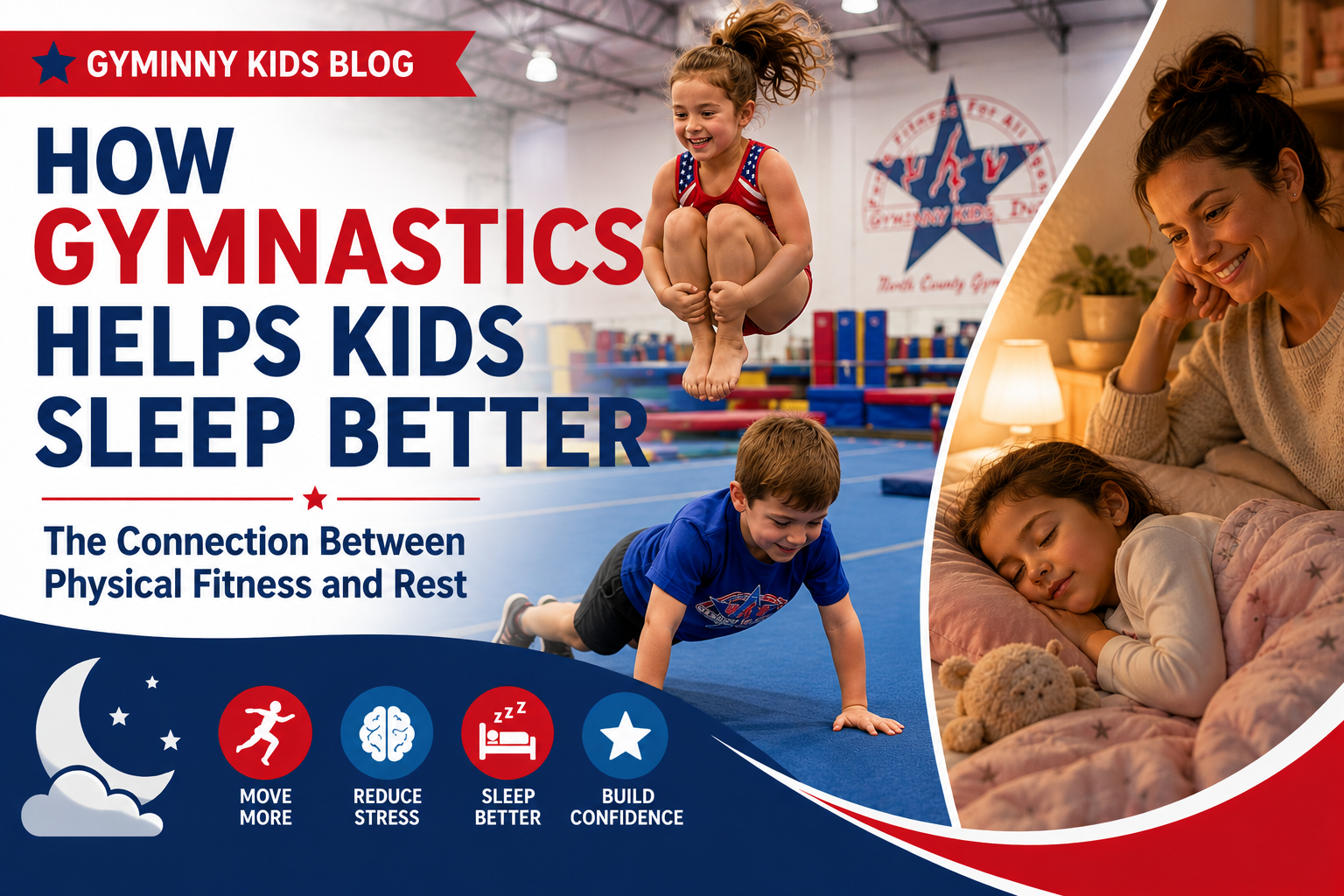
How Gymnastics Helps Kids Sleep Better: The Connection Between Physical Fitness and Rest
As parents, we spend a lot of time thinking about our children's sleep.
Are they getting enough rest? Why do they wake up so early? Why do they seem full of energy at bedtime but exhausted during school?
The reality is that many children today struggle to get the quality sleep their growing bodies need. Increased screen time, busy schedules, academic pressures, and a lack of physical activity can all contribute to poor sleep habits.
One question we hear from parents all the time is:
Does gymnastics and ninja help kids sleep better?
In our experience, the answer is often yes.
After more than twenty years of coaching gymnastics and raising six children of my own, I have noticed a clear pattern. Children who participate in regular physical activity, especially structured activities like gymnastics, often fall asleep faster, sleep more soundly, and wake up feeling more refreshed.
At Gyminny Kids, our mission is simple: Fun and fitness while teaching character through sport. Along the way, many families discover an unexpected benefit: better sleep.
Why Sleep Matters for Growing Children
Sleep is one of the most important parts of childhood development.
During sleep, a child's body works hard to:
Build and repair muscle tissue
Strengthen the immune system
Process new information and learning
Support emotional regulation
Release growth hormones
Improve memory and concentration
According to the American Academy of Sleep Medicine, school-age children generally need between 9 and 12 hours of sleep per night, while preschool-aged children need even more.
Unfortunately, many children fall short of those recommendations.
When children don't get enough quality sleep, parents often notice:
Increased irritability
Difficulty focusing
Lower energy levels
Emotional outbursts
Reduced athletic performance
Challenges at school
The good news is that regular physical activity can play a major role in helping children establish healthier sleep patterns.
How Gymnastics Supports Better Sleep
Gymnastics provides a unique combination of physical exercise, mental engagement, social interaction, and skill development.
All four of those factors can contribute to improved sleep quality.
Physical Activity Helps Burn Energy
This may seem obvious, but many children today are not moving enough throughout the day.
Gymnastics classes keep children active through:
Running
Jumping
Climbing
Swinging
Balancing
A productive gymnastics or ninja class challenges the entire body.
When children have opportunities to move, play, and exercise, their bodies naturally become more prepared for rest later in the evening.
Research consistently shows that children who engage in regular physical activity tend to fall asleep faster and experience deeper sleep than their less active peers.
Gymnastics Challenges the Brain
Gymnastics isn't only physical.
Every class requires children to:
Follow directions
Learn new skills
Solve physical challenges
Remember sequences
Practice body awareness
Mental stimulation is another important ingredient for healthy sleep.
Children leave class physically tired and mentally engaged, creating an ideal combination for winding down later in the day.
Physical Activity Helps Reduce Stress
Children experience stress too.
School, friendships, family changes, social pressures, and everyday challenges can create anxiety even in young children.
Physical activity has been shown to help regulate mood and reduce stress hormones.
Many parents tell us their children seem calmer and more relaxed after gymnastics or ninja.
That doesn't mean children leave class quietly. In fact, many are excited and energized immediately afterward.
However, as the evening progresses, that physical and emotional outlet often contributes to a more peaceful bedtime routine.
Consistent Routines Support Better Sleep
Children thrive on routine.
Gymnastics classes often become a predictable part of a family's weekly schedule.
A structured week helps children develop healthy rhythms that support consistent sleep habits.
Kids crave structure. When children know they have school, activities, dinner, homework, and bedtime occurring at similar times throughout the week, their bodies begin to develop stronger sleep patterns.
What We See as Parents
As both a gym owner and father, I have had the opportunity to watch this firsthand.
My own children have spent countless hours in gymnastics gyms over the years.
Audio, Axel, Finley, Remi, Rocket, and now our newest little one have all grown up around physical activity and athletics.
One thing Melanie and I consistently noticed was that our kids generally slept best during periods when they were physically active and engaged in sports.
The days that included training, outdoor play, or active learning often led to smoother evenings and fewer behavioral issues than days spent primarily indoors or in front of screens.
Every child is different, of course, but many gymnastics parents share similar experiences.
It's common for families to tell us:
"My child sleeps so much better on gymnastics days."
The Sleep Benefits of Toddler Gymnastics
The connection between gymnastics and sleep may be especially noticeable in younger children.
Many parents enrolling in gymnastics classes for toddlers are looking for:
Physical activity
Social development
Better sleep can be an added benefit.
Toddler gymnastics classes offer young children opportunities to climb, balance, jump, crawl, swing, and explore movement in a safe environment.
Those experiences support healthy physical development while helping toddlers use their energy productively.
Many parents report that after participating in toddler gymnastics classes, their children settle more easily during naps and bedtime routines.
More Than Sleep: Building Healthy Habits for Life
While better sleep is valuable, the benefits of gymnastics extend far beyond it.
Gymnastics helps children develop:
Strength
Coordination
Confidence
Perseverance
Discipline
Respect
Resilience
These lessons often carry into school, friendships, family life, and future athletic pursuits.
At Gyminny Kids, we believe sports should help children grow as people, not just athletes.
That belief is reflected in everything we do.
When children learn to work hard, overcome challenges, support teammates, and believe in themselves, they develop character traits that will serve them long after their gymnastics journey ends.
Research & Expert Insights Section
What the Research Says About Exercise and Sleep
The connection between physical activity and sleep is well established. According to the American Academy of Sleep Medicine, regular exercise can improve sleep quality, help individuals fall asleep faster, and support deeper, more restorative sleep. Children who participate in consistent physical activity often experience healthier sleep patterns than children who lead more sedentary lifestyles.
The Centers for Disease Control and Prevention (CDC) recommends that children ages 6 to 17 engage in at least 60 minutes of physical activity each day. Activities that combine aerobic exercise, strength development, and coordination training can be especially beneficial for overall health and wellness.
Gymnastics naturally incorporates all three.
A typical gymnastics class includes running, jumping, climbing, balancing, swinging, strength exercises, and skill development. These activities challenge both the body and the brain, helping children use energy productively while supporting healthy growth and development.
While gymnastics is not a cure for sleep difficulties, many families find that regular participation helps establish healthier daily routines that contribute to improved rest.
Sources:
American Academy of Sleep Medicine
Centers for Disease Control and Prevention (CDC)
National Sleep Foundation
Parent Testimonial Section
What Gyminny Kids Families Tell Us
One of the most common comments we hear from parents sounds something like this:
"My child always sleeps great after gymnastics."
Parents frequently tell us that gymnastics days are some of the easiest bedtime nights of the week. Children leave class having exercised their bodies, focused their minds, interacted with peers, and accomplished new challenges.
Many families notice that their children are not only more physically tired, but also more emotionally regulated and prepared to settle into their evening routines.
While every child responds differently, the feedback we receive from families consistently reinforces what research has shown for years: active children often rest better.
Does Gymnastics Help Kids Sleep Better?
For many families, the answer is yes.
While every child is unique, regular participation in gymnastics can support better sleep by:
Increasing physical activity
Reducing excess energy
Challenging the brain
Supporting emotional well-being
Creating healthy routines
Encouraging overall wellness
Children who move more during the day are often better prepared to rest at night.
That combination of movement, learning, and fun is one reason so many families continue returning to gymnastics year after year.
Whether your child is a toddler exploring movement for the first time or a school-age athlete looking for a fun way to stay active, gymnastics offers benefits that reach far beyond the gym walls.
And sometimes, one of those benefits is a more peaceful bedtime for the entire family.
By Daniel Gundert, Owner of North County Gymnastics & The Gyminny Kids, former gymnast, lifelong coach, national gymnastics judge, best-selling author, and father of five competitive gymnasts.
Proudly Serving Families In:
• 4S Ranch
• Poway
• Carlsbad
• La Costa
Quick Links
• Register for a free trial class today→]
• Competitive gymnastics training→]
• Gymnastics mindset training→]
• Adaptive gymnastics classes at Gyminny Kids→]
• Learn more about GK's no registration or annual fees pricing model→]
• Why Families Choose Gyminny Kids→]
Frequently Asked Questions
Does gymnastics help kids sleep better?
Many parents report that their children sleep better on gymnastics days. Regular physical activity can help children fall asleep faster and experience deeper, more restorative sleep.
What age can children start gymnastics?
Many children begin parent participation classes around age 9 months. Structured gymnastics classes for toddlers often begin between the ages of 2 and 3.
How often should my child attend gymnastics?
Most recreational gymnasts attend once or twice per week. Families seeking additional physical activity may choose multiple classes.
Can gymnastics improve focus at school?
Physical activity has been linked to improved concentration, memory, and classroom performance. Many parents notice positive changes in attention and confidence after consistent participation.
Are gymnastics classes good for toddlers?
Yes. Toddler gymnastics classes can help develop coordination, balance, body awareness, confidence, and social skills while providing a fun outlet for physical activity.