
Gymnastics vs Martial Arts for Kids: Comparing Discipline, Fitness, and Skill Development
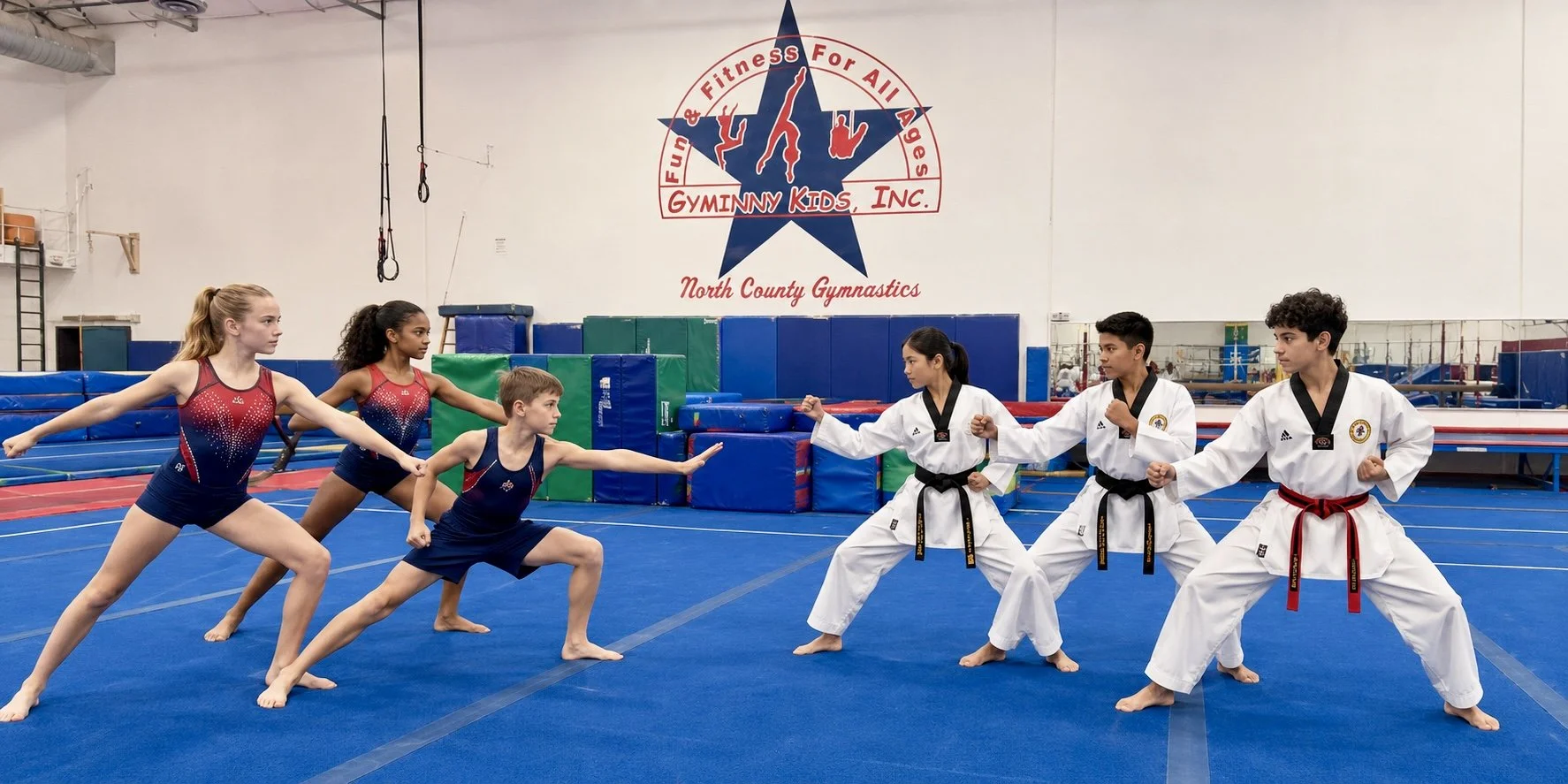
Parents today have more choices than ever when it comes to youth activities. Two of the most popular options are gymnastics and martial arts. Both offer physical activity, structure, discipline, and confidence-building. Both can positively impact a child's development. But many parents still ask the same question:
Is gymnastics or martial arts better for kids?
The truth is, both can be excellent choices depending on your child's personality, goals, and interests. But there are important differences between the two, especially in physical development, body awareness, social interaction, and long-term athletic foundations.
At North County Gymnastics & The Gyminny Kids, we work with thousands of children every week across all age groups and developmental stages. Many families actually try both gymnastics and martial arts before deciding which environment is the best fit for their child.
As a parent of five competitive gymnasts, a former gymnast, coach, and gymnastics judge, I've seen firsthand how gymnastics can shape children's confidence, focus, resilience, and physical literacy. That said, martial arts also offers valuable benefits, especially for children who thrive in highly structured, belt-progression systems.
The bigger question is not necessarily which activity is "better," but which one best supports your child's current developmental needs.
Gymnastics Builds the Foundation for Nearly Every Sport
One of the biggest differences between gymnastics and martial arts is the type of movement development children experience.
Gymnastics focuses heavily on:
Agility
Motor planning
Body control
These are considered foundational movement skills that transfer into nearly every other sport.
Research published in Human Movement Science found that structured physical activity programs significantly improve children's motor skill development and coordination over time.
The American Academy of Pediatrics also emphasizes the importance of physical literacy and movement development during childhood because these skills support long-term health, confidence, and athletic participation.
This is one reason gymnastics is often called:
"The foundation for all sports."
At Gyminny Kids, we see this all the time. Children who begin in gymnastics often transition successfully into soccer, baseball, football, basketball, dance, diving, cheerleading, surfing, martial arts, and many other sports because they already understand how to move their bodies efficiently.
Martial arts also develops athleticism, but gymnastics generally exposes children to a wider variety of movement patterns at an earlier age.
Martial Arts Often Emphasize Self-Control and Structure
Martial arts programs tend to focus heavily on:
Respect
Listening
Self control
Emotional regulation
Focus
Discipline
Goal progression through belt systems
For some children, especially those who respond well to highly structured environments and incremental achievement systems, martial arts can be an outstanding fit.
A 2022 study on Taekwondo participation found improvements in attentional self-regulation and reductions in conduct-related problems among participating children.
Additional research published through the NIH concluded that martial arts programs positively impacted agility, flexibility, coordination, balance, and overall physical fitness in children.
Many parents are drawn to martial arts because of the visible progression system. Belt advancement can create strong motivation and measurable milestones for kids.
Gymnastics develops discipline, too, but the progression system looks different. Advancement usually happens through skill mastery rather than visible belts or ranks.
Gymnastics Develops Comfort With Controlled Risk
One area where gymnastics stands out is helping children become comfortable managing controlled physical challenges.
Children learn:
How to fall safely
How to rotate their bodies
How to navigate space upside down
How to recover after mistakes
How to persist through fear
Children today often spend large portions of the day sitting indoors, using screens, and engaging in less unstructured physical play than previous generations. The American Academy of Pediatrics continues to emphasize the importance of movement and active play for cognitive and physical development.
Gymnastics introduces children to movement patterns that many kids do not experience elsewhere.
Forward rolls, climbing, swinging, balancing, jumping, hanging, cartwheels, and inversion work all help children build confidence in their bodies.
This physical confidence often carries into everyday life.
Which Activity Is Better for Confidence?
Honestly, both can be excellent for confidence.
Martial arts confidence often comes from:
Belt promotions
Self-defense skills
Structured mastery
Mental focus
Gymnastics confidence often comes from:
Overcoming fear
Learning difficult physical skills
Building body awareness
Performing independently
Persistence through repetition
One major difference is that gymnastics tends to expose children to a wider range of physical problem-solving.
Every apparatus presents different movement challenges. Children are constantly adapting, adjusting, balancing, rotating, climbing, swinging, and flipping.
That variety creates tremendous neurological stimulation for growing kids.
Research has shown that gymnastics-style training may positively impact balance, executive function, and motor coordination in children.
Social Development: Gymnastics vs Martial Arts
Parents are often surprised by how social gymnastics becomes.
Most recreational gymnastics classes involve:
Group warm-ups
Partner stations
Team encouragement
Shared obstacle courses
Cooperative learning
Children cheer each other on constantly.
One Gyminny Kids parent recently wrote on Google:
"My daughter came in shy and nervous. Within a few weeks, she was making friends, talking more confidently, and couldn't wait to come back every week."
Another Yelp review from a Gyminny Kids family shared:
"The coaches make the environment positive and encouraging. My son has learned confidence, patience, and how to work with other kids."
Martial arts can absolutely build friendships, especially in long-term programs, but some classes may feel slightly more individual and instructor-directed, depending on the style and school.
Which Is Better for Younger Kids?
For toddlers and younger elementary-age children, gymnastics often provides broader developmental benefits due to the sheer variety of movement exposure.
Young children benefit tremendously from:
Climbing
Crawling
Jumping
Hanging
Rolling
Balancing
Landing
Swinging
These movements help build gross motor skills and coordination during critical developmental years.
The American Academy of Pediatrics emphasizes that early movement experiences help build the foundation for lifelong physical literacy and motor development.
This is why many pediatric therapists and developmental specialists frequently recommend gymnastics-based movement programs for young children.
Injury Risk and Safety
Parents naturally wonder which activity is safer.
The reality is that injury risk depends heavily on:
Facility safety
Appropriate progressions
Class structure
Supervision
Equipment quality
Both gymnastics and martial arts can be very safe when run properly.
At Gyminny Kids, safety systems include:
Background checks
Ongoing training
Safety certifications
Progressive skill development
Specialized preschool equipment
Foam pits
Climate-controlled facilities
Safety inspections across all locations
Good programs prioritize readiness over rushing skills.
So Which One Should Parents Choose?
Here is the honest answer:
Choose the environment your child enjoys enough to stay consistent with.
Both gymnastics and martial arts can positively shape children physically and emotionally.
But gymnastics tends to provide:
Broader athletic foundations
More varied movement exposure
Greater body awareness
Strong transfer into other sports
Earlier gross motor development opportunities
Martial arts often provide:
Strong behavioral structure
Clear progression systems
Emotional regulation
Self-defense principles
Ritual and routine
For many families, gymnastics is the best starting point because it develops foundational athleticism that supports success almost everywhere else later.
Gymnastics is one of the few youth activities that simultaneously develops strength, flexibility, coordination, confidence, balance, agility, spatial awareness, and resilience.
That combination is difficult to replicate.
And perhaps most importantly, kids usually think it's fun.
When children are having fun, they stay active longer, work harder, and build healthier habits for life.
Gymnastics is the foundation for all sports. Start with gymnastics, go anywhere!
Quick Links:
Proudly Serving Families In:
• 4S Ranch
• Poway
• Carlsbad
• La Costa
By Daniel Gundert, Owner of North County Gymnastics & The Gyminny Kids, former gymnast, lifelong coach, national gymnastics judge, best-selling author, and father of five competitive gymnasts.
Frequently Asked Questions
Is gymnastics or martial arts better for shy kids?
Both can help shy children build confidence. Gymnastics often helps through social interaction and physical accomplishment, while martial arts may help through structure and discipline.
Which activity builds better athletic foundations?
Gymnastics generally develops broader athletic foundations by emphasizing coordination, balance, flexibility, agility, strength, and body awareness across a range of movement patterns.
Can kids do both gymnastics and martial arts?
Absolutely. Many children successfully participate in both activities, especially when schedules are balanced properly. These two sports tend to supplement each other.
Is gymnastics good for ADHD or high-energy children?
Many parents report strong benefits from gymnastics because it provides constant movement, physical challenges, and structured activity. Research also supports movement-based activities for the development of executive function and attention.
What age should kids start gymnastics?
Many gymnastics programs begin as early as walking age through parent participation classes. Structured recreational classes commonly begin around ages 3 to 5.
Does martial arts help kids with focus?
Research suggests that martial arts training may improve attentional control, self-regulation, and emotional discipline in children.