
Why Movement Matters for Toddler Brains: How Gymnastics Builds Neuro Pathways
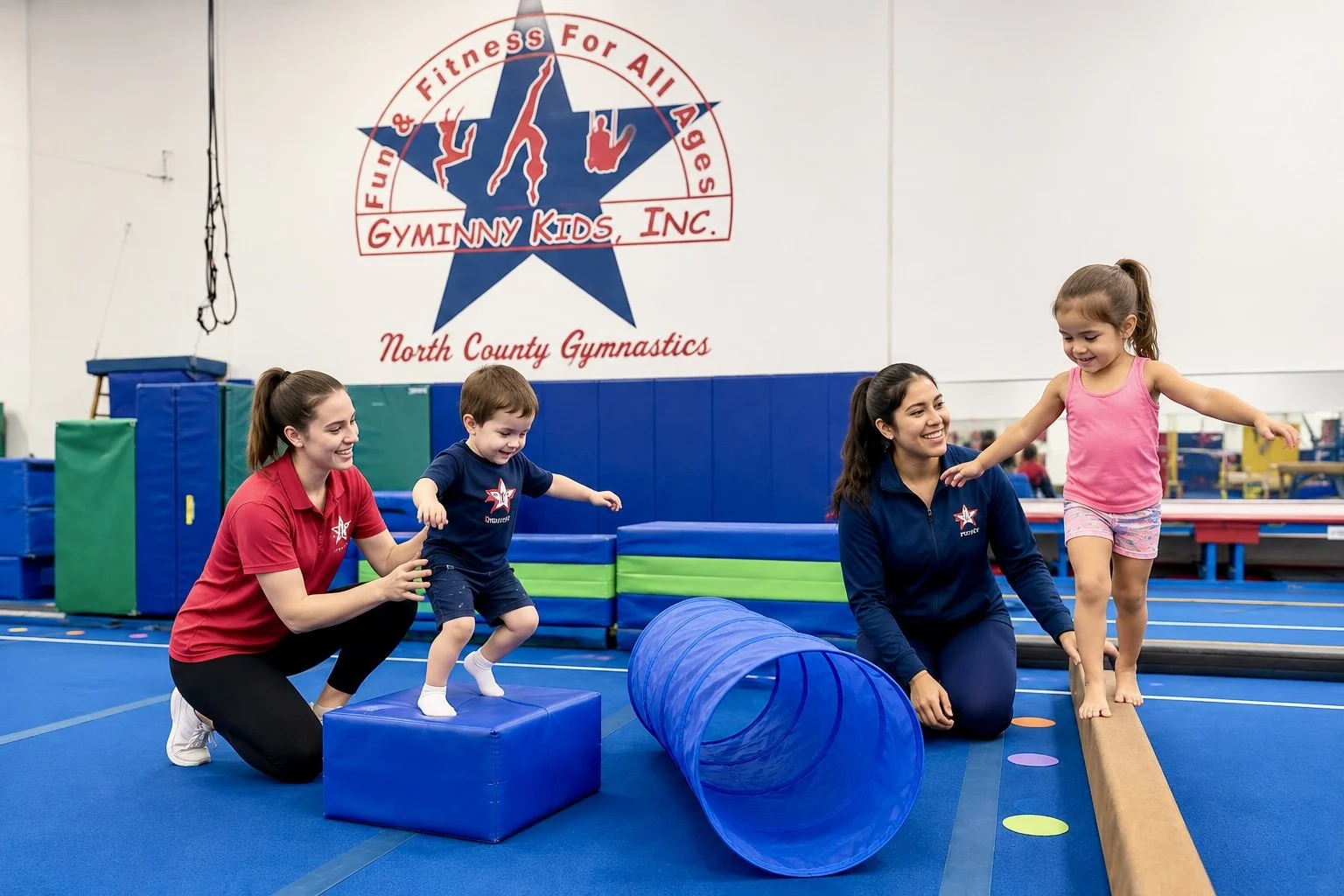
Parents often think of toddler gymnastics as a place where kids burn energy, climb on equipment, and learn basic physical skills. While all of that is true, many families do not realize that gymnastics classes for toddlers can also play a major role in early brain development.
Toddlers are not designed to sit still for long periods. Their brains are wired to learn through crawling, climbing, balancing, jumping, hanging, spinning, rolling, and exploring the world around them. Every physical challenge helps strengthen neural pathways connected to coordination, focus, emotional regulation, confidence, language development, and problem-solving.
In many ways, gymnastics acts like a full-body brain workout for young children.
At North County Gymnastics & The Gyminny Kids, we see this every day. Some toddlers begin class shy, cautious, and hesitant to separate from their parents. A few months later, many of those same children are following directions independently, interacting confidently with other kids, climbing with greater body awareness, and developing skills that transfer far beyond the gym.
Gymnastics is not simply exercise for toddlers. It is foundational learning through physical activity.
The Connection Between Movement and Brain Development
Research continues to show a strong relationship between physical activity and healthy brain development in early childhood.
According to the American Academy of Pediatrics, active play supports cognitive, social, emotional, and motor development during the early years of life.
The Harvard Center on the Developing Child explains that early experiences physically shape the architecture of the developing brain. Repetitive physical experiences help strengthen neural connections that children use later for learning, coordination, emotional control, and executive functioning.
This is one reason gymnastics classes for toddlers can be so valuable.
When toddlers:
balance on beams
crawl through obstacle courses
jump on trampolines
swing from bars
climb soft structures
practice hand support positions that we call weight transfers
Their brains are constantly processing information about space, timing, balance, strength, coordination, and body awareness.
The more children safely practice these patterns, the stronger and more efficient those neurological connections become.
Why Gymnastics Is So Effective for Toddler Development
Many sports focus primarily on one or two movement patterns. Gymnastics exposes toddlers to a broader range of physical challenges.
That variety matters because young brains thrive on diverse sensory and motor experiences.
A quality toddler gymnastics class may include:
climbing
balancing
hanging
jumping
crawling
spinning
landing
rolling
upside-down positions
rhythm and timing activities
obstacle courses
coordination through physical games
All of these activities stimulate different parts of the brain simultaneously.
This helps improve:
coordination
vestibular development
bilateral coordination
reaction timing
spatial awareness
motor planning
body control
The vestibular system, which helps regulate balance and spatial orientation, develops rapidly during early childhood. Activities commonly used in toddler gymnastics classes help stimulate and strengthen this system.
Research published through the National Institutes of Health has also linked physical activity in young children with improved executive functioning and cognitive performance.
Movement Helps Prepare Toddlers for School
One of the biggest misconceptions parents have is that kindergarten readiness is mostly academic.
In reality, many teachers will tell you that the most important school readiness skills involve:
following directions
waiting turns
confidence
social interaction
focus
persistence after frustration
Gymnastics classes naturally help develop these abilities.
Toddlers learn how to:
line up
transition between stations
follow multi-step instructions
participate in group activities
build patience
recover after mistakes
interact with teachers
navigate structured environments
Those skills directly transfer into preschool and elementary school settings.
As a parent of five gymnasts, I have watched firsthand how gymnastics helped build confidence before school even started. Kids who develop physical confidence early often become more willing to explore socially, participate in activities, and take healthy risks in learning environments.
The Playground Confidence Parents Notice
One of the most common things parents notice after enrolling their child in toddler gymnastics classes is increased confidence on the playground.
Children begin climbing more confidently. They become less fearful physically. They understand how to fall safer. They develop stronger coordination and awareness.
That confidence often spills into other parts of life.
Instead of avoiding challenges, many children begin approaching them with curiosity.
That matters developmentally.
Children build resilience by attempting difficult things, failing safely, falling safely, and trying again.
Gymnastics creates those opportunities constantly.
Real Parent Experiences
One parent recently wrote on Google:
"The difference in my toddler's confidence after starting classes at Gyminny Kids has been incredible. She listens better, climbs more confidently, and absolutely loves coming every week."
Another parent shared on Yelp:
"Our son was very shy before gymnastics. Now he runs into class excited, follows directions better, and has made friends. We've noticed improvements at preschool, too."
A Facebook review from a Gyminny Kids parent stated:
"The coaches are patient, energetic, and amazing with toddlers. My daughter has become so much more coordinated and social since starting classes."
These are the kinds of developmental changes many families begin noticing long before their child learns formal gymnastics skills.
The Cognitive Benefits of Physical Challenge
Physical challenges force the brain to constantly solve problems.
Even simple toddler activities involve complex neurological processing.
For example:
balancing requires continuous micro-adjustments
jumping develops timing and force control
obstacle courses improve motor planning
hanging activities strengthen grip and shoulder stability
rolling improves body awareness and spatial orientation
The brain is actively adapting during all of these activities.
According to the CDC Physical Activity Guidelines for Children, regular physical activity supports healthy growth and development across both the body and the brain.
Why Screen Time Cannot Replace Physical Exploration
Technology can absolutely have a place in modern childhood, but screens cannot replace physical exploration.
Toddlers learn best through real-world sensory experiences.
They need:
physical challenge
balance
touch
coordination
movement
social interaction
spatial exploration
Excessive screen time may reduce opportunities for the kind of active learning that supports neurological development during early childhood.
The American Academy of Pediatrics Media Guidelines emphasize the importance of balancing technology use with active, hands-on play.
This is one reason many parents today are intentionally seeking activities that help children get off screens and into active environments.
Gymnastics provides exactly that.
Gymnastics Helps Build Emotional Resilience
Toddlers experience frustration constantly while learning new skills.
That is actually healthy.
In gymnastics classes, children regularly encounter manageable challenges:
climbing something new
balancing independently
jumping farther
participating without parent assistance
trying unfamiliar activities
These small moments help children build emotional resilience.
They learn:
persistence
patience
frustration tolerance
confidence through repetition
recovery after mistakes
Those are life skills, not just gymnastics skills.
The Social Benefits of Toddler Gymnastics
Gymnastics classes for toddlers also create valuable social experiences.
Children learn how to:
interact with peers
share equipment
take turns
communicate
cooperate
For many toddlers, gymnastics may be one of their first structured group experiences outside the home.
That social exposure matters tremendously for emotional development.
At Gyminny Kids, many lifelong friendships between both children and parents begin in toddler classes.
What Makes a Quality Toddler Gymnastics Program Different?
Not all gymnastics classes for toddlers are created equal.
Parents should look for:
clean and safe facilities
structured class flow
engaging obstacle courses
strong safety systems
a welcoming environment
equipment designed specifically for young children
At Gyminny Kids, our toddler programs focus heavily on age-appropriate learning, positive reinforcement, confidence building, and safe progressions.
Our coaches understand that the goal is not simply teaching gymnastics skills. The goal is to help children build strong physical, emotional, and cognitive foundations. Gyminny Kids takes a holistic approach.
Gymnastics is the foundation for all sports. Start with gymnastics, go anywhere!
Proudly Serving Families In:
• 4S Ranch
• Poway
• Carlsbad
• La Costa
By Daniel Gundert: Owner of North County Gymnastics & The Gyminny Kids, former gymnast, lifelong coach, former national gymnastics judge, best-selling author, and father of five competitive gymnasts.
Frequently Asked Questions
Is gymnastics good for toddler brain development?
Yes. Research shows that physical activity helps strengthen neural pathways connected to coordination, focus, memory, emotional regulation, and learning.
At what age can toddlers start gymnastics?
Many toddler gymnastics classes begin around walking age, often between 12 and 18 months, depending on the program. Gyminny Kids starts at 9 months old.
Does gymnastics help prepare toddlers for preschool?
Absolutely. Gymnastics helps children practice listening, following directions, taking turns, engaging in social interaction, developing independence, and regulating emotions.
Can gymnastics improve toddler confidence?
Many parents notice significant improvements in confidence, playground skills, social comfort, and willingness to try new activities after enrolling in gymnastics.
How often should toddlers participate in gymnastics?
Most toddlers benefit from attending classes once or twice per week consistently.
Is gymnastics safe for toddlers?
When taught by qualified coaches using age-appropriate equipment and progressions, toddler gymnastics is considered a very safe activity.