
How Gymnastics Helps Basketball Players: Build the Athlete Before the Player
By Daniel Gundert, Owner of North County Gymnastics & The Gyminny Kids, gymnastics coach and judge, former gymnast, and father of six
Basketball asks kids to do a lot at once. They sprint, stop, pivot, jump, land, change direction, protect the ball, and react to what is happening around them. The players who look most comfortable on the court are often the ones who can control their bodies while everything is moving quickly.
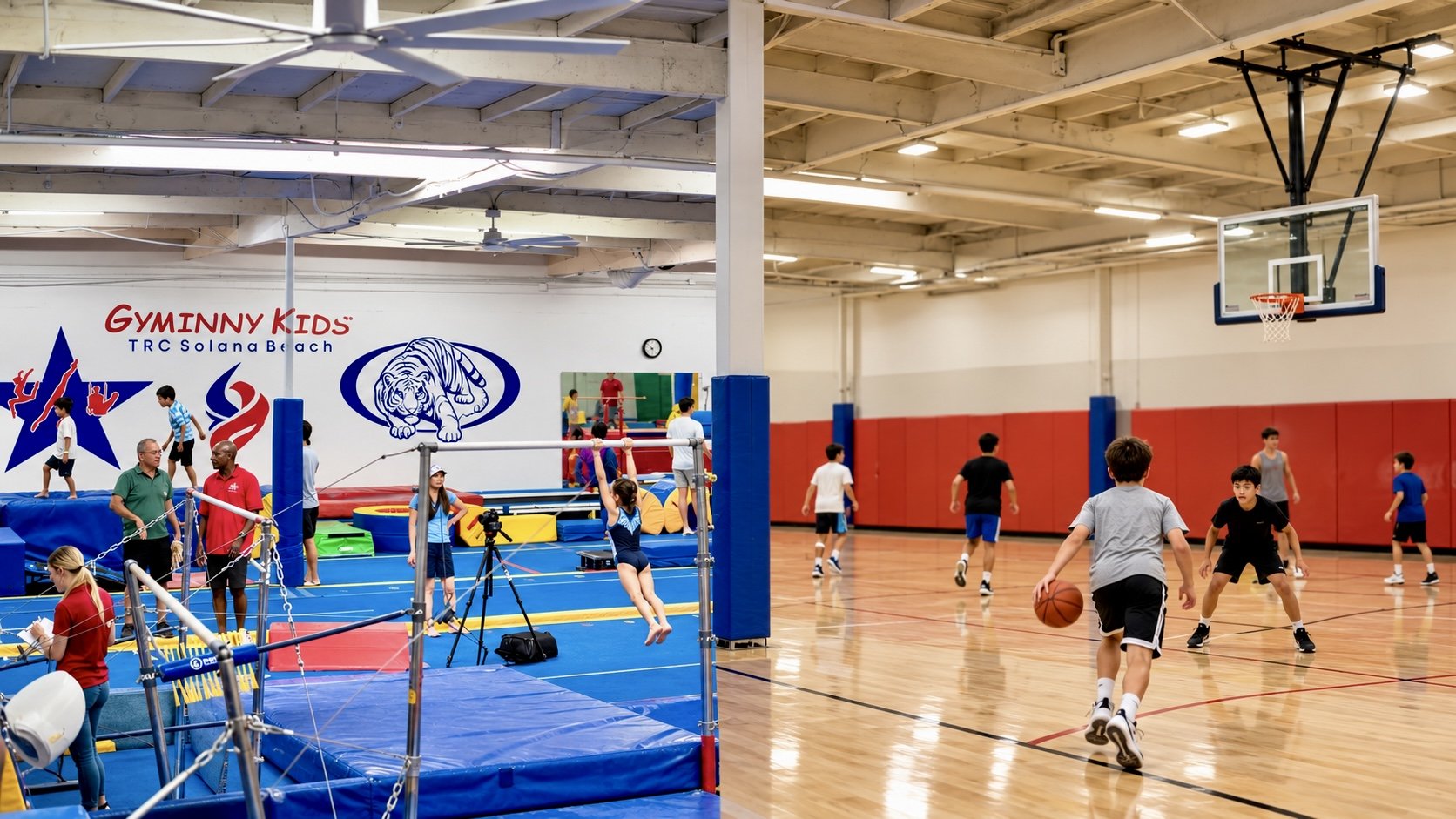
That is one reason gymnastics can be such a strong foundation for young basketball players. Gymnastics gives children regular practice with balance, strength, coordination, body awareness, jumping, landing, and moving in many directions. Those aren't basketball skills on their own, and gymnastics doesn't replace basketball practice. They are general athletic skills that can help a child learn and perform sport-specific movements.
After more than 30 years in gymnastics, I have watched thousands of children build confidence as they learn to move their bodies in new ways. As a father of six, I have also seen how the physical confidence children develop through gymnastics can carry into unfamiliar activities. Basketball is a great example because the game constantly asks young athletes to stay balanced, adjust quickly, and make a decision while moving.
Why Basketball Players Need More Than Ball Skills
Dribbling, passing, shooting, and understanding the game are essential. Children learn those skills through basketball instruction and play. But the body has to support every basketball skill.
A player needs balance to stop under control after a drive. They need coordination to move their feet while dribbling. They need strength to hold position, absorb contact, and get back up after a fall. They need body awareness to know where they are in the air while going for a rebound or layup.
The basketball court is full of fast transitions. Players accelerate, decelerate, turn, jump, land, and respond to other players. The better a child understands how to control their body, the better prepared they are to practice those sport-specific skills.
1. Balance Helps Players Stay in Control
Basketball is played on two feet, one foot, while moving, and sometimes after contact. Players need to stay steady while catching a pass, changing direction, defending, shooting, and landing from a jump.
Gymnastics gives children different ways to practice balance. They may hold a position on a beam, move through an obstacle course, land a jump, or adjust their body during a tumbling skill. These activities challenge children to notice where their body is and make small corrections.
Balance alone does not make a child a better shooter. It gives them a physical skill that helps them stop, pivot, land, or move under control.
2. Jumping and Landing Are Part of the Game
Basketball players jump for rebounds, shots, blocks, and passes. They also need to land and be ready for what happens next.
In gymnastics, children practice jumping and landing in a coached setting. They learn to bend their knees, control their movement, and finish a skill with awareness. Depending on a child's age and class, they may also practice rolls and other safe ways to respond when they lose balance.
Those experiences are not a substitute for basketball coaching on jump stops, layups, or rebounding. They do give children more chances to understand how their bodies move through space and how to regain control after a movement.
A small study of 23 under-15 basketball players compared 12 weeks of balance training with traditional machine-based strength training. The balance training group improved measured balance by 28.3% in a two-foot stance and 41.4% to 45.8% in single-leg stances. Its measured muscular power in vertical jump tests improved by 8.1% to 13.5%. The study involved only 23 players and examined a specific balance program, not gymnastics classes, so it does not prove that gymnastics creates the same results. It does show that balance can be trained and is relevant to basketball actions like jumping. Read the study in the Journal of Sports Science and Medicine.
3. Gymnastics Builds Strength Through Movement
Gymnastics asks children to support, pull, push, climb, hang, jump, and move their own body weight. Children develop strength while learning how to use it with control.
That matters in basketball, where players need to stay stable, reach for the ball, move through contact, and maintain control while changing direction. A gymnast's strength does not automatically translate into better basketball performance, but a stronger, more coordinated base can give a young athlete more ways to move.
4. Coordination and Body Awareness Support Faster Learning
A child handling a basketball must coordinate their eyes, hands, feet, and attention. They need to notice a teammate, track the ball, and adjust their movement at the same time.
Gymnastics provides varied movement experiences. Children roll, balance, climb, swing, jump, and learn skills that involve different body positions. These challenges ask them to listen, plan a movement, try it, and adjust.
A study of 333 primary school children, whose average age was 8.1, compared a 16-week gymnastics curriculum with regular physical education. The children in the gymnastics group made greater gains in stability and object control skills. Read the study abstract through PubMed.
5. A Broader Athletic Base Can Keep Sport Fun
Many children love one sport and want to do it all year. Others are still trying different activities to see what they enjoy. Both paths deserve support. A broad movement foundation can be useful while a child explores, and it can remain useful if they later focus more seriously on basketball.
Gymnastics and basketball are different sports. One does not need to replace the other. A child can enjoy basketball practice, games, and team experiences while also taking a gymnastics class that develops different movement challenges.
I believe in building the athlete before asking a young child to define themselves by one sport. Gymnastics helps children become comfortable with movement, practice skills step by step, and build confidence through progress. Basketball can then teach court skills, teamwork, and game decisions unique to basketball.
What I Have Seen as a Coach and a Dad
Over the years, I have watched children arrive at the gym unsure about a new skill. With patient coaching and repetition, they learn to try, adjust, and keep going. That process matters as much as any single movement. It helps a child become more willing to take on a new physical challenge.
My own six children grew up around gymnastics and have explored activities beyond the gym. I have seen the confidence that comes from knowing how to move, fall, get back up, and keep learning. I do not see gymnastics as a shortcut or a guarantee of basketball success. As a coach and parent, I've seen that children benefit from a strong foundation in movement before they are asked to master the details of any one sport.
At Gyminny Kids, we want children to enjoy gymnastics, grow at their own pace, and carry confidence with them wherever they go. For some, that next step may be basketball. For others, it may be soccer, baseball, football, swimming, dance, or simply being more comfortable trying something new.
How to Combine Gymnastics and Basketball
Families do not have to choose one activity for every season of childhood. A few practical principles can help keep both experiences positive:
Follow your child's interest and energy. If they enjoy both activities, look for a schedule that leaves room for rest and family time.
Choose age-appropriate classes and coaching. Children should learn skills through progressions that fit their current ability.
Keep basketball instruction in the hands of basketball coaches. Gymnastics supports general movement, while basketball practice teaches ball skills and game play.
Let progress take time. Children develop at different rates, and confidence grows through steady practice.
Talk with your child's coaches if the total activity schedule becomes difficult to manage.
Families looking for a place to start can explore Gyminny Kids gymnastics classes, including programs for young children, recreational gymnasts, and athletes ready for more advanced training.
Continue the Foundation Series
Read more about how gymnastics supports athletic development in other sports:
How Gymnastics Creates Better Athletes: The Cross-Training Benefits for Every Sport
Gymnastics for Baseball: Why the Best Baseball Players Start in the Gym
Why Gymnastics Is the Best Foundation for Current and Future Soccer Players
Gymnastics and Football: Why Gymnastics May Be the Best Foundation for Future Football Players
Build the Foundation, Then Let Them Play
Basketball gives children a chance to learn teamwork, court awareness, ball skills, and the joy of competing together. Gymnastics gives them another place to practice moving with strength, balance, coordination, and confidence.
They are different sports, and they can complement each other. When children learn to move well, they have a stronger starting point for basketball and the many activities they may discover as they grow.
At Gyminny Kids, we believe gymnastics is the foundation for all sports. Start with gymnastics, go anywhere.
Explore Gyminny Kids classes and schedule a free trial.
References
Rudd, J. R., et al. "Effectiveness of a 16-week gymnastics curriculum at developing movement competence in children." Journal of Science and Medicine in Sport. PubMed.
Bressel, E. et al. "Using balance training to improve the performance of youth basketball players." Journal of Sports Science and Medicine. Full text.
About the Author
Daniel Gundert owns North County Gymnastics & The Gyminny Kids. He is a former gymnast, gymnastics coach, and judge, and father of six. Daniel has spent more than 30 years helping children and families build confidence, strength, and a lasting love of physical fitness.
Quick Links
• Register for a free trial class today→]
• Adaptive gymnastics classes at Gyminny Kids→]
• Learn more about GK's no registration or annual fees pricing model→]
• Competitive gymnastics training→]
• Gymnastics mindset training→]
• Why Families Choose Gyminny Kids→]
Proudly Serving Families In:
• 4S Ranch
• Poway
• Carlsbad
• La Costa
Frequently Asked Questions
Is gymnastics good for basketball players?
Gymnastics can complement basketball by giving children opportunities to practice balance, strength, coordination, body awareness, jumping, and landing. It does not teach basketball skills such as shooting, dribbling, or game strategy.
Does gymnastics make a child better at basketball?
No activity can guarantee that a child will become a better basketball player. Gymnastics can help develop general movement skills that may support learning basketball, while basketball instruction and practice remain essential.
What gymnastics skills help with basketball?
Relevant movement skills include balance, body control, strength, coordination, spatial awareness, and controlled jumping and landing. Each child will use these skills differently.
Should my child do gymnastics or basketball first?
There is no single right order. Many children can enjoy both, depending on their interests, age, schedule, and readiness. Gymnastics can build broad movement skills, and basketball can introduce sport-specific skills and teamwork.
Can gymnastics prevent basketball injuries?
This article cannot promise injury prevention. Gymnastics gives children practice with strength, balance, body awareness, and controlled movement, but basketball injuries have many causes. Families should speak with qualified coaches and health professionals about an individual child's needs.
What age can my child start gymnastics at Gyminny Kids?
Gyminny Kids offers parent-and-tot gymnastics classes beginning as early as 9 months, with age-appropriate programs as children grow. Visit the classes page to explore current options and schedule a free trial.